

iThenticate vs Turnitin: Which Is Better? It Depends on This

At first glance, iThenticate and Turnitin seem almost identical. Same company, similar reports, same core idea—checking similarity and AI-generated content.
So it’s natural to ask: which one is better?
The issue is, that question misses something important. These tools weren’t built for the same context. Because of this, “better” isn’t really the right way to compare them.
What actually matters is how—and where—they’re used.
What Turnitin Is Designed For
Built Around Academic Workflows
Turnitin isn’t just a checking tool—it’s part of how schools manage assignments.
In most universities, it’s integrated directly into systems like Canvas, Blackboard, or Moodle. That means students don’t usually “run a check” themselves. Instead, papers are submitted, and the system automatically generates a similarity report for instructors.
Because of this setup, Turnitin is less of a personal tool and more of an institutional one.
What It Actually Checks Against
Turnitin compares submissions against a large mix of sources:
previously submitted student papers
publicly available web content
academic publications (to a certain extent)
What makes it different is the student paper database. Over time, this becomes a massive archive of assignments from schools around the world.
So similarity scores often come not just from the internet, but from other students’ work.
How Paper Storage Works (And Why It Matters)
In many cases, submitted papers are added to Turnitin’s database.
This is where things get sensitive.
Once a paper is stored, future submissions—even by the same author—can show high similarity. That’s why resubmitting the same draft or uploading it to multiple systems can sometimes create unexpected results.
What a Turnitin Report Actually Includes
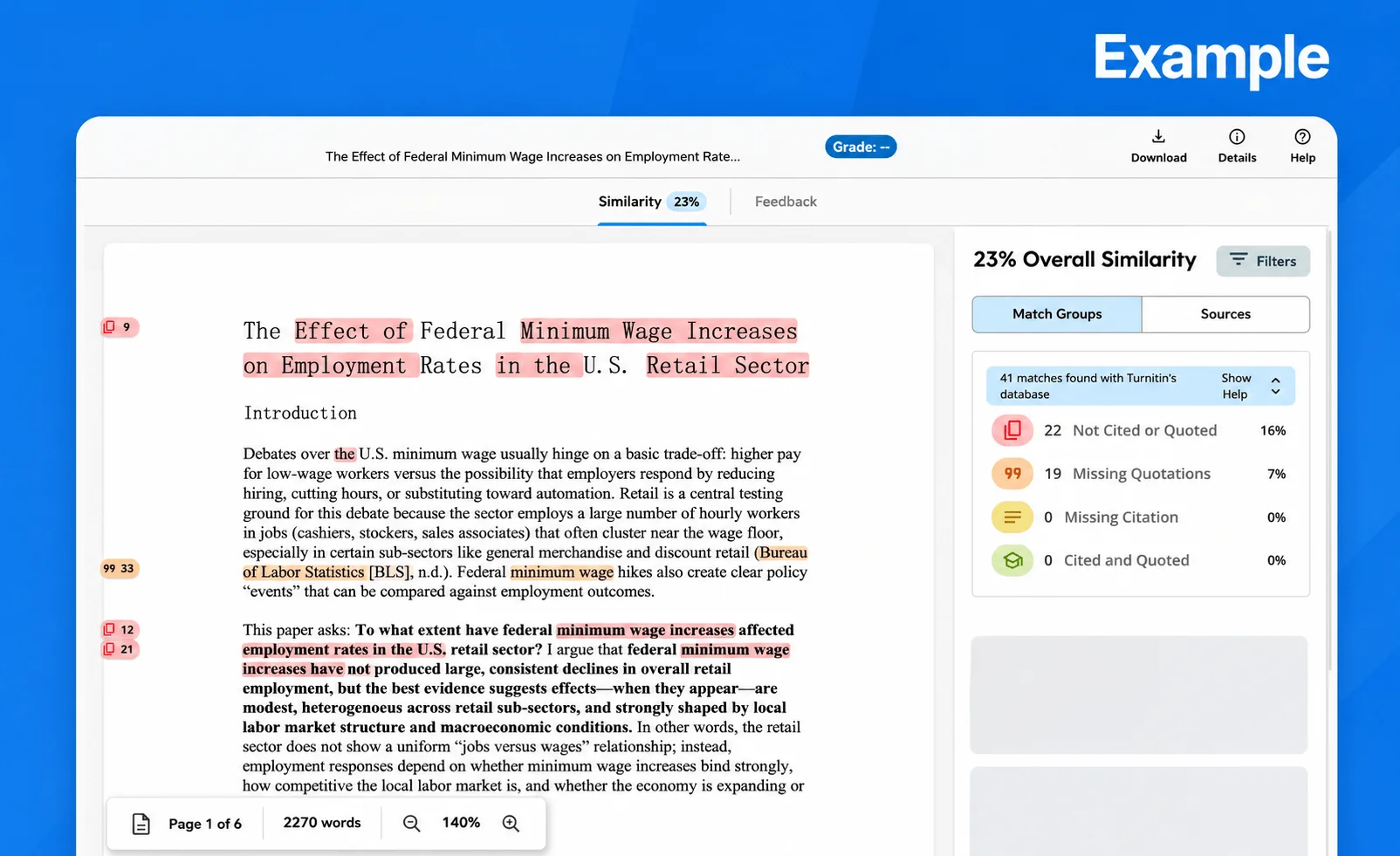
A Turnitin report usually comes down to two main parts: similarity and AI detection.
The similarity report highlights matched text and shows a percentage based on overlap with its database—student papers, web sources, and other content. It also breaks down where those matches come from, so instructors can review them in context.
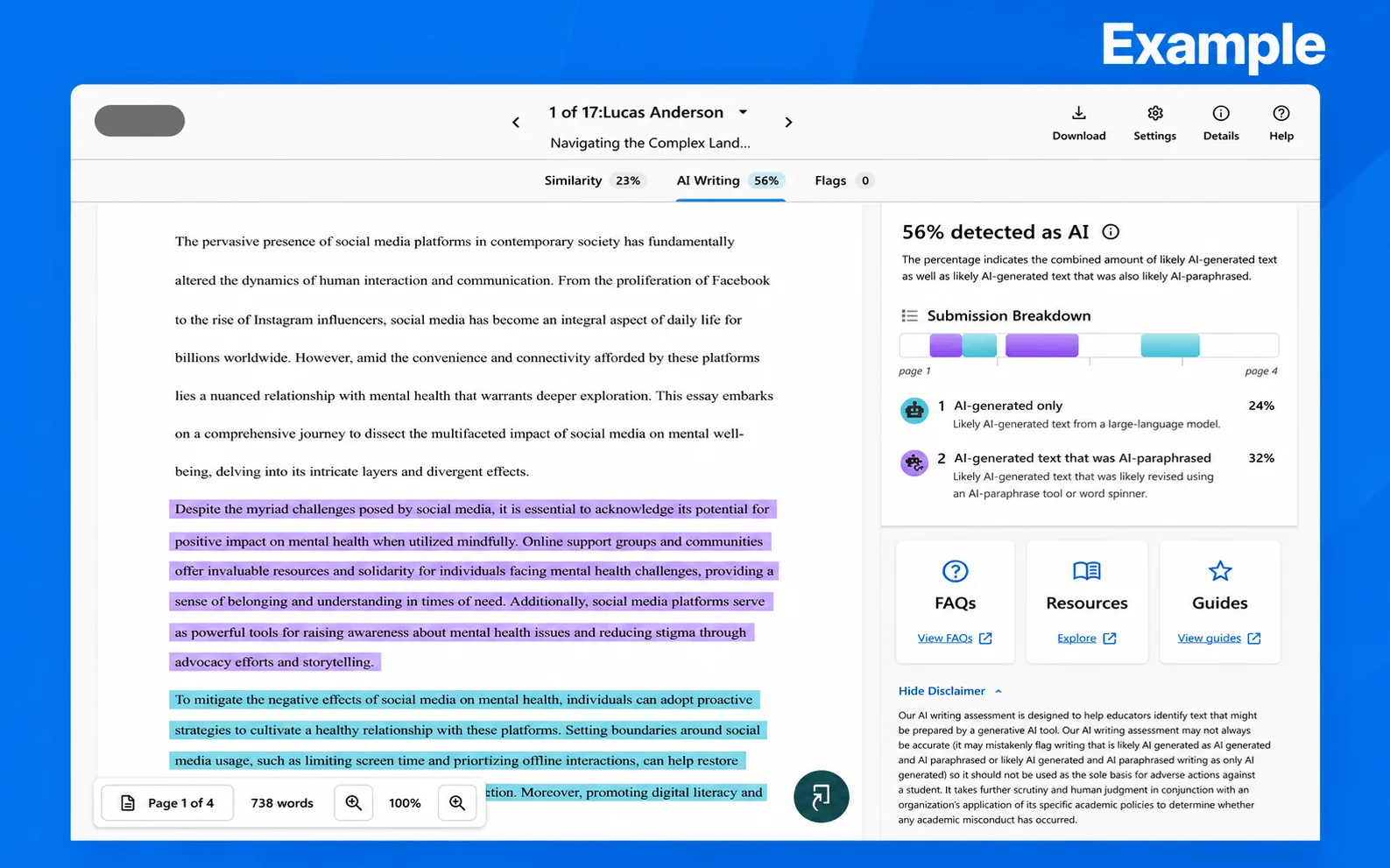
On top of that, Turnitin now includes an AI writing indicator. It estimates how much of the text may have been generated by AI, based on language patterns. However, this part isn’t shown to students.
Where Turnitin Works Best
Turnitin is most effective in structured academic environments where:
assignments are formally submitted
originality needs to be verified
instructors review reports alongside grading
That’s why it’s closely tied to coursework and academic integrity policies.
What iThenticate Is Designed For
Built for Research and Publication Workflows
iThenticate isn’t designed for classrooms. It’s built for what happens after that—research, writing, and publication.
It’s commonly used by:
academic journals
publishers
research institutions
Instead of handling assignments, it focuses on manuscripts that are being prepared for submission or already under review.
Because of this, the expectations are different. The goal isn’t just to flag overlap—it’s to protect the integrity of published work.
What It Actually Checks Against
iThenticate’s strength comes from its database.
It compares content against:
peer-reviewed journals
academic publications
conference papers
some web sources
This makes it much more aligned with what editors care about. Overlap with published research is a bigger concern than overlap with student papers.
So the matches it finds tend to be more relevant for academic writing.
How It Handles Submissions
One key difference is how submissions are treated.
In most cases, iThenticate does not automatically store submitted manuscripts in a central student-style database.
This changes how it’s used.
There’s less risk of a draft showing up as a match later just because it was checked before. Because of this, it’s more practical for iterative use during the writing process.
What an iThenticate Report Actually Includes
An iThenticate report also centers on two things: similarity and AI detection.
The similarity report shows matched text against published research, journals, and academic databases. Because of this, the sources tend to be more relevant for scholarly writing, especially when evaluating overlap with existing literature.
In addition, iThenticate now includes an AI writing indicator. Similar to Turnitin, it estimates how much of the text may have been generated by AI, based on language patterns and structure.
Where iThenticate Works Best
iThenticate fits situations where:
a paper is being prepared for journal submission
originality needs to be evaluated at a publication level
overlap with existing research is a concern
It’s especially useful before submission, when revisions are still possible.
So Which One Is Better? It Depends on the Situation
For Students
Turnitin is the one that matters.
Even if another tool is used beforehand, the final submission is often checked through Turnitin. So in practice, that’s the system that defines the outcome.
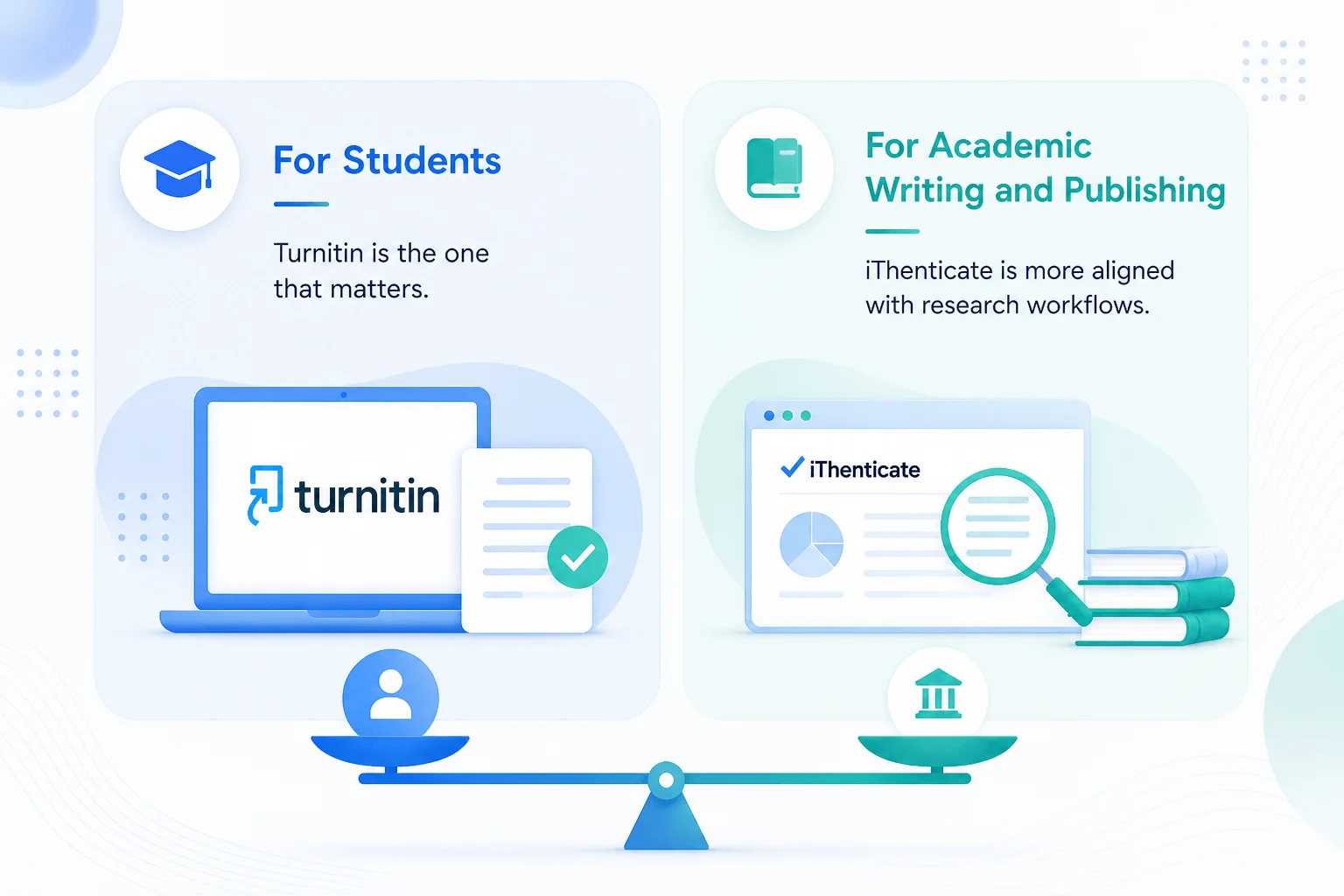
For Academic Writing and Publishing
iThenticate is more aligned with research workflows.
It reflects how journals evaluate similarity, which makes it more relevant before submission.
Can You Check Before Submitting to Turnitin or iThenticate?
This is where things get a bit frustrating.
Checking similarity before submitting sounds like a basic step. But once looking into how Turnitin and iThenticate actually work, it’s not that straightforward.
Turnitin: Why It’s Hard to Use Ahead of Time
Turnitin isn’t built for independent use.
There’s no sign-up page, no pricing listed, and no way to upload a paper on demand. Access usually comes through a course, and everything happens inside that system.
So instead of “checking a draft,” what really happens is submitting an assignment and waiting for the report.
Another detail that often gets missed: what shows up in the report depends on the instructor’s settings. In some cases, even the AI detection results aren’t visible on the student side.
Because of this, Turnitin ends up being more of a final step, not something used along the way.
iThenticate: Technically Available, But Not Always Practical
iThenticate works differently.
It can be purchased directly, which makes it usable before submission. A typical setup looks like this:
$125 per paper (excluding tax)
up to 25,000 words
credits valid for 12 months
includes a few revision checks
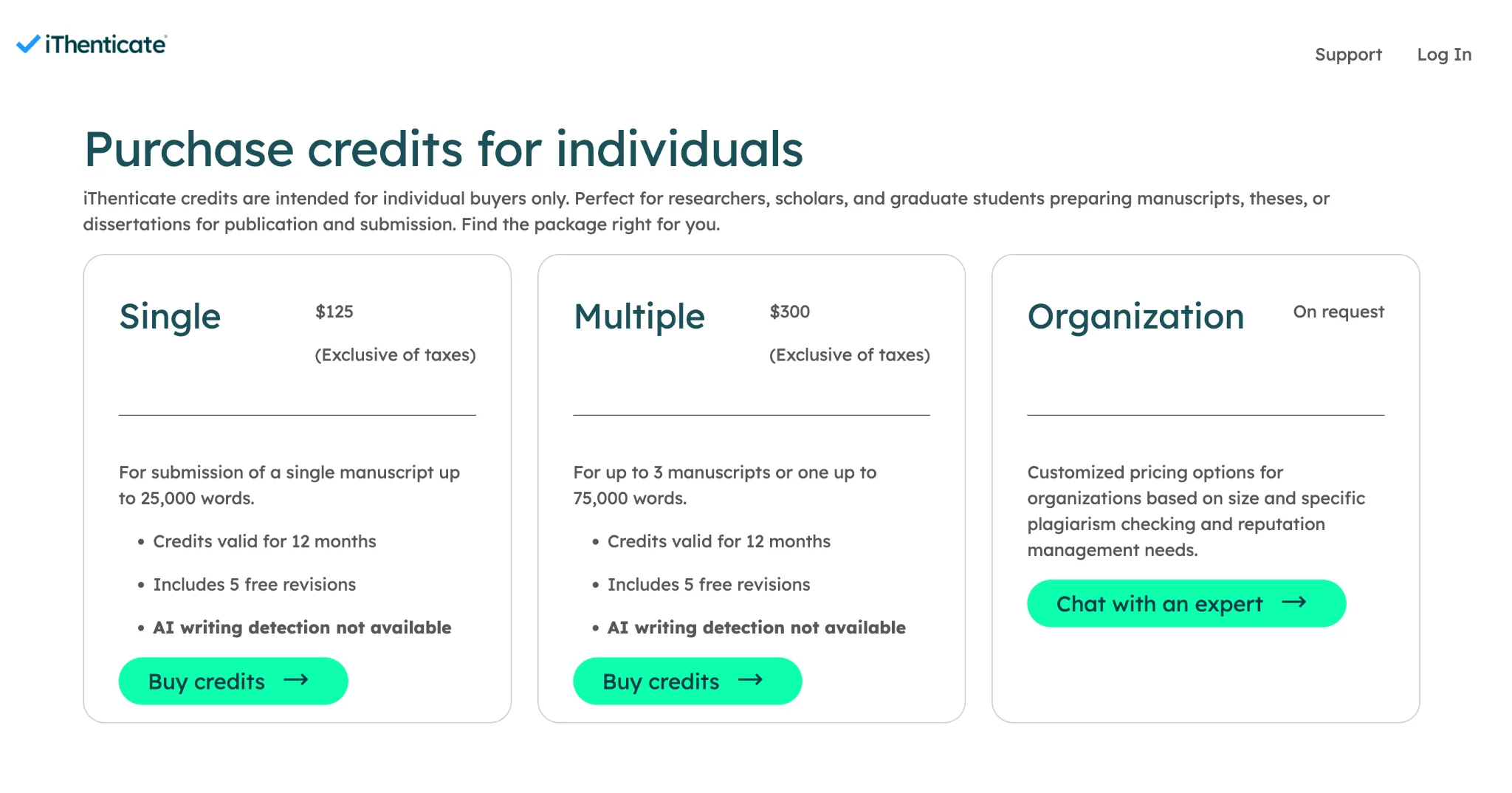
So yes, it works for pre-submission checking.
But in practice, it’s not something most people use repeatedly. The cost adds up quickly, especially when working through multiple drafts. And unlike Turnitin, there’s no built-in AI writing detection.
This is where the gap shows.
Turnitin is the tool that often decides the outcome, but it’s not accessible in advance.
iThenticate is accessible, but not lightweight enough for frequent use.
At the same time, the need is obvious. Running a check before submission helps avoid surprises later. So instead of relying on just one tool, many writers end up working around the system.
How People Handle Pre-Submission Checks
In practice, a lot of pre-checking happens through tools that mirror the logic of the originals.
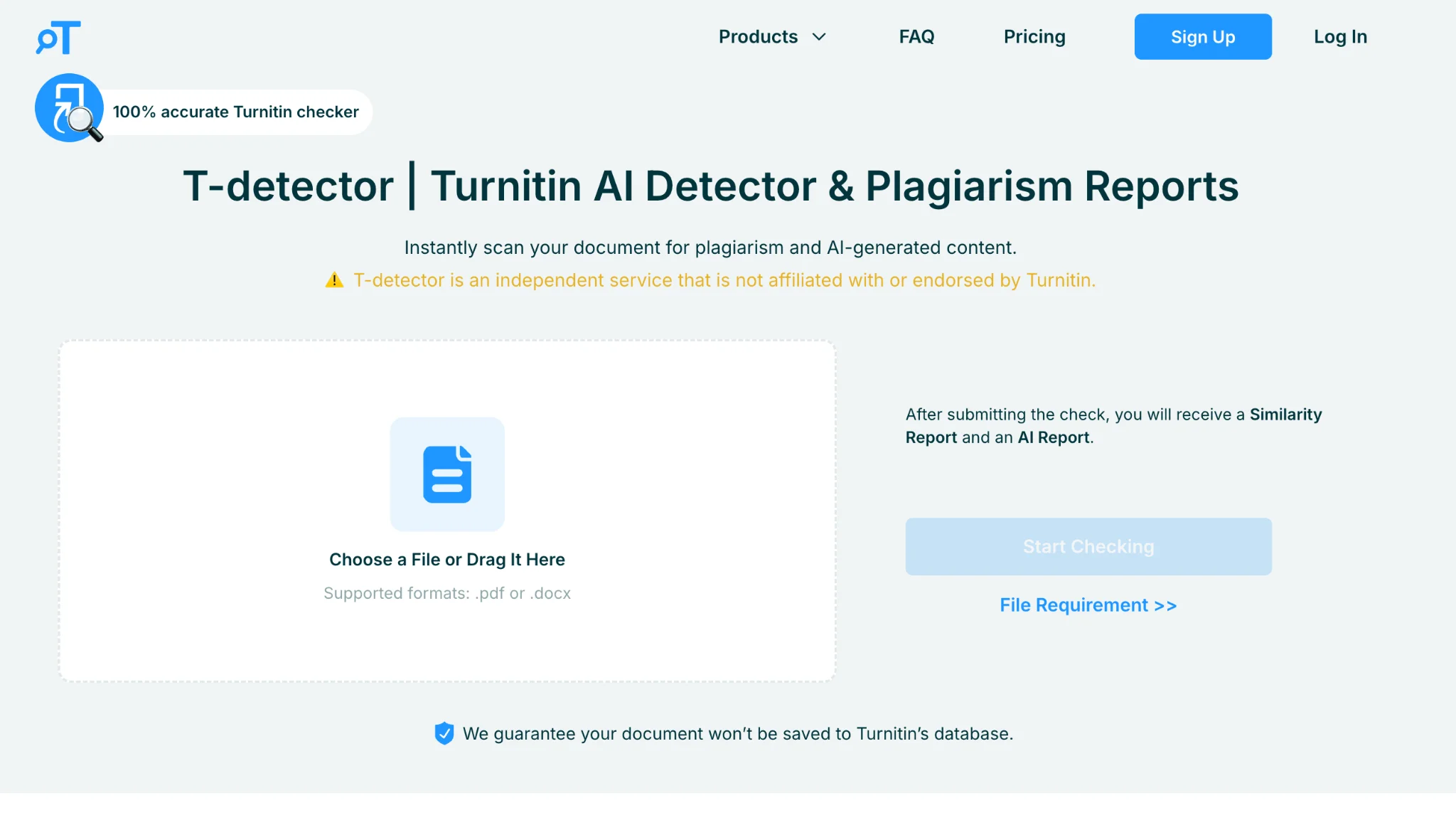
For Turnitin-style checking, Turnitindetector (T-detector) is one option. It’s designed around similar evaluation methods and provides both similarity and AI reports. One key detail is that papers checked there aren’t added to a database, so there’s no risk of the draft showing up later as a match.
For research-focused work, tools like Thentify.com can act as a practical alternative to iThenticate. They’re generally more flexible in terms of cost, don’t store submitted papers, and can be used more freely during the writing process. Some also include AI-related checks, which iThenticate itself doesn’t offer.
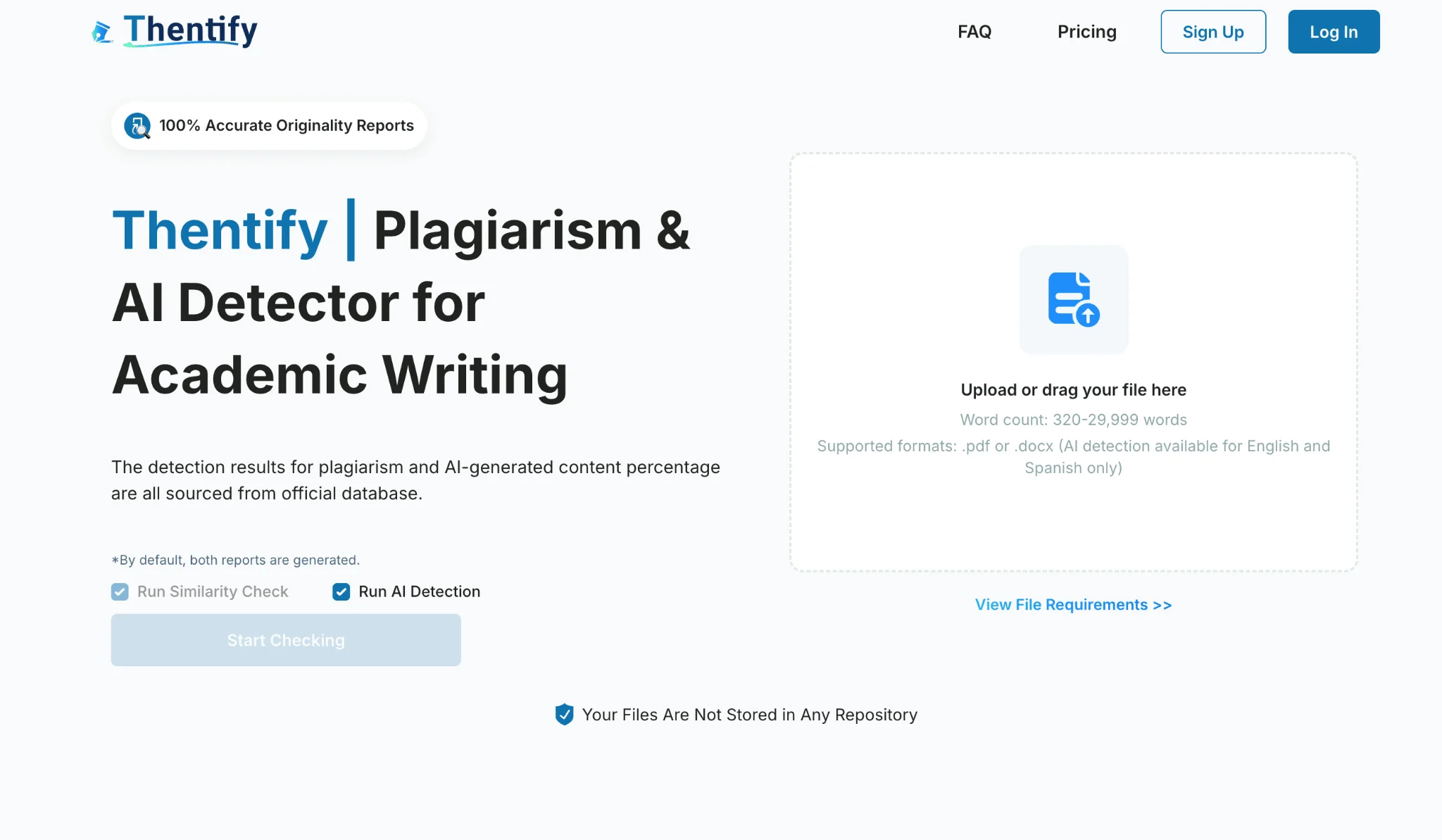
These tools aren’t meant to replace Turnitin or iThenticate. They just make it easier to get a clearer picture before the final submission.
Final Takeaway
So which one should you actually care about?
It comes down to what will affect the final result. iThenticate and Turnitin aren’t competing tools.
If the work is being submitted through a school system, Turnitin is the reference point.
If the work is being reviewed for publication, iThenticate is closer to what matters.
So instead of asking which one is better, the more useful question is: which one will be used to evaluate the work?