

What Is a Good iThenticate Score for Journal Submission?

You open your iThenticate report and see a 24% similarity score or 20% AI score.
Too high? Maybe — maybe not.
The information revealed in a similarity or AI report often goes far beyond a single percentage.
In this guide, we will take a closer look at how editors actually interpret similarity and AI reports, what these scores can realistically tell you, and where many researchers misunderstand the screening process.
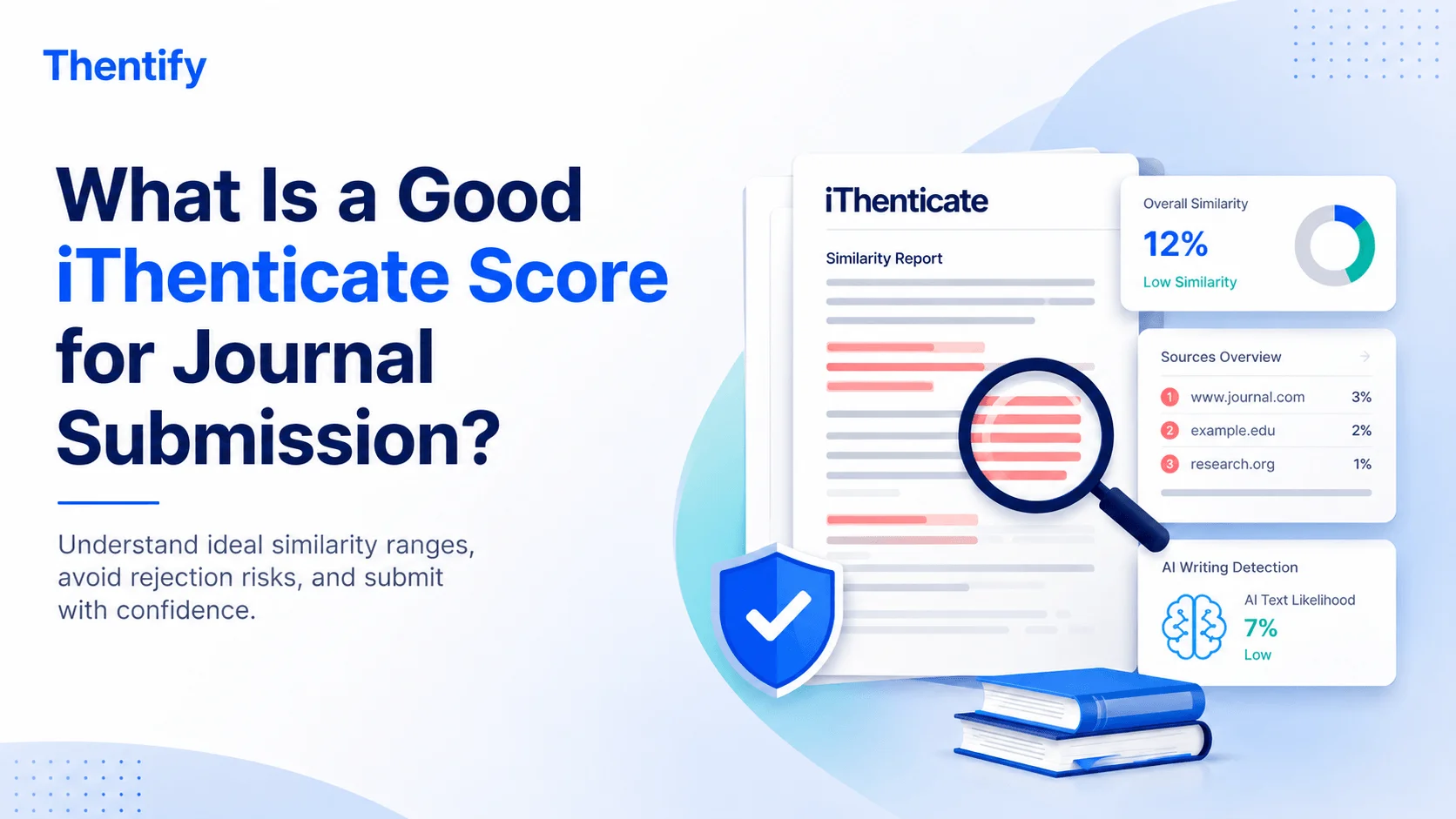
What Is a Good iThenticate Score for Journal Submission?
There is no universal “safe” percentage for journal submission. In reality, similarity reports are interpreted much more differently across journals and disciplines than most authors expect.
Typical Similarity Ranges Accepted by Journals
While journals rarely publish strict similarity limits, some general patterns are commonly seen during manuscript screening.
Under 10%
A similarity score below 10% is often considered relatively safe for many journals. These reports usually contain smaller matches from references, technical terminology, or commonly used academic phrases.
However, even a low percentage can still raise concerns if a large portion of the overlap comes from a single uncited source.
10%–20%
Many journals consider scores between 10% and 20% acceptable, especially for research papers that include standard methodology descriptions or extensive literature references.
At this range, editors typically pay closer attention to:
The size of individual matches
Whether citations are properly included
Repeated wording patterns
Similarity concentrated in sensitive sections like the abstract or discussion
For most authors, this range is where manual review becomes especially important.
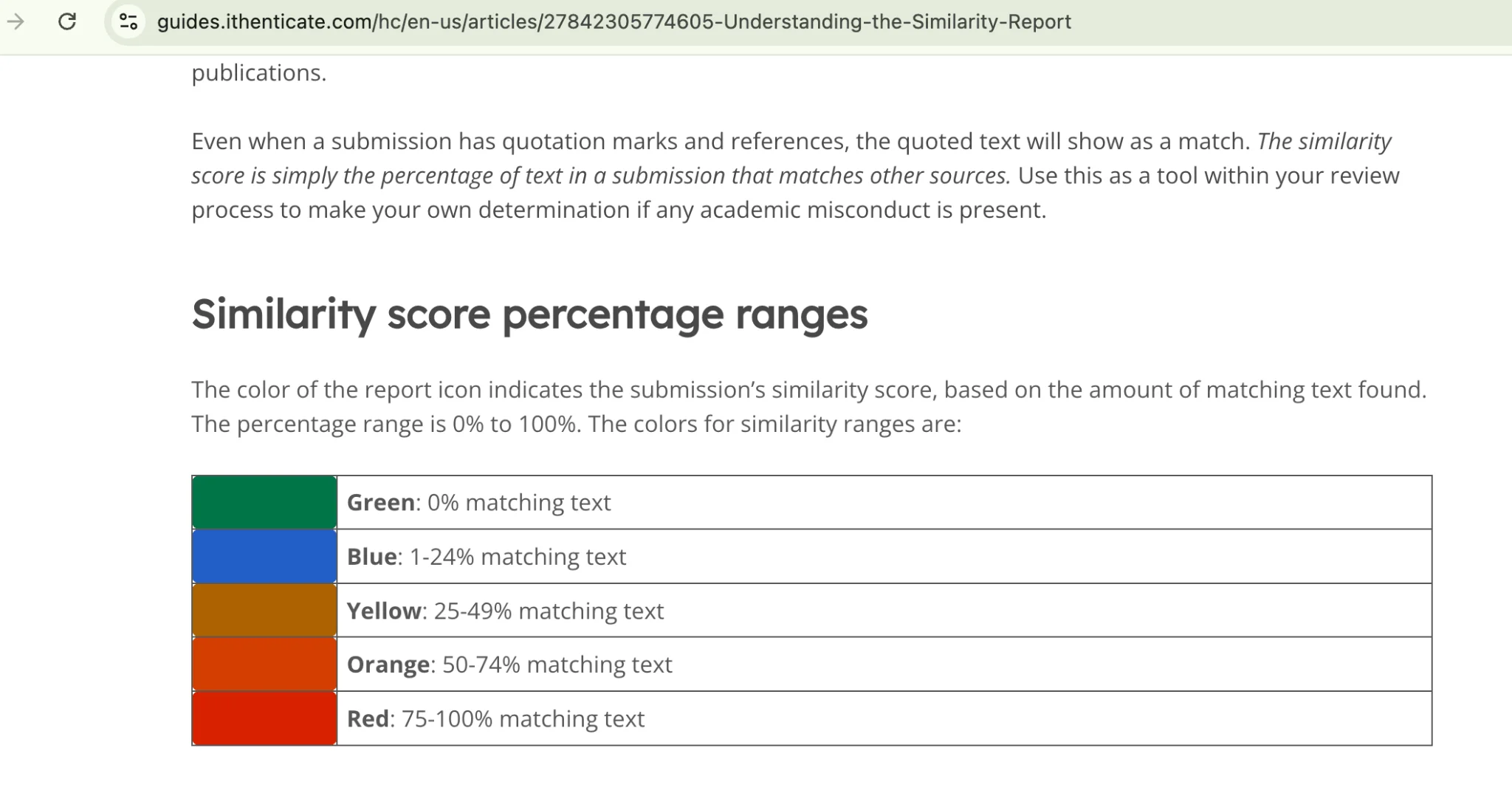
20%+ Situations
A similarity score above 20% does not automatically mean plagiarism, but it often triggers additional editorial scrutiny. Some journals may request revisions before peer review, while others may reject the manuscript immediately if the overlap appears excessive.
Higher scores are more common in:
Review articles
Papers with heavily reused methodology sections
Manuscripts containing poor paraphrasing
Self-reuse from previously published work
Because of this, editors usually examine the context behind the matches rather than relying only on the percentage itself.
AI Writing Detection Scores
But similarity percentages are no longer the only thing journals review. As AI-assisted writing becomes more common, some publishers are also paying closer attention to AI detection reports during editorial screening.
While there is still no universal “safe” AI score, some general patterns are becoming more common.
Under 20%
Low AI detection percentages are usually less likely to trigger editorial concern, especially when the writing contains clear technical detail, natural variation, and field-specific analysis.
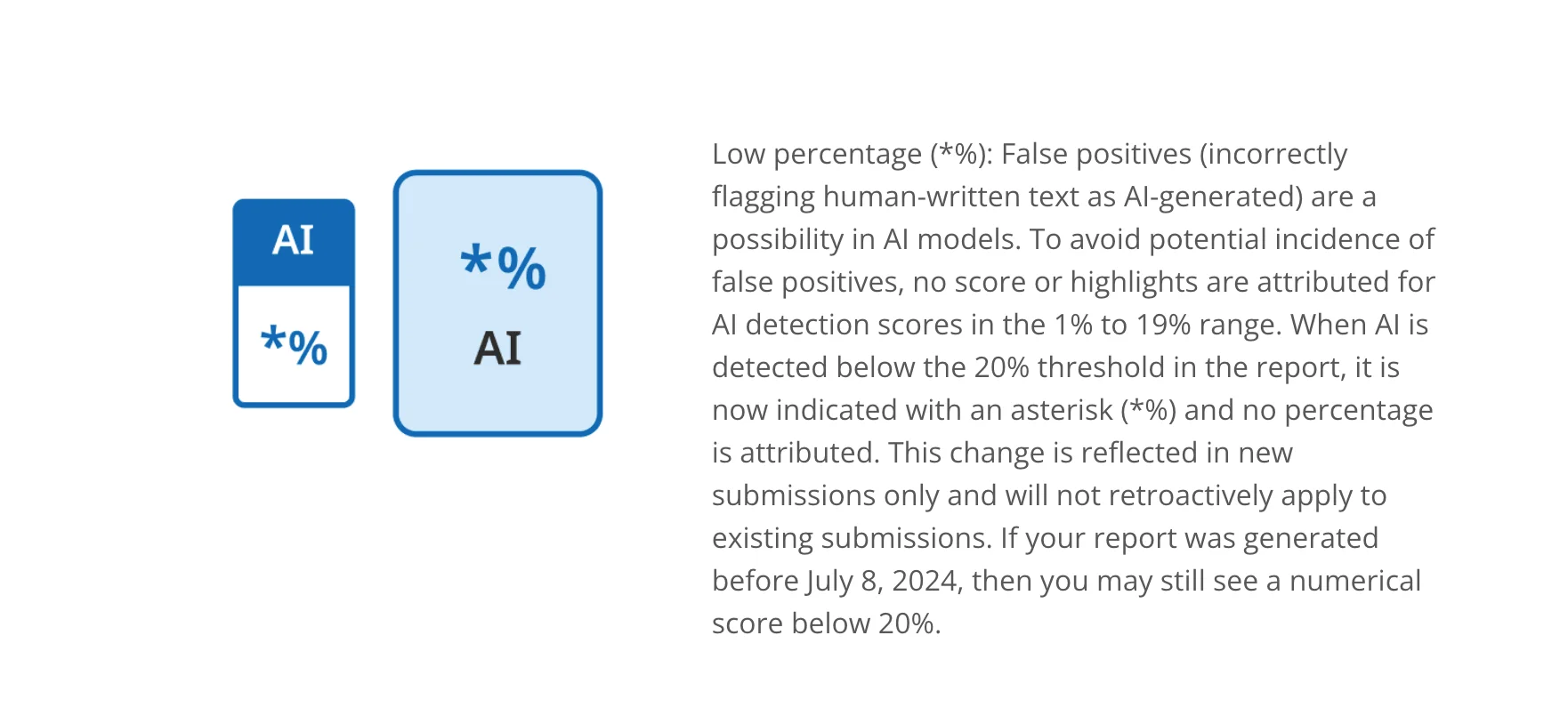
20%–50%
This is often considered a gray area. Some journals may ignore moderate AI signals, while others may manually review the manuscript more carefully — particularly if the writing sounds overly uniform or generic.
At this range, editors may pay attention to:
Repetitive sentence structure
Overly polished academic phrasing
Generic transitions
Weak human interpretation
50%+ Situations
Higher AI detection scores are more likely to attract editorial scrutiny, especially in competitive journals or institutions with stricter AI policies.
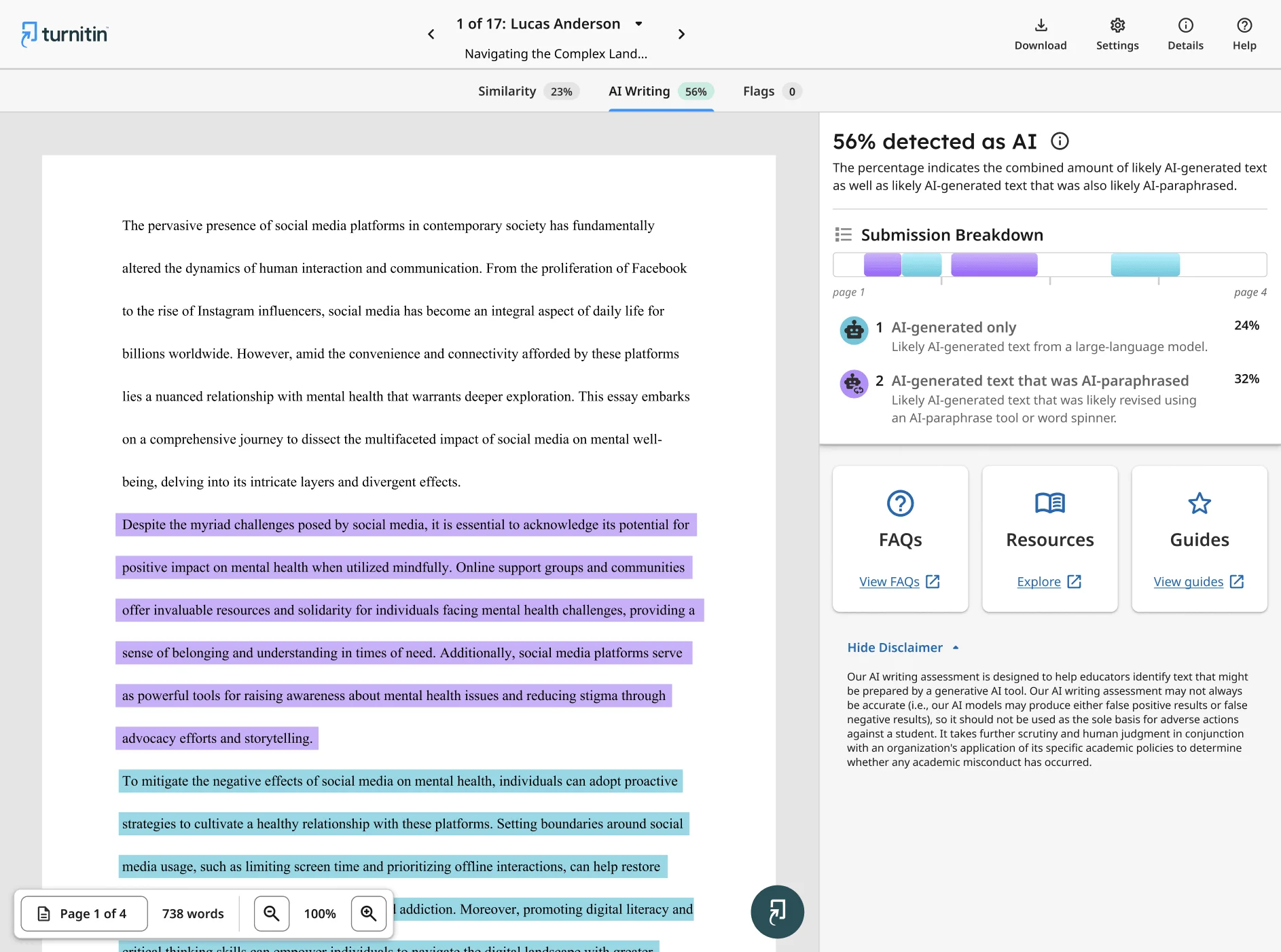
However, AI reports are not always treated as proof of misconduct. In practice, editors usually combine AI detection signals with similarity reports, writing quality, citation accuracy, and overall manuscript consistency before making decisions.
Can You Check Similarity Before Submission?
Yes — and many researchers do exactly that before submitting to a journal.
Since editorial similarity screening often happens before peer review, checking a manuscript early can help authors spot potential problems before an editor sees them. In practice, this is often easier than dealing with revision requests or desk rejection later.
Researchers commonly review similarity reports to identify:
Large matching text blocks
Weak paraphrasing
Overlap from previous publications
Similarity concentrated in abstracts or discussions
Some authors also use iThenticate alternatives like Thentify to preview overlap patterns before official journal screening. This can help researchers revise risky sections earlier and submit with more confidence.
Why Different Journals Have Different Standards
However, even the same similarity score may receive completely different reactions depending on the journal itself. Expectations can vary significantly depending on the discipline, publisher, and manuscript type.
Medical Journals
Medical and biomedical journals often apply stricter originality standards because of ethical and regulatory concerns. Even moderate overlap may receive attention if it appears in clinical findings, patient data interpretation, or conclusions.
Many medical publishers also use aggressive pre-screening workflows before peer review begins.
Engineering Journals
Engineering and technical journals may tolerate slightly higher similarity levels in methodology or formula-based sections. Standardized terminology and repeated technical descriptions are more common in these fields.
Still, copied interpretation or discussion content can remain problematic regardless of discipline.
Review Papers vs Original Research
Review articles naturally produce higher similarity scores because they summarize large amounts of published literature. Repeated terminology, citations, and source discussion are much harder to avoid.
Original research papers, however, are usually evaluated more strictly — especially in sections like the abstract, results, and discussion.
And this is why the same similarity score can lead to very different editorial decisions depending on the type of paper being submitted.
Why a “Safe” Score Does Not Guarantee Acceptance
At this point, one thing becomes clear: reaching a “low” similarity percentage does not automatically mean a paper is safe from editorial concerns.
In practice, editors rarely make decisions based on the final number alone. A manuscript with 25% similarity may pass screening without major issues, while another with 10% similarity can still raise concerns.
Editorial Discretion
Similarity reports are ultimately interpreted by human editors, not automated systems alone.
Some editors focus heavily on originality in discussion sections. Others pay closer attention to uncited overlap or repeated wording patterns. This is why two journals may react very differently to the exact same report.
Source Concentration
One of the biggest red flags is overlap concentrated in a single source.
For example, a paper showing 12% similarity across dozens of cited references often appears less risky than a paper showing 8% similarity mostly matched to one publication.
And this is where many researchers get surprised: lower percentages do not always look safer to editors.
Uncited Overlap
Even properly written papers can face problems if reused material is not clearly acknowledged.
Uncited overlap — especially from the author’s own previous publications — may trigger concerns about:
Self-plagiarism
Duplicate publication
Insufficient originality
Because of this, experienced editors usually evaluate how the overlap appears before worrying about the percentage itself.
How to Reduce Your iThenticate Score Before Submission
Once you understand what editors actually look for, the next step becomes much more practical: reducing the kinds of overlap most likely to trigger editorial attention.
And increasingly, that also includes AI-generated writing patterns.
Improve the Way You Paraphrase
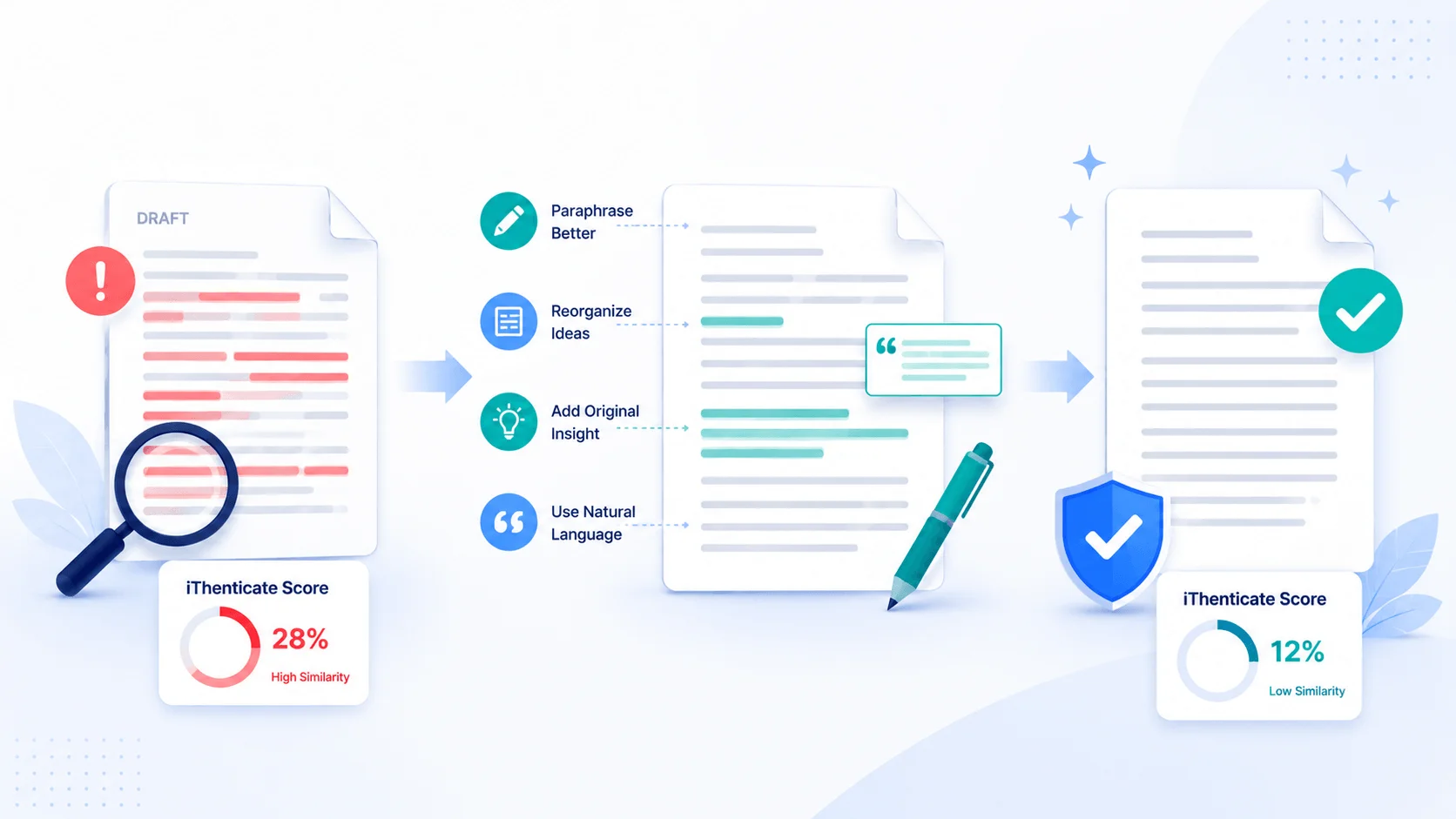
Weak paraphrasing is one of the most common reasons papers receive high similarity scores. Simply replacing a few words usually does not help much because the original sentence structure often remains visible.
In practice, stronger paraphrasing comes from reorganizing ideas completely, simplifying the wording, and adding more original interpretation instead of repeating source language too closely. This is especially important in literature reviews and discussion sections, where similarity problems tend to appear most often.
Rewrite High-Risk Sections First
Some parts of a manuscript receive far more editorial attention than others. If a report shows heavy overlap, it is usually more effective to revise the abstract, introduction, and discussion first rather than rewriting the entire paper.
These sections are expected to show the paper’s originality most clearly. And interestingly, they are also where AI-assisted writing often becomes easiest to recognize because the language starts sounding overly polished, repetitive, or generic.
Reduce AI-Like Writing Patterns
Even when AI-generated text does not create a high similarity score, it can still raise concerns during editorial review.
Many AI-assisted drafts rely on repetitive sentence flow, generic transitions, and overly uniform paragraph structure. The writing may look grammatically clean while still sounding unnatural to experienced editors.
This is why many researchers now manually revise AI-assisted sections before submission, especially when the text feels too broad, too smooth, or lacking field-specific detail.
Review the Full Report Before Submission
One of the biggest mistakes researchers make is focusing only on the final percentage.
A full similarity report usually tells a much more useful story: which sources dominate the overlap, where the matched text appears, and whether certain sections may attract extra editorial attention.
Reviewing these patterns before submission often helps researchers revise more strategically and avoid unnecessary problems later in the screening process.
Final Thoughts
There is no single “perfect” iThenticate score for journal submission. In most cases, journals care more about problematic overlap patterns than the raw similarity percentage itself.
Understanding how editors interpret reports can help researchers revise manuscripts more effectively and avoid unnecessary risks before submission. Reviewing a similarity report early, especially before submitting to competitive journals, often gives authors more control over potential overlap issues.
FAQ

Is 15% a good iThenticate score for journal submission?
In many cases, yes. A 15% similarity score is often considered acceptable if the overlap comes from properly cited sources and is not concentrated in critical sections.
Can journals reject papers with low similarity scores?
Yes. Even low percentages may raise concerns if the overlap comes heavily from one uncited source or contains copied interpretation.
Is 30% similarity always considered plagiarism?
No. Review articles, methodology-heavy papers, and citation-rich manuscripts may naturally generate higher similarity scores. Editors usually evaluate the context behind the matches.
Do journals ignore references in iThenticate reports?
Many journals pay less attention to references, citations, and standard terminology, although this depends on the publisher’s filtering settings.
How can I lower my similarity score before submission?
Improving paraphrasing, rewriting high-risk sections, reducing long copied phrasing, and reviewing the full similarity report before submission can all help lower problematic overlap.
Does iThenticate detect AI-generated writing?
Yes. iThenticate includes an AI writing detection feature and can generate AI reports for supported institutional accounts.
How can you view an iThenticate AI report?
iThenticate AI reports are usually not visible to individual users, even with paid access. Some researchers use tools like Thentify to preview AI detection results before submission.