

12 Types of Plagiarism That Threaten Research Integrity

In academic publishing, plagiarism is usually defined more broadly and more strictly than in typical classroom settings. Many publishers, including Elsevier, Springer, Wiley, and IEEE, evaluate plagiarism as part of publication ethics misconduct rather than simple copying.
As a result, journals now assess issues beyond duplicated text, including image reuse, data misuse, citation problems, and undisclosed AI-generated content.
Because of this, the most common types of plagiarism in academic publishing generally fall into the following core categories.

1. Direct Plagiarism
Definition
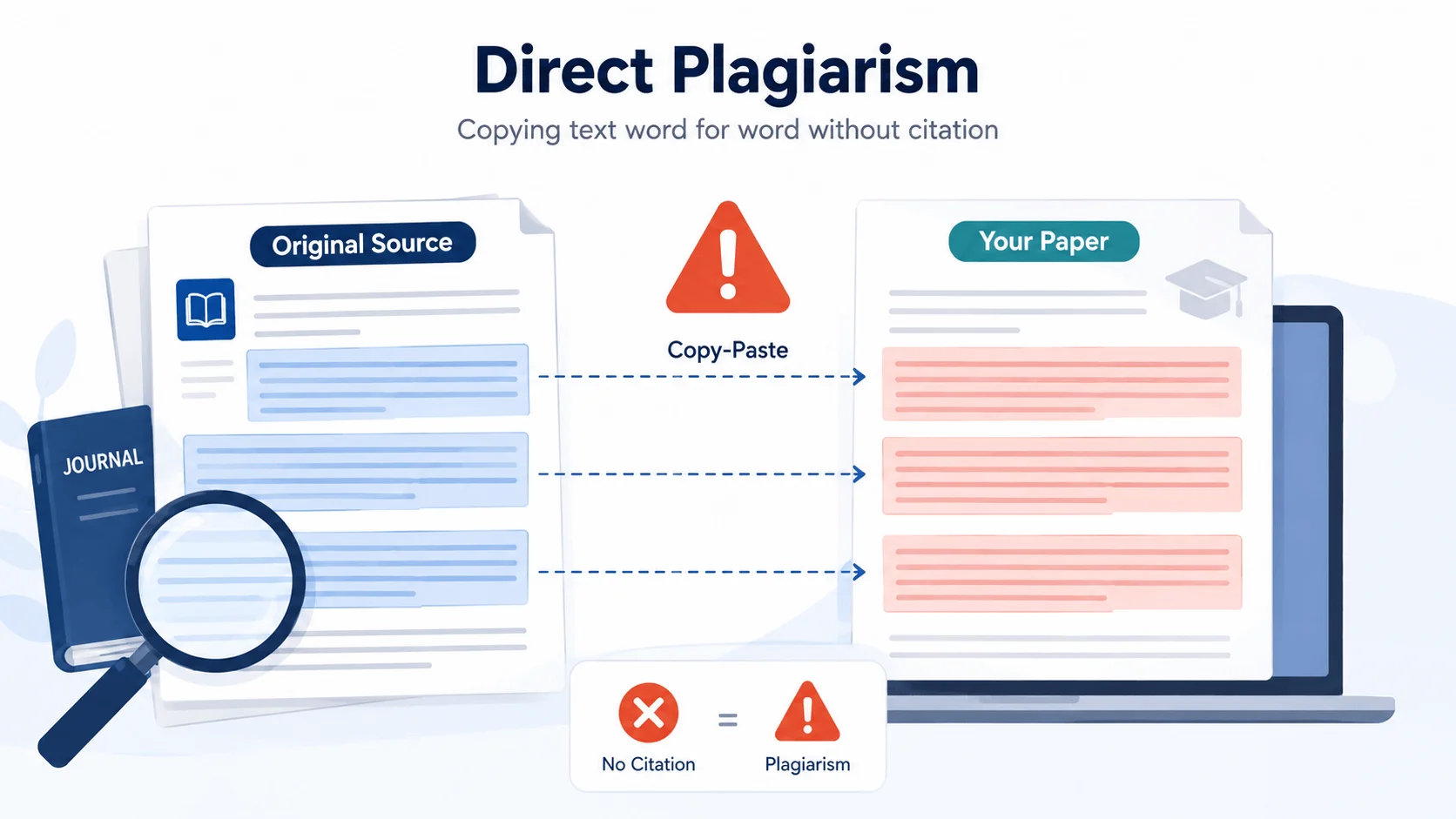
Direct plagiarism is the most obvious form of plagiarism. It happens when someone copies text from a source word for word without proper attribution.
In academic publishing, this may involve reproducing sentences, paragraphs, tables, or entire sections from published papers, dissertations, or conference proceedings. Because the original wording is used without acknowledgment, direct plagiarism is considered a serious violation of research ethics and publication standards.
Example
A manuscript introduction includes several paragraphs copied directly from a previously published review article without citation or quotation marks.
How to Avoid It
Cite all directly quoted material properly
Use quotation marks when exact wording is necessary
Write from understanding instead of copying source text
Keep careful records during note-taking
2. Mosaic (Patchwork) Plagiarism
Definition
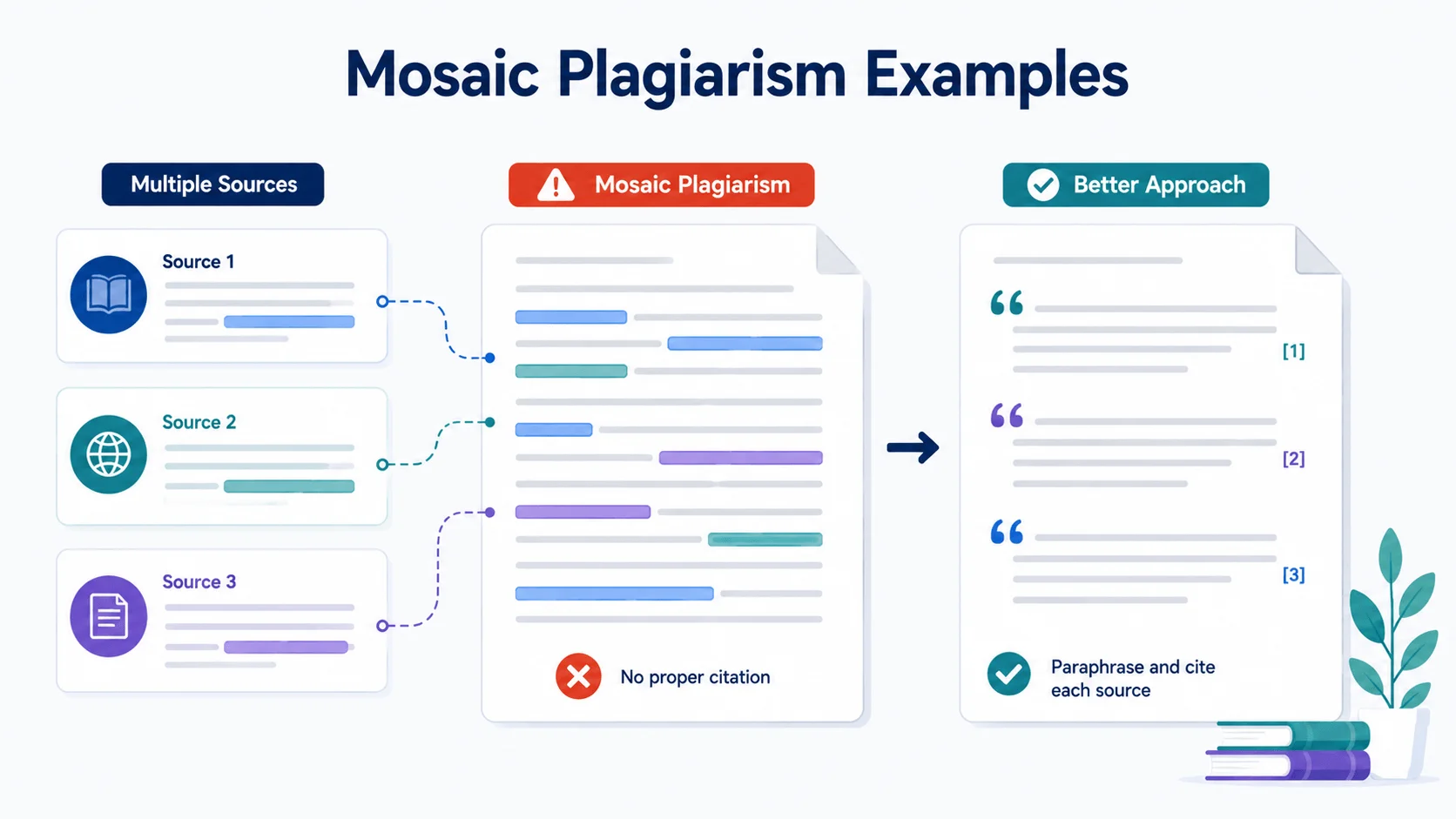
Mosaic plagiarism, also called patchwork plagiarism, happens when a writer combines phrases, sentence structures, or ideas from multiple sources into new text with only minor wording changes.
Unlike direct plagiarism, the copied material is partially modified. However, the writing still relies heavily on the language and structure of the original sources rather than independent synthesis. This type of plagiarism commonly appears in literature reviews and background sections.
Example
A literature review paragraph combines lightly rewritten sentences from several published studies while keeping much of the original phrasing and structure.
How to Avoid It
Write from notes instead of source articles
Separate reading from drafting
Build an original structure for the discussion
Focus on synthesis rather than sentence rewriting
3. Paraphrasing Plagiarism
Definition
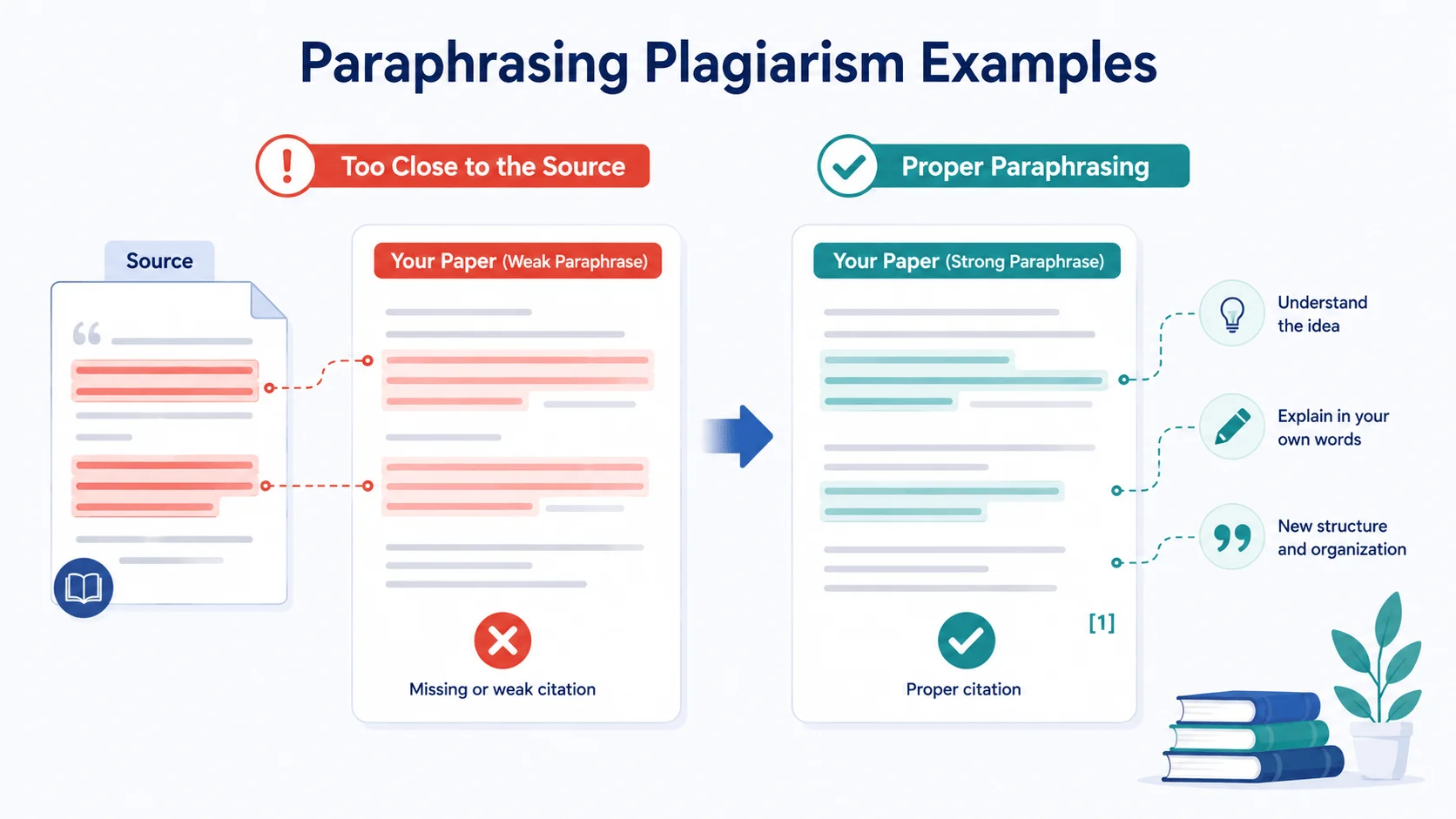
Paraphrasing plagiarism occurs when someone rewrites source material using different words while preserving the original logic, structure, or expression.
Many researchers mistakenly believe that replacing keywords or using synonyms is enough to create original writing. However, if the sentence organization and reasoning closely follow the source text, the writing may still be considered plagiarism.
Example
A manuscript rewrites a published abstract with minor wording changes while keeping the same sentence flow and argument structure.
How to Avoid It
Rewrite ideas using a completely new structure
Add your own interpretation or analysis
Summarize concepts from understanding
Avoid sentence-by-sentence rewriting
4. Self-Plagiarism
Definition
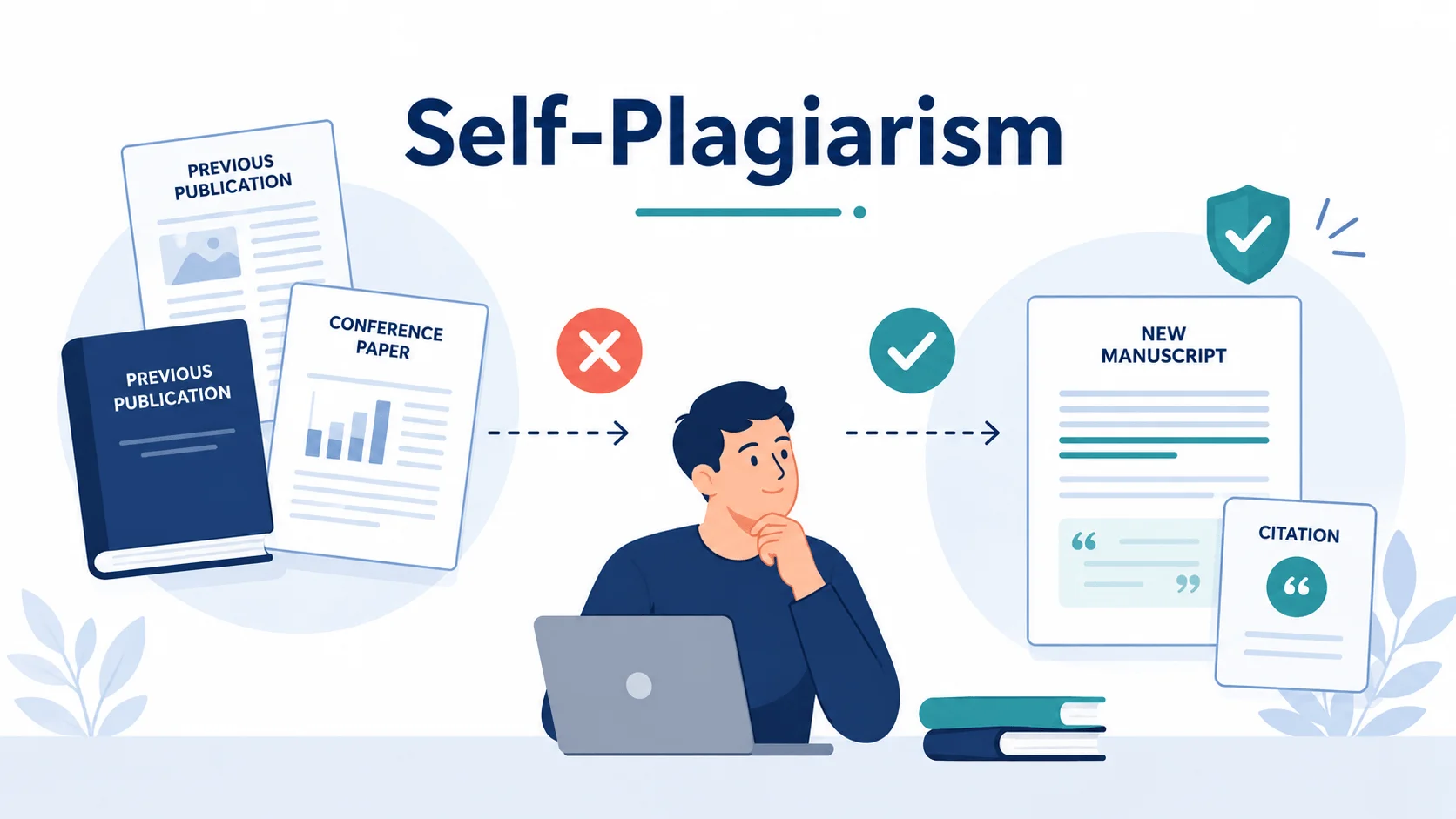
Self-plagiarism happens when researchers reuse their own previously published content without proper acknowledgment or disclosure.
Although the material originally belongs to the same author, academic journals still expect submitted manuscripts to contain substantially original content. Reusing published text, data, figures, or analyses without citation can create misleading impressions about the novelty of the work.
Example
A researcher reuses large portions of a previously published introduction or methods section in a new journal submission without citing the earlier paper.
How to Avoid It
Cite previous publications when reusing content
Review journal policies on text reuse and duplicate publication
Disclose overlapping material during submission when necessary
Rewrite standard sections instead of copying earlier wording
5. Duplicate Publication
Definition
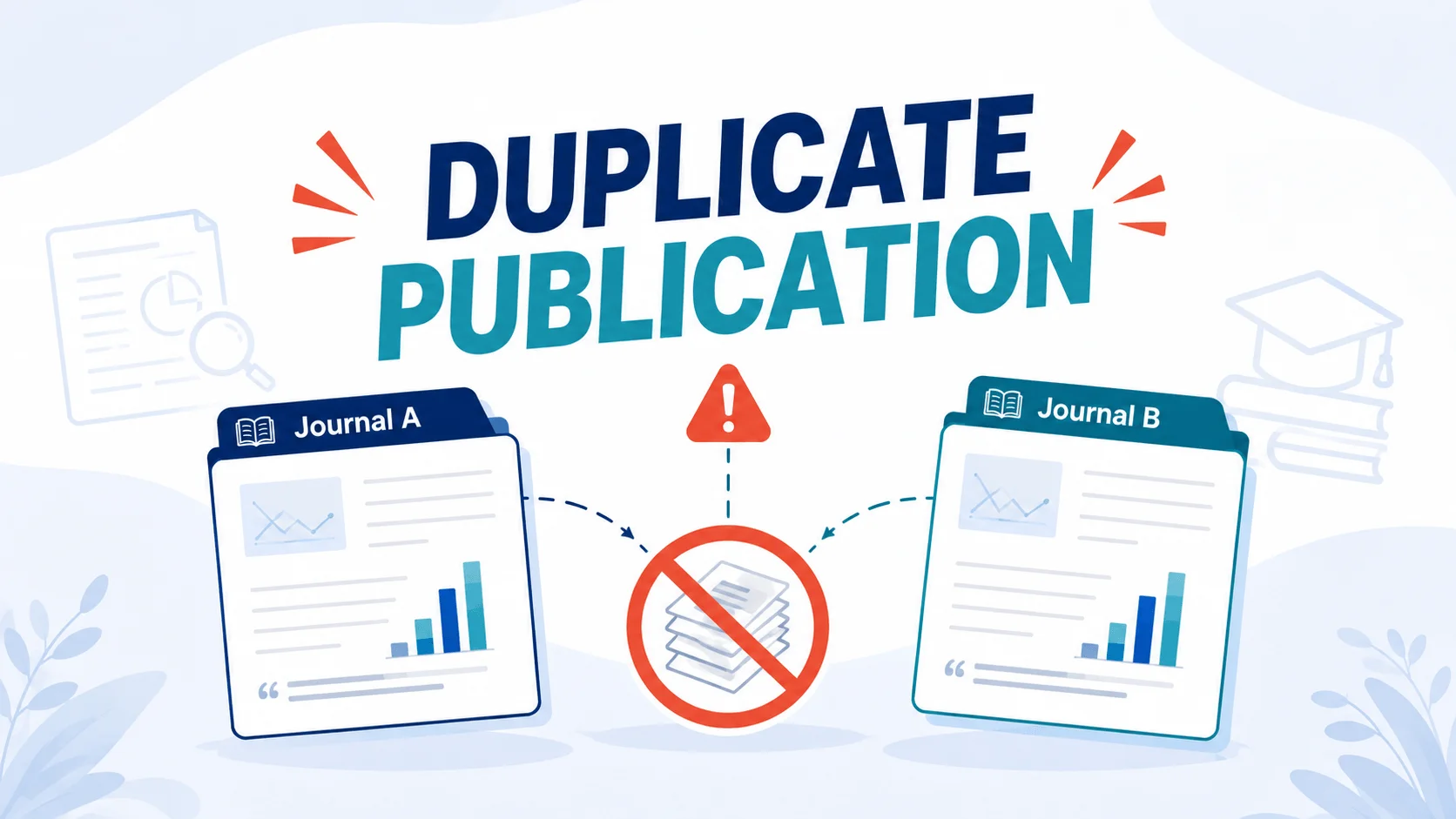
Duplicate publication happens when the same research is submitted to or published in multiple journals without proper disclosure.
This type of plagiarism usually involves substantial overlap in data, analysis, results, or conclusions across different publications. Because academic journals expect original submissions, duplicate publication can distort the scientific record and create misleading publication counts.
Example
A researcher submits the same manuscript to multiple journals simultaneously or republishes an already published study in another journal with only minor modifications.
How to Avoid It
Submit manuscripts to only one journal at a time
Withdraw a submission properly before sending it elsewhere
Review publisher policies on duplicate publication
Disclose related or overlapping manuscripts during submission
6. Redundant Publication
Definition
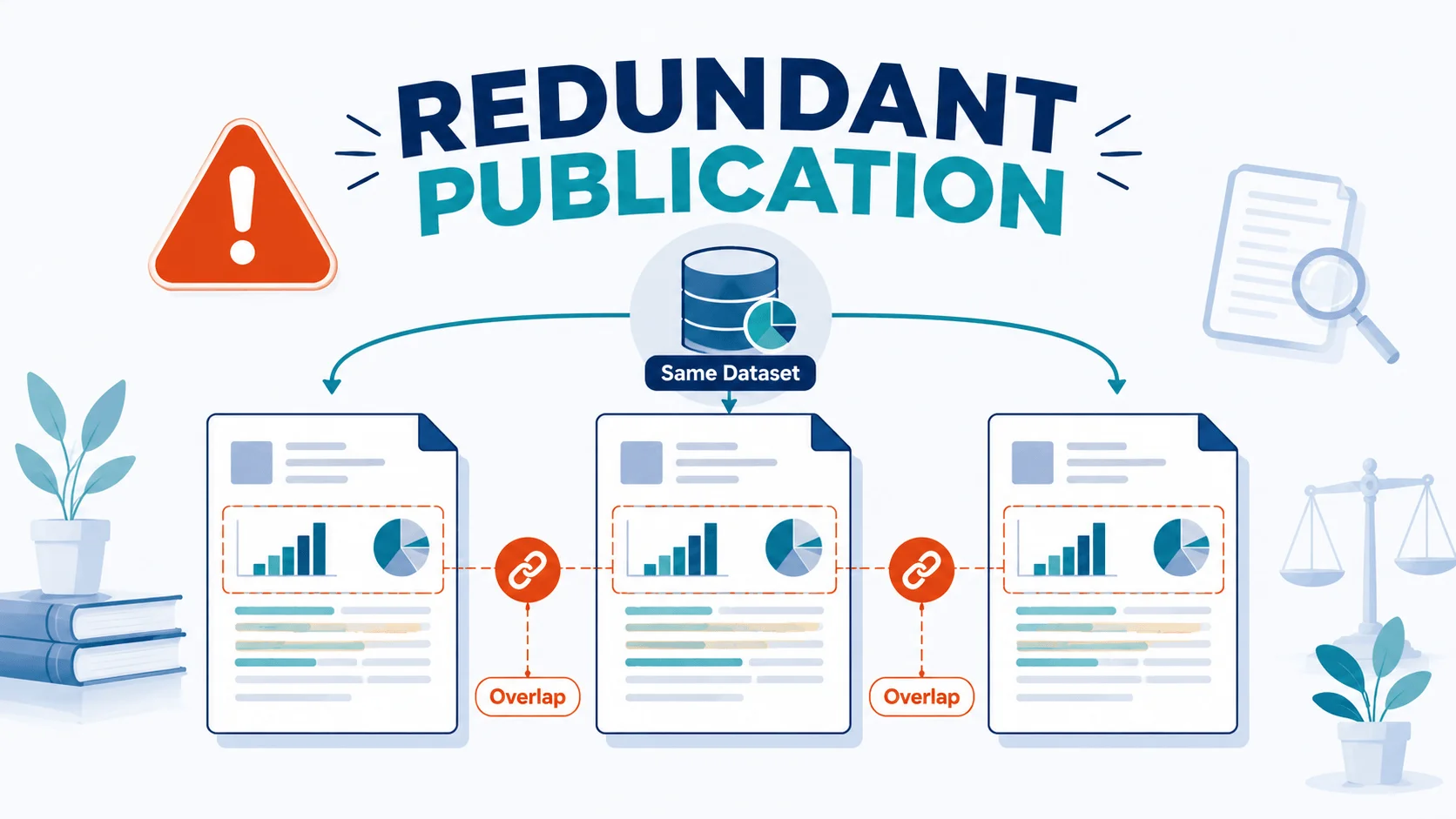
Redundant publication happens when multiple papers contain substantially overlapping content, data, or findings without clear justification or disclosure.
Unlike duplicate publication, redundant publication usually involves partially modified versions of the same research rather than identical manuscripts. This practice can create an inflated impression of research productivity and may mislead readers about the amount of independent evidence available on a topic.
Example
A researcher publishes several papers based on the same dataset with only minor changes to the analysis, discussion, or presentation of results.
How to Avoid It
Be transparent about related manuscripts and prior publications
Clearly explain differences between datasets or analyses
Cite earlier related studies appropriately
Avoid excessive overlap in text, figures, or findings
7. Text Recycling
Definition
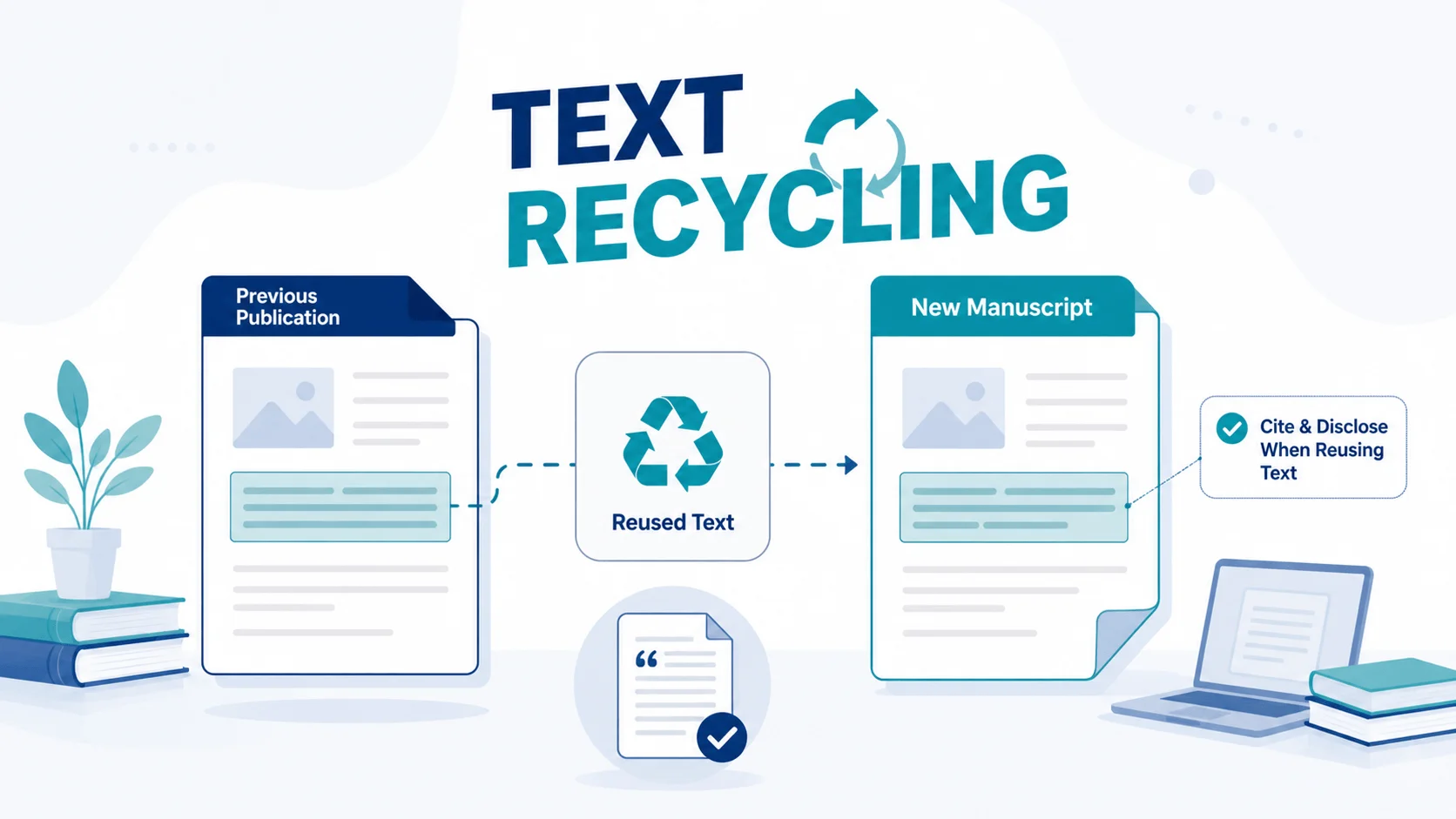
Text recycling refers to reusing portions of text from an author’s previous publications in a new manuscript without clear acknowledgment.
This practice most commonly appears in methodology, background, or theoretical framework sections where similar descriptions are repeated across related studies. Although some degree of text reuse may be acceptable in certain disciplines, excessive recycling can still raise ethical concerns if readers are not informed about the overlap.
Example
A researcher reuses methodology descriptions from an earlier published paper in a new journal submission without citation or disclosure.
How to Avoid It
Rewrite reusable sections whenever possible
Cite earlier publications when reusing text
Disclose overlapping material if required by the journal
Follow journal-specific policies on text reuse and self-overlap
8. Source-Based Plagiarism
Definition
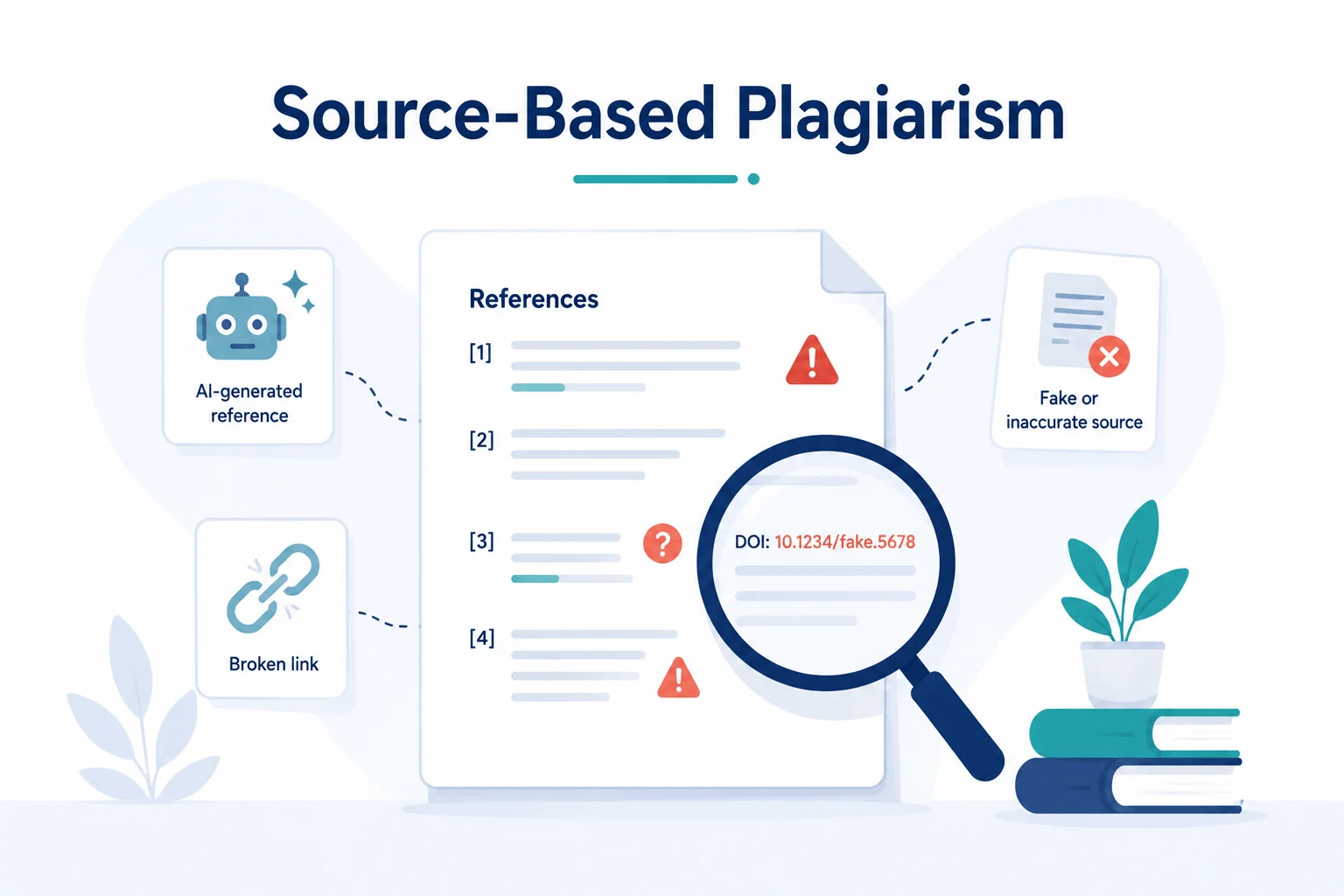
Source-based plagiarism occurs when a writer misrepresents the sources behind an idea, claim, or piece of evidence.
This can include citing a source that was not actually read, referencing a paper that does not support the stated claim, or using secondary citations as if they came from the original study. Unlike direct plagiarism, the problem is not copied wording but inaccurate or misleading attribution.
Example
A manuscript cites several studies in support of a statistical claim, but some of those papers were copied from another review article and were never checked against the original sources.
How to Avoid It
Read primary sources directly whenever possible
Verify that each citation supports the exact claim being made
Avoid copying reference lists from other papers
Double-check author names, publication years, and source details before submission
9. Image Plagiarism
Definition
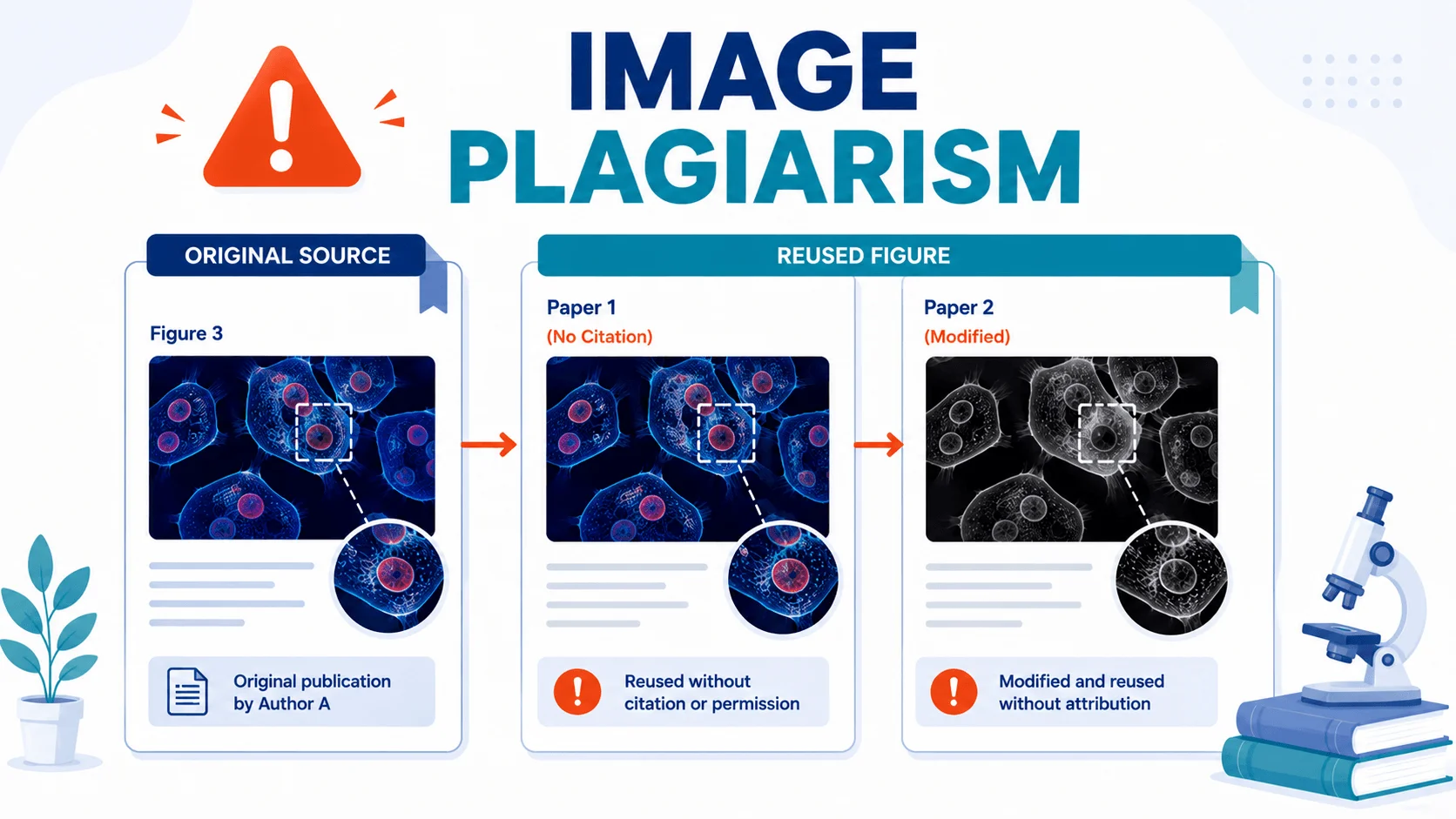
Image plagiarism occurs when figures, charts, photographs, or scientific images are reused, modified, or presented without proper permission or attribution.
In academic publishing, this may involve copying visual materials from previously published papers or altering images in ways that misrepresent the original data. Because research images are considered part of the scientific record, improper reuse can raise both ethical and copyright concerns.
Example
A journal submission includes microscopy images or figures reused from another publication without citation, permission, or disclosure of prior publication.
How to Avoid It
Obtain reuse permission when required by the publisher
Cite the original source of reused figures or images
Keep original image files and research records
Avoid excessive or misleading image editing before publication
10. Data Plagiarism
Definition
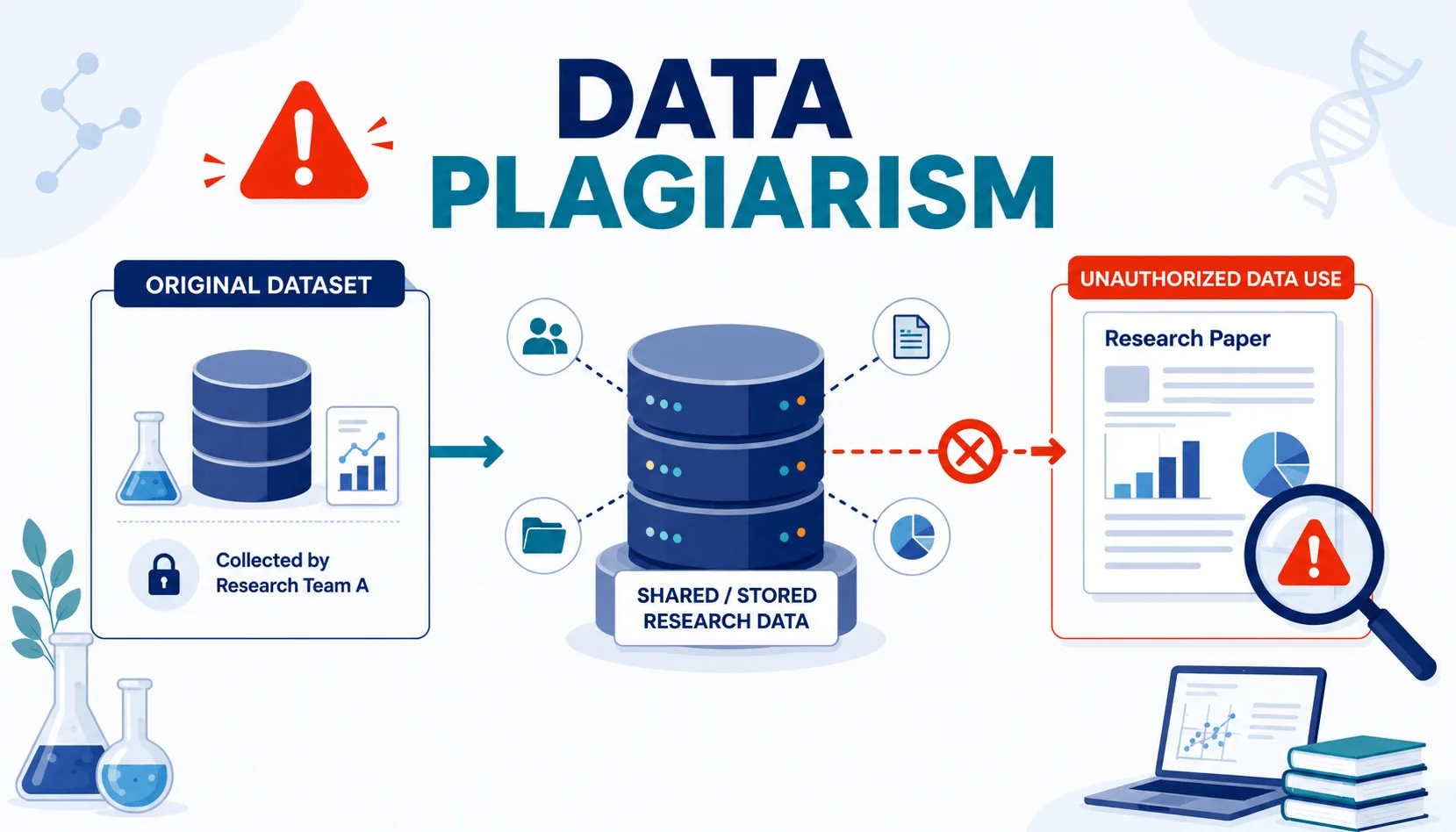
Data plagiarism occurs when researchers use data, experimental results, or datasets without proper permission, attribution, or acknowledgment.
This may involve unpublished laboratory data, shared databases, collaborative research materials, or data obtained from other researchers. Because research data represents intellectual and scientific work, unauthorized use can violate both publication ethics and data ownership agreements.
Example
A researcher includes another laboratory’s dataset in a manuscript analysis without permission from the data owners or proper citation of the original source.
How to Avoid It
Clarify data ownership and usage rights before using shared data
Cite datasets and data repositories appropriately
Obtain permission for unpublished or collaborative data
Maintain clear and transparent data documentation throughout the research process
11. Idea Plagiarism
Definition
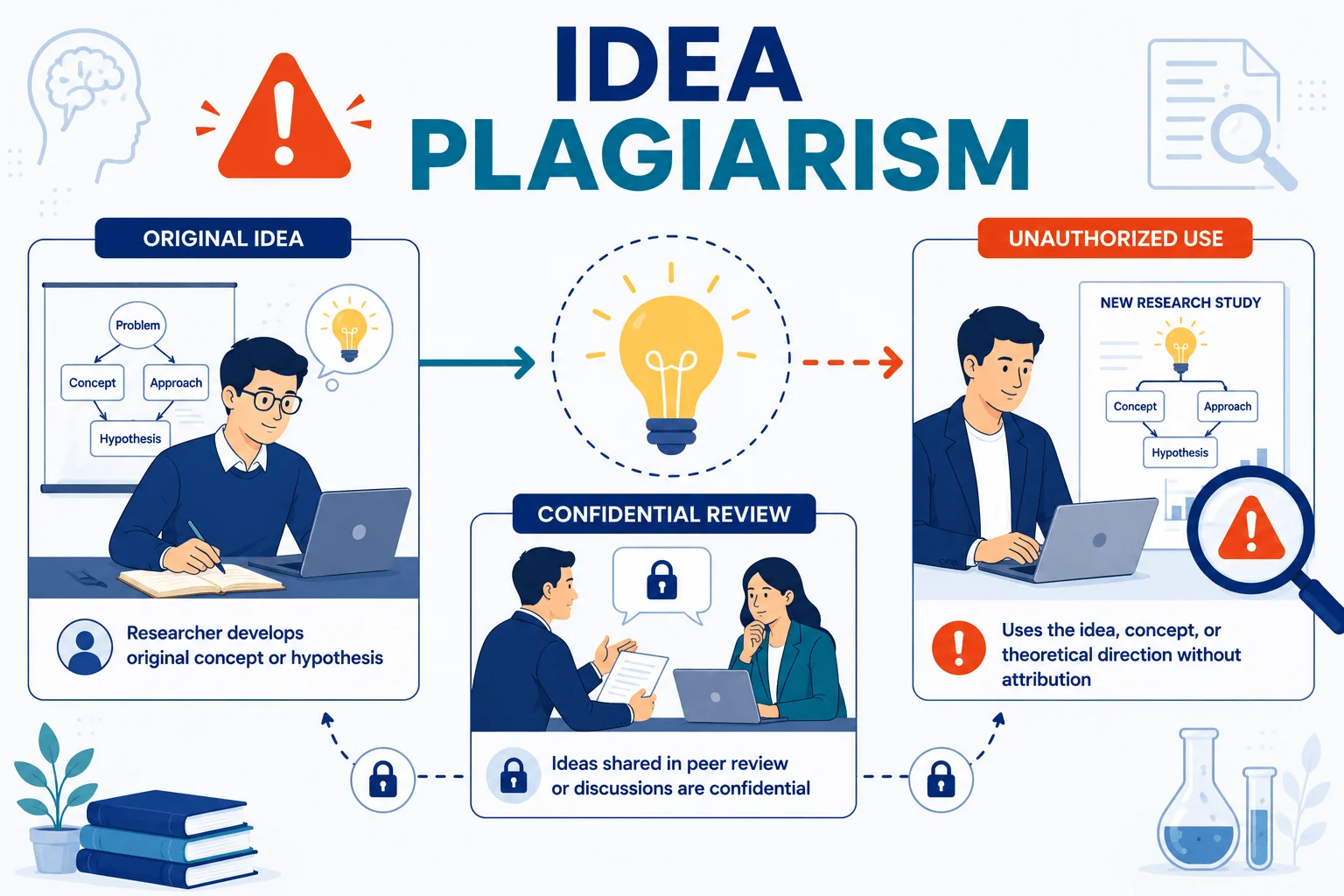
Idea plagiarism occurs when someone uses another researcher’s original concept, hypothesis, theoretical framework, or research direction without proper acknowledgment.
Unlike text plagiarism, the issue is not copied wording but the unauthorized use of intellectual contributions. This type of plagiarism can be difficult to detect because ideas may be presented in entirely different language while still originating from another person’s work.
Example
A researcher develops a study based on theoretical ideas or research directions obtained through confidential peer review discussions without crediting the original source.
How to Avoid It
Acknowledge intellectual contributions appropriately
Respect confidentiality during peer review and collaboration
Clarify authorship and contribution boundaries early
Keep transparent records of collaborative research discussions
12. Undisclosed AI-Generated Content
Definition
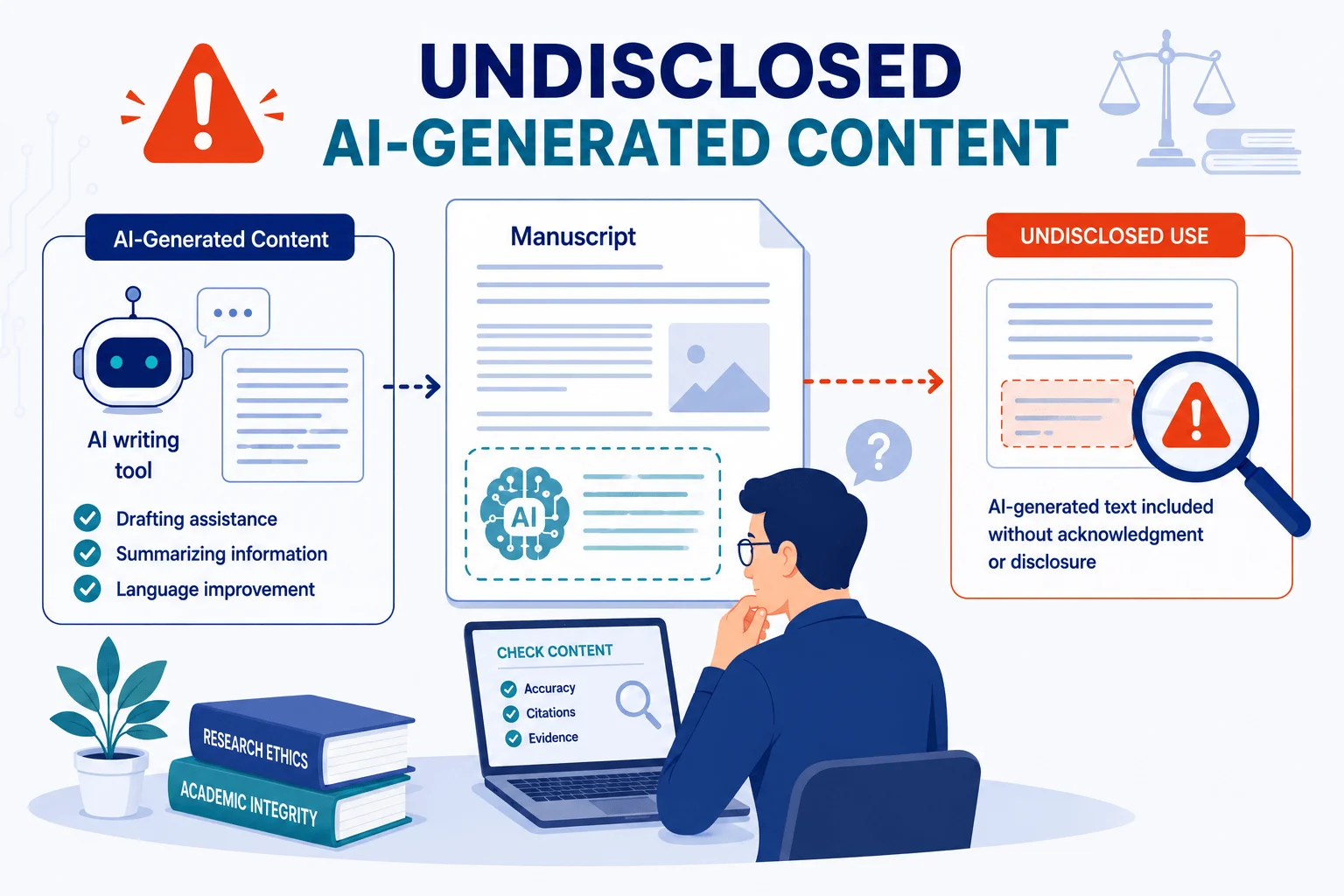
Undisclosed AI-generated content refers to using artificial intelligence tools to produce academic text without following journal disclosure requirements.
Many publishers now allow limited AI assistance for language editing or drafting support, but researchers are typically expected to disclose how AI tools were used during manuscript preparation. Problems arise when AI-generated content is presented as entirely human-written work without transparency or proper verification.
Example
A manuscript includes AI-generated literature review sections or summaries without acknowledging the use of AI writing tools in the submission process.
How to Avoid It
Review publisher policies on AI-assisted writing
Disclose AI usage when required by the journal
Manually verify all AI-generated content and citations
Use AI as a support tool rather than a replacement for original scholarly analysis
Final Thoughts
Understanding the different types of plagiarism is increasingly important in academic publishing, where originality, transparency, and proper attribution all support research integrity.
As this guide shows, plagiarism can appear in many forms, from copied wording to problems involving sources, authorship, data, images, prior publications, and AI use.
Hopefully, this guide has made the topic feel clearer and less overwhelming. Strong academic writing develops through awareness, practice, and responsible research habits over time.
FAQ

What is the most common type of plagiarism in academic writing?
Paraphrasing plagiarism and mosaic plagiarism are among the most common forms in academic publishing because they often occur during literature review and manuscript drafting.
Can self-plagiarism lead to journal rejection?
Yes. Many journals consider undisclosed text reuse or duplicate publication a violation of publication ethics, especially when large sections overlap with previous work.
Is AI-generated content considered plagiarism?
AI-generated content itself is not always considered plagiarism, but undisclosed AI use, fabricated citations, or unverified generated text can create serious publication integrity concerns.
Do plagiarism detection tools identify paraphrased content?
Modern plagiarism detection software can identify certain forms of paraphrased or patchwork writing, especially when sentence structure and source overlap remain highly similar.
How can researchers avoid plagiarism during manuscript writing?
Researchers can reduce plagiarism risks by citing sources carefully, writing from understanding instead of copying, maintaining accurate research notes, and reviewing manuscripts before submission.