

The Consequences of Plagiarism in Modern Academic Publishing

The consequences of plagiarism can extend well beyond a single similarity report or rejected manuscript. What begins as an overlap concern during editorial screening may later involve reputational damage, institutional investigation, funding risks, or long-term publishing restrictions.
This guide explores the immediate and lasting consequences of plagiarism, including how journals, institutions, and publishers evaluate plagiarism-related concerns throughout the publication process.
Understanding What Counts as Plagiarism
Before discussing the consequences of plagiarism, it is important to understand how plagiarism is typically defined in academic publishing.
In research environments, plagiarism generally refers to the uncredited use of another person’s words, ideas, data, structure, or intellectual contribution. Journal editors increasingly evaluate plagiarism not only as a writing issue, but also as a broader research integrity concern connected to originality, transparency, and attribution practices.
Importantly, plagiarism is not limited to direct copy-paste behavior. In academic publishing, concerns may also involve:
close paraphrasing without proper attribution
reuse of previously published material without disclosure
unattributed synthesis of existing research
copied figures, tables, or data presentation
Because of this, plagiarism assessments often depend heavily on context.
Immediate Consequences of Plagiarism in Publishing
Manuscript Rejection and Editorial Concerns
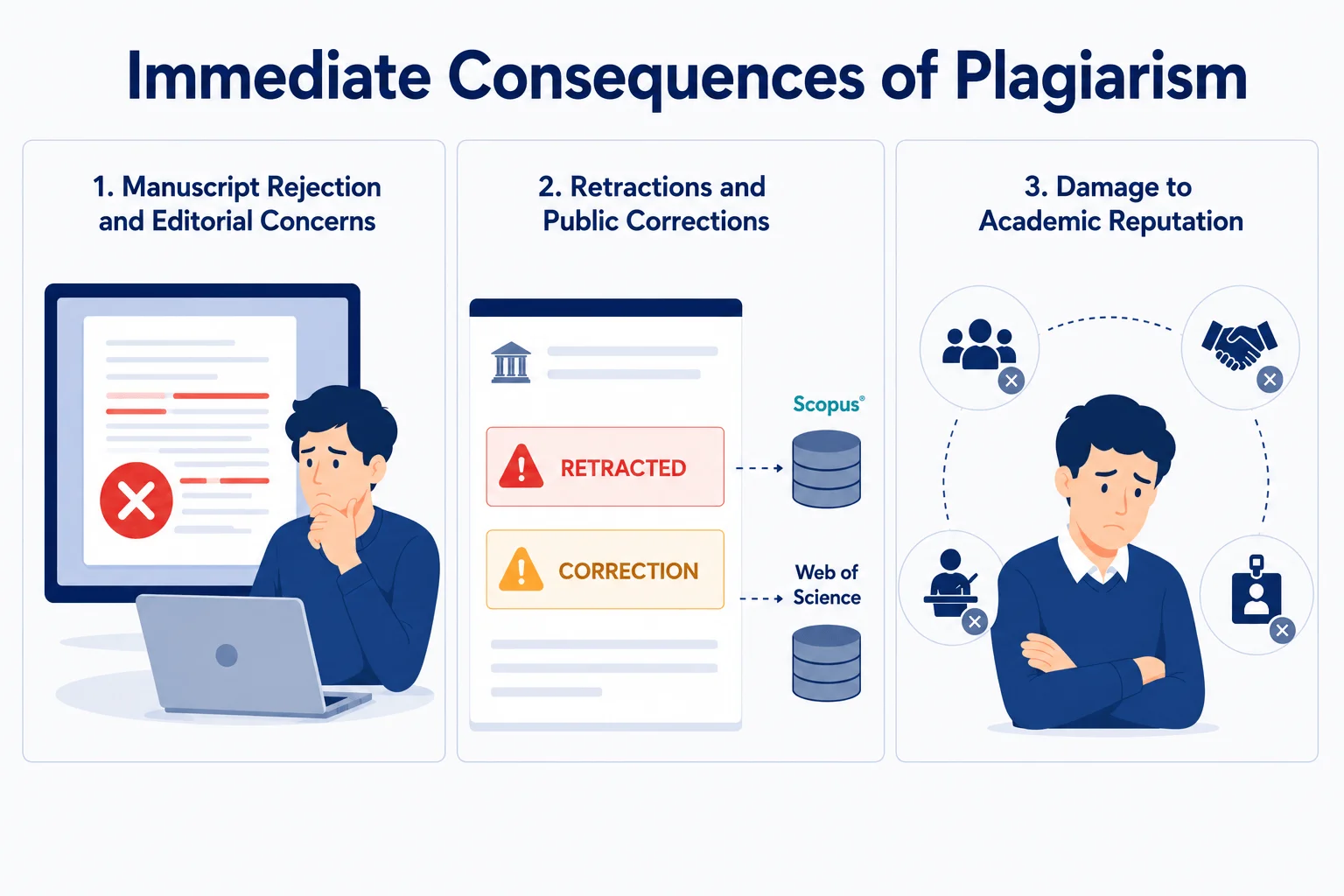
One of the most common consequences of plagiarism is manuscript rejection during initial editorial screening. Journals routinely evaluate submissions using similarity-detection software, and problematic overlap may lead to desk rejection before peer review even begins.
In some cases, editors request additional clarification regarding citations, reused methodology sections, or overlapping language. Severe or repeated issues may also result in internal author flagging, particularly within the same publisher group.
Even relatively small sections of duplicated content can attract scrutiny when they appear in abstracts, discussions, or claims of originality.
Retractions and Public Corrections
If plagiarism is discovered after publication, journals may issue either a correction or a full retraction depending on the severity of the overlap.
Corrections are generally used for limited attribution problems, while retractions are reserved for cases involving substantial duplication or misleading claims of originality. Importantly, retraction notices usually remain permanently visible on journal websites and indexing databases.
Because platforms such as Scopus and Web of Science maintain publication records publicly, plagiarism-related actions can continue affecting an author’s visibility long after the original paper is removed or corrected.
Damage to Academic Reputation
Beyond publication outcomes, plagiarism can also damage professional credibility within the research community.
Potential consequences include:
Loss of trust from reviewers and collaborators
Reduced opportunities for multi-author projects
Greater difficulty securing conference invitations or editorial positions
For researchers working in competitive publication environments, reputational damage may ultimately become one of the most serious consequences of plagiarism.
Long-Term Professional and Institutional Consequences
The consequences of plagiarism often extend well beyond a single rejected manuscript or retracted article. In many cases, plagiarism concerns can affect institutional standing, future funding opportunities, and long-term academic credibility.
Institutional Investigations and Disciplinary Actions
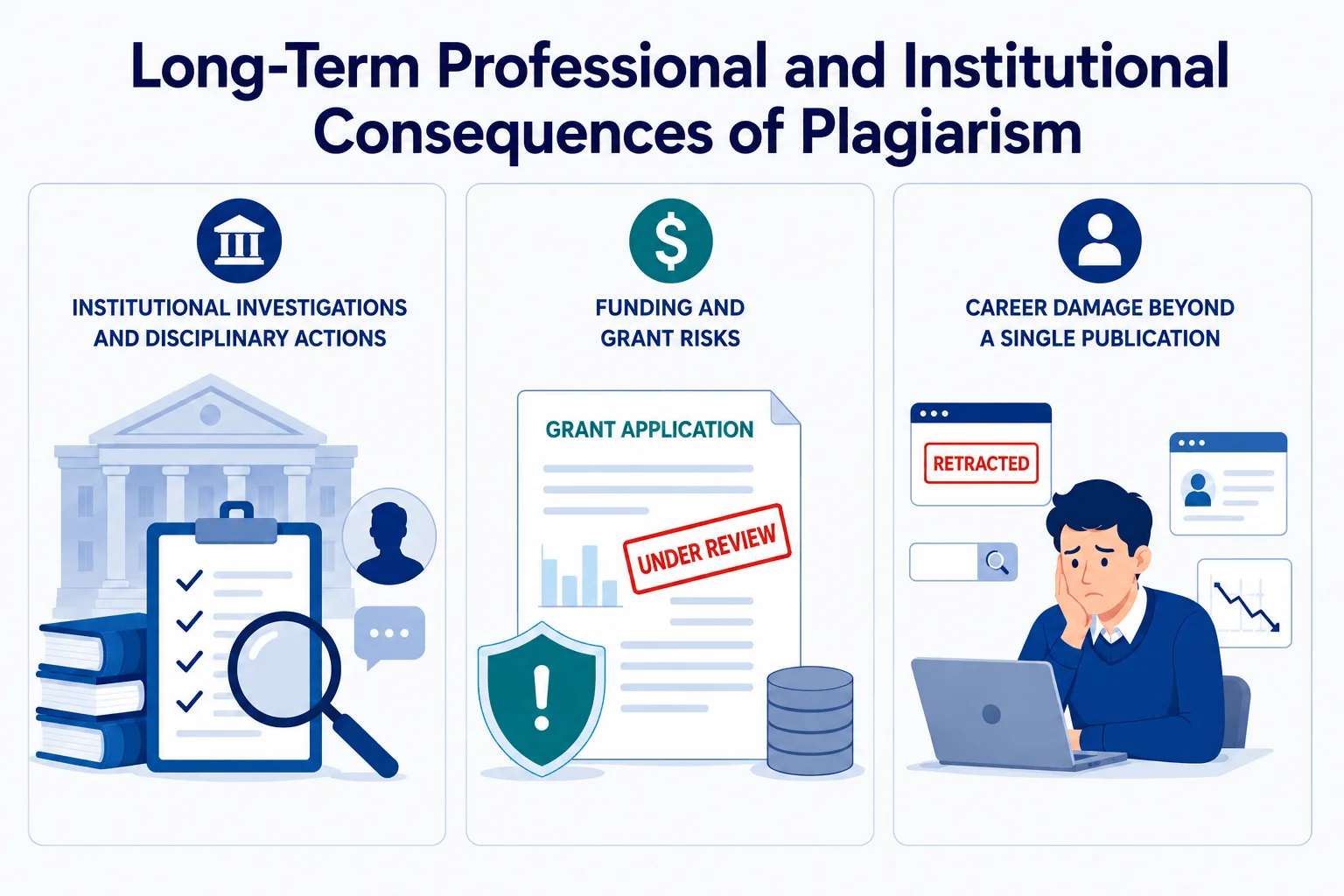
When plagiarism allegations involve published research, universities and research institutions may initiate formal misconduct procedures. These investigations are typically handled through ethics committees or research integrity offices.
Depending on the severity of the case, institutions may:
Conduct internal reviews of related publications
Request explanations from co-authors and supervisors
Suspend research responsibilities or academic appointments
In serious or repeated cases, disciplinary actions may include contract termination or restrictions on future institutional affiliation.
Funding and Grant Risks
Funding agencies increasingly consider research integrity records during grant evaluation processes. Ongoing misconduct investigations, retractions, or confirmed plagiarism findings may affect both current funding and future applications.
Some agencies also require researchers to disclose active investigations or institutional disciplinary actions during the application process. As a result, plagiarism concerns can create financial and operational consequences that extend beyond publishing itself.
Career Damage Beyond a Single Publication
One of the most difficult aspects of plagiarism-related misconduct is the persistence of reputational damage. Retraction notices, editorial statements, and public indexing records often remain searchable for years.
This long-term visibility may lead to:
Reduced confidence in future publications
Greater scrutiny of citation practices and authorship claims
Difficulty rebuilding trust with collaborators, reviewers, and editors
Even after formal investigations end, restoring professional credibility can become a prolonged challenge, particularly in highly competitive research fields.
Legal and Copyright Consequences Researchers Often Ignore
Discussions about the consequences of plagiarism usually focus on ethics violations or manuscript rejection. However, plagiarism can also create legal and contractual risks, particularly in journal publishing environments where copyright ownership and licensing agreements are strictly enforced.
Copyright Violations and Publisher Claims
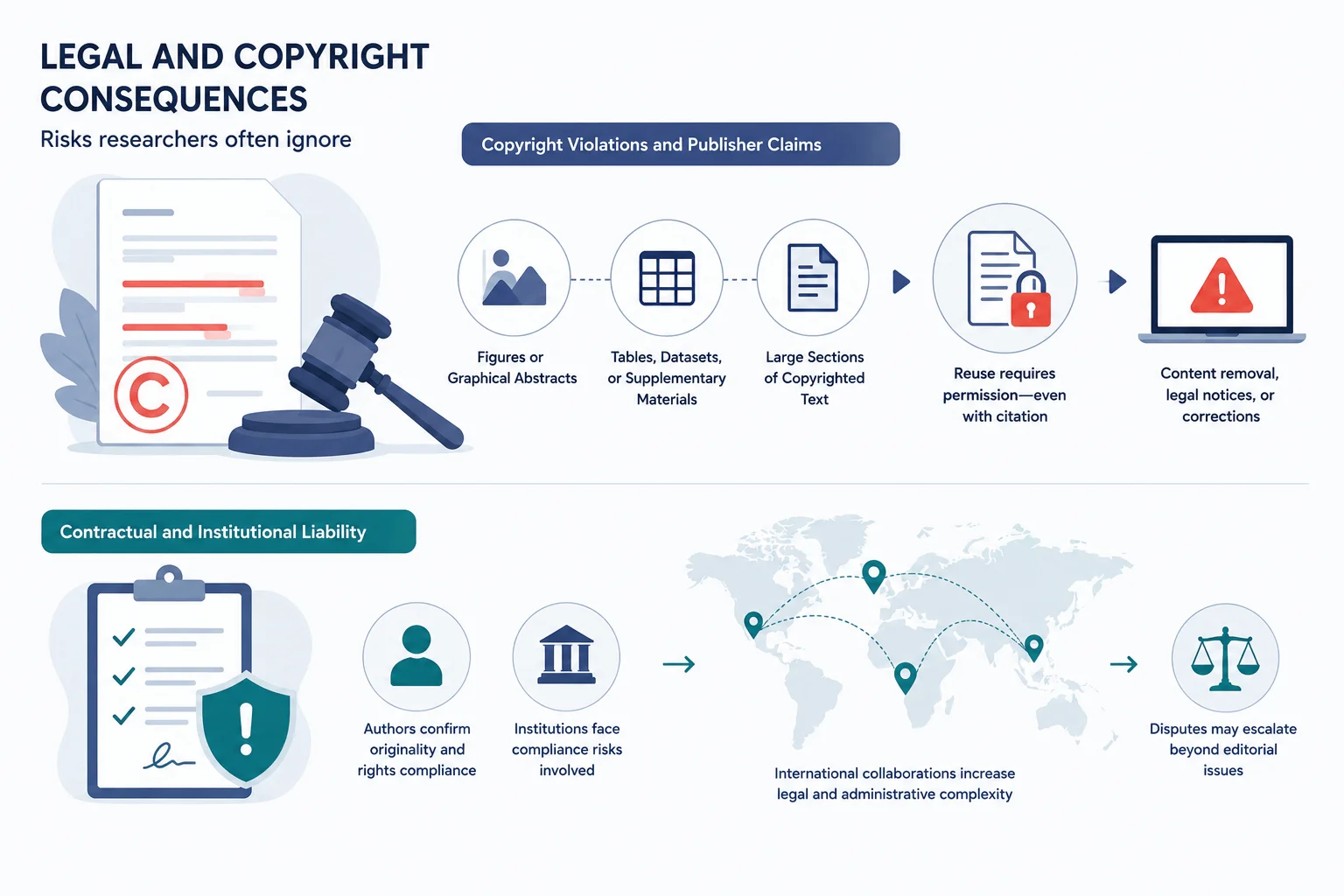
Plagiarism and copyright infringement are related but not identical issues. A manuscript may violate academic ethics standards even when no copyright breach exists, while unauthorized reuse of protected material can create legal exposure regardless of citation intent.
Problems commonly arise when researchers reuse:
Published figures or graphical abstracts
Tables, datasets, or supplementary materials
Large sections of copyrighted text
In many journals, previously published content cannot be reproduced without formal permission from the copyright holder. This applies even when the original source is cited correctly.
Publishers may request content removal, issue legal notices, or require post-publication corrections if unauthorized reuse is identified.
Contractual and Institutional Liability
Plagiarism concerns may also involve violations of publishing agreements signed during manuscript submission. Most publishers require authors to confirm that submitted work is original and does not infringe on third-party rights.
If misconduct is identified, consequences may extend beyond the individual author. Institutions can face compliance concerns, especially when funded research or collaborative projects are involved.
Risks become more complex in international collaborations, where copyright regulations, data ownership rules, and publication standards may differ across countries and institutions. In these situations, plagiarism disputes can evolve into broader legal and administrative conflicts rather than remaining solely editorial issues.
How Researchers Can Reduce the Risk of Plagiarism
Reducing plagiarism risk requires more than checking a manuscript at the final submission stage. In most cases, prevention depends on consistent writing, citation, and review practices throughout the research process.
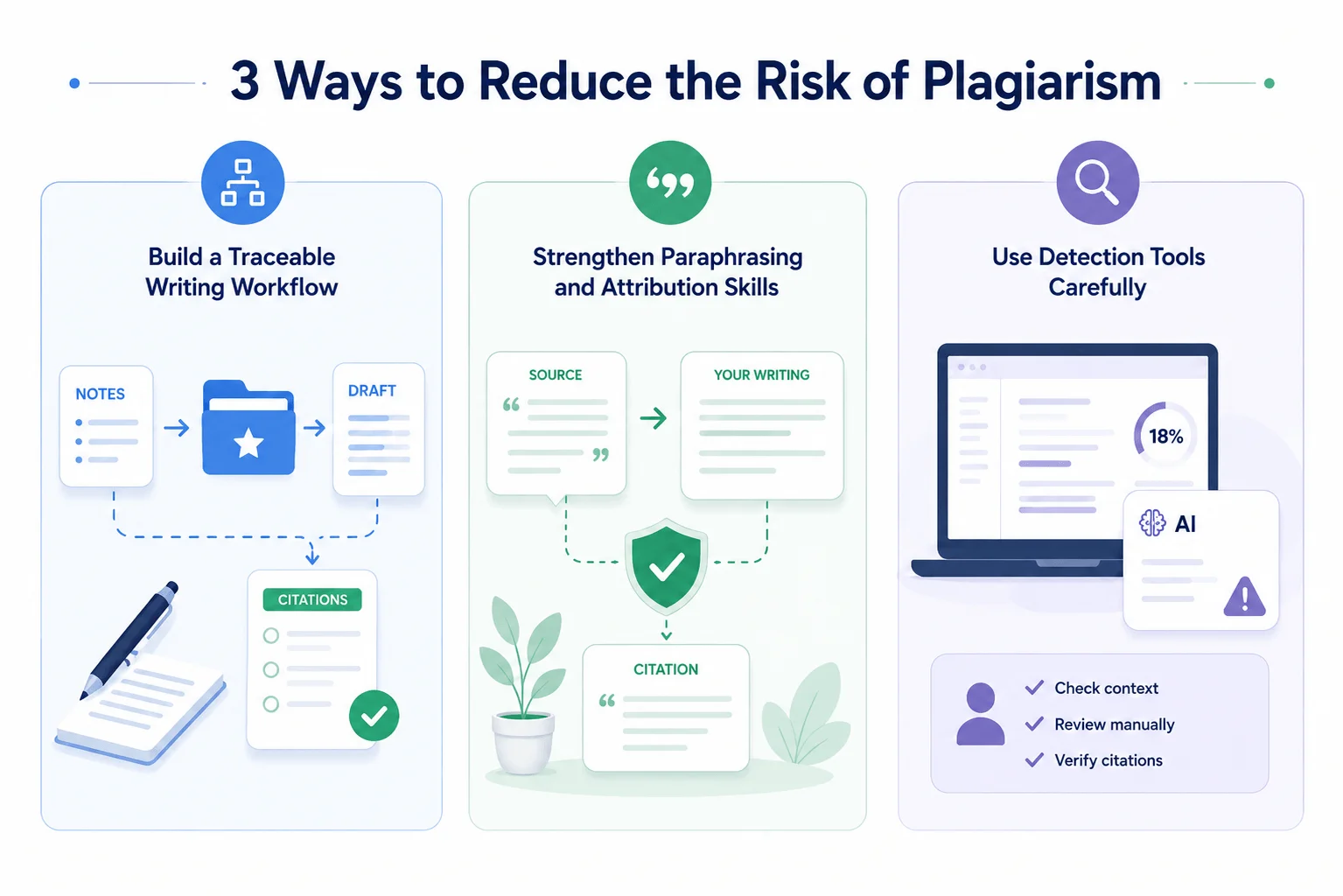
Build a Traceable Writing Workflow
A structured workflow helps researchers separate source material from original writing during drafting and revision. Organizing notes clearly, tracking citations early, and keeping referenced text identifiable can significantly reduce accidental overlap, especially in collaborative projects.
Strengthen Paraphrasing and Attribution Skills
Effective academic paraphrasing involves synthesizing and interpreting information rather than simply replacing words. Even heavily rewritten content still requires attribution when the underlying idea, structure, or analytical framing comes from another source.
Use Detection Tools Carefully
Similarity-detection tools are useful for pre-submission screening, but similarity scores always require context. AI-assisted paraphrasing can also create hidden overlap or citation problems, making manual review essential before journal submission.
Final Thoughts
Now that we’ve explored the major consequences of plagiarism, the risks involved in academic publishing often become much easier to recognize.
A plagiarism issue may start with a similarity report. But in some cases, the impact can extend much further and affect publication opportunities, professional credibility, funding, and long-term research careers.
Hopefully, this guide gives you a clearer understanding of how journals evaluate plagiarism and why careful citation, transparent writing, and responsible research practices matter long before submission begins.
FAQ
What are the most serious consequences of plagiarism in research?
The most serious consequences include article retraction, reputational damage, institutional investigation, and loss of funding opportunities.
Can plagiarism permanently affect an academic career?
Yes. Public retractions and misconduct records may continue affecting publication, collaboration, and funding opportunities for years.
Is self-plagiarism considered misconduct in academic publishing?
In many cases, yes. Reusing previously published material without disclosure can violate journal and publisher policies.
Can researchers face legal consequences for plagiarism?
Yes. Copyright infringement, unauthorized figure reuse, and publishing agreement violations may create legal and contractual risks.
Do plagiarism detection tools determine misconduct automatically?
No. Similarity reports only identify text overlap. Editors evaluate context, attribution quality, and intent separately.