

8 Common Types & Examples of Plagiarism in Academic Writing

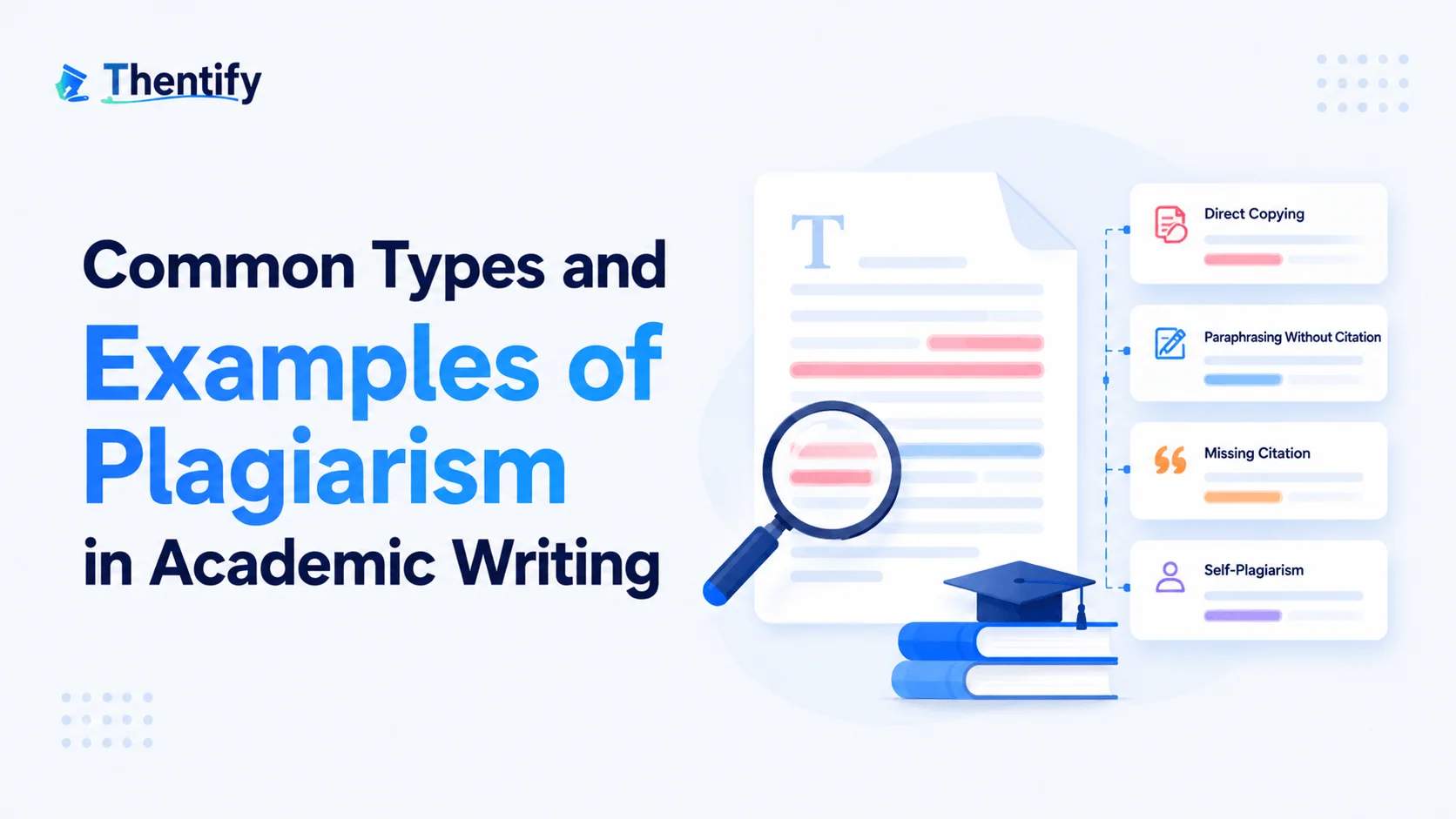
Many plagiarism problems do not involve obvious copy-and-paste text. Small paraphrasing changes, missing citations, recycled content, and AI-generated wording can still trigger serious academic concerns.
Some plagiarism problems are obvious, while others are much harder to recognize during drafting.
This article breaks down common plagiarism examples in academic writing and explains how researchers can identify and avoid them before submission.
1. Direct Plagiarism Examples
What Is Direct Plagiarism?
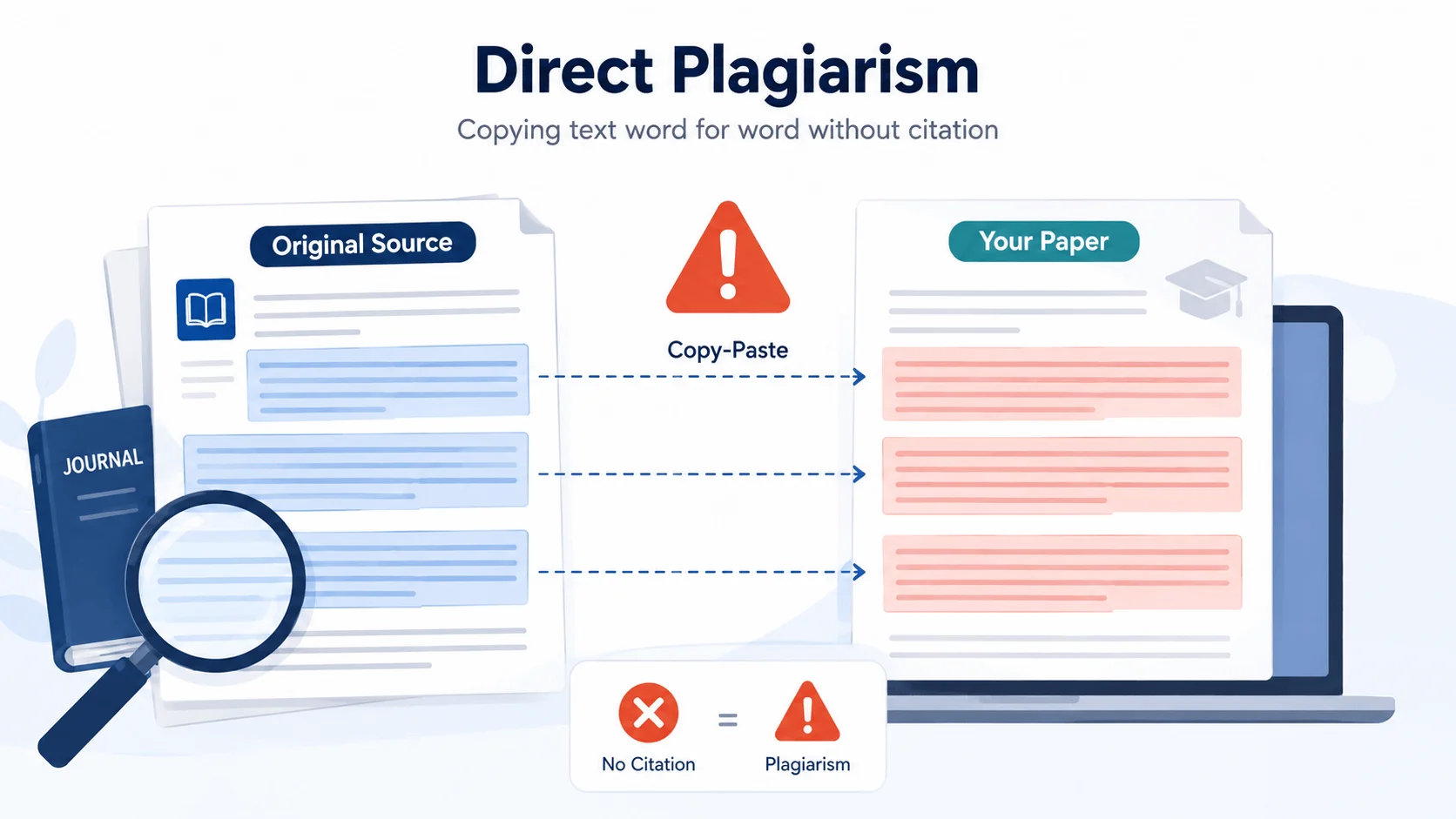
Direct plagiarism means copying someone else’s work word for word without giving credit. Common examples include copying text from articles or websites, submitting downloaded essays as your own work, or slightly changing a few words while keeping most of the original content.
Example Source Text
Digital communication has transformed the way individuals interact with information. Constant exposure to online content has shortened attention spans and increased dependence on rapid forms of media consumption. As a result, many educators argue that students now struggle to engage deeply with long-form academic reading.
Carr, Nicholas. The Shallows: What the Internet Is Doing to Our Brains. New York: W.W. Norton, 2010.
Draft
Digital communication has transformed the way people interact with information. Constant exposure to online content has shortened attention spans and increased dependence on quick forms of media consumption. Many educators believe that students now struggle to engage deeply with long academic readings.
Explanation
This draft is an example of direct plagiarism because the writer copies most of the original wording and sentence structure from the source text while making only minor word substitutions. Although a few terms are changed, the ideas and phrasing remain substantially the same. The writer also fails to include quotation marks or citations to acknowledge the original author.
How to Fix Direct Plagiarism
To avoid direct plagiarism, writers should always cite borrowed material properly and rewrite ideas fully in their own words. If exact wording is necessary, quotation marks and clear attribution should be included.
Therefore, the previous draft should be revised as follows:
Corrected Draft
Nicholas Carr argues that modern internet use has significantly changed the way people process information. According to Carr, continuous interaction with fast-paced online media may reduce readers’ ability to concentrate on extended academic texts and encourage more superficial reading habits (Carr 2010).
2. Mosaic Plagiarism Examples
What Is Mosaic Plagiarism?
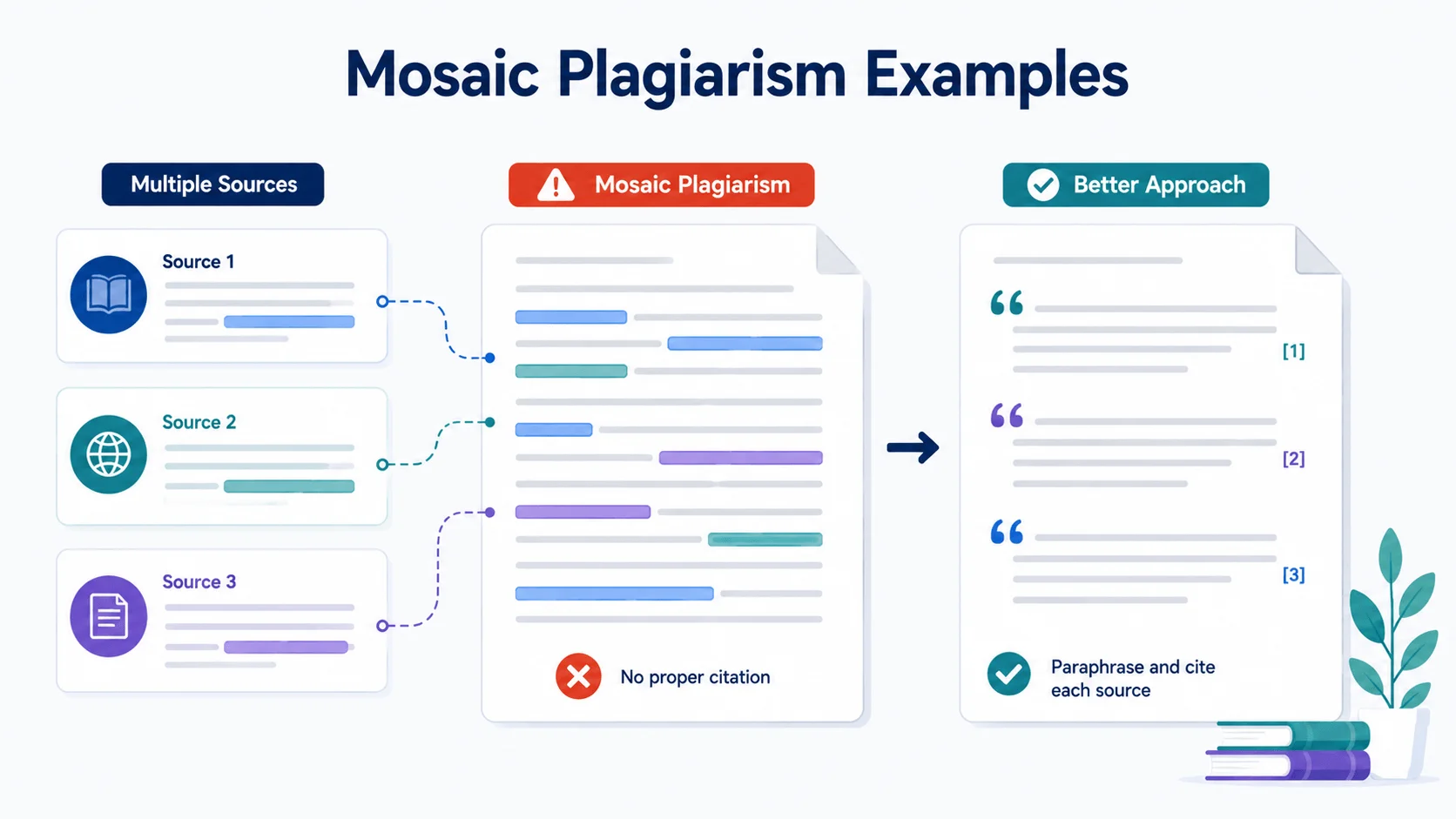
Mosaic plagiarism happens when a writer combines phrases or ideas from different sources while making only small wording changes. Common examples include mixing sentences from multiple articles without citation, copying technical phrases with slight edits, or using AI tools to paraphrase existing texts while keeping much of the original wording.
Example Source Text 1
Social media platforms are designed to maximize user engagement through personalized algorithms. These systems continuously analyze user behavior in order to recommend content that will keep individuals online for longer periods of time.
Pariser, Eli. The Filter Bubble. New York: Penguin Press, 2011.
Example Source Text 2
Excessive exposure to algorithm-driven content can reinforce confirmation bias by repeatedly presenting users with information that aligns with their existing beliefs and preferences.
Sunstein, Cass. #Republic: Divided Democracy in the Age of Social Media. Princeton: Princeton University Press, 2017.
Draft
Social media platforms are designed to maximize user engagement through personalized algorithms that analyze user behavior. These systems recommend content that keeps people online for longer periods of time. Excessive exposure to algorithm-driven content can also reinforce confirmation bias by repeatedly presenting users with information that matches their existing beliefs.
Explanation
This paragraph is an example of mosaic plagiarism because the writer pieces together language and ideas from multiple sources while making only minor wording changes. Although the paragraph appears somewhat original, many phrases and sentence patterns are taken directly from the source materials. In addition, the writer provides no citations to acknowledge the original authors.
Unlike direct plagiarism, mosaic plagiarism often mixes copied material with the writer’s own words, making the plagiarism more difficult to detect. However, the lack of proper attribution still makes the writing academically dishonest.
How to Fix Mosaic Plagiarism
To avoid mosaic plagiarism, writers should develop original sentence structures instead of patching together borrowed phrases. All outside ideas and wording should also be cited properly.
Therefore, the previous draft should be revised as follows:
Corrected Draft
Researchers have argued that social media algorithms strongly influence the way users consume information online. Pariser explains that digital platforms track user activity in order to increase engagement by recommending personalized content (Pariser 2011). Sunstein further notes that repeated exposure to similar viewpoints may strengthen confirmation bias and limit users’ exposure to differing perspectives (Sunstein 2017).
3. Paraphrasing Plagiarism Examples
What Is Paraphrasing Plagiarism?
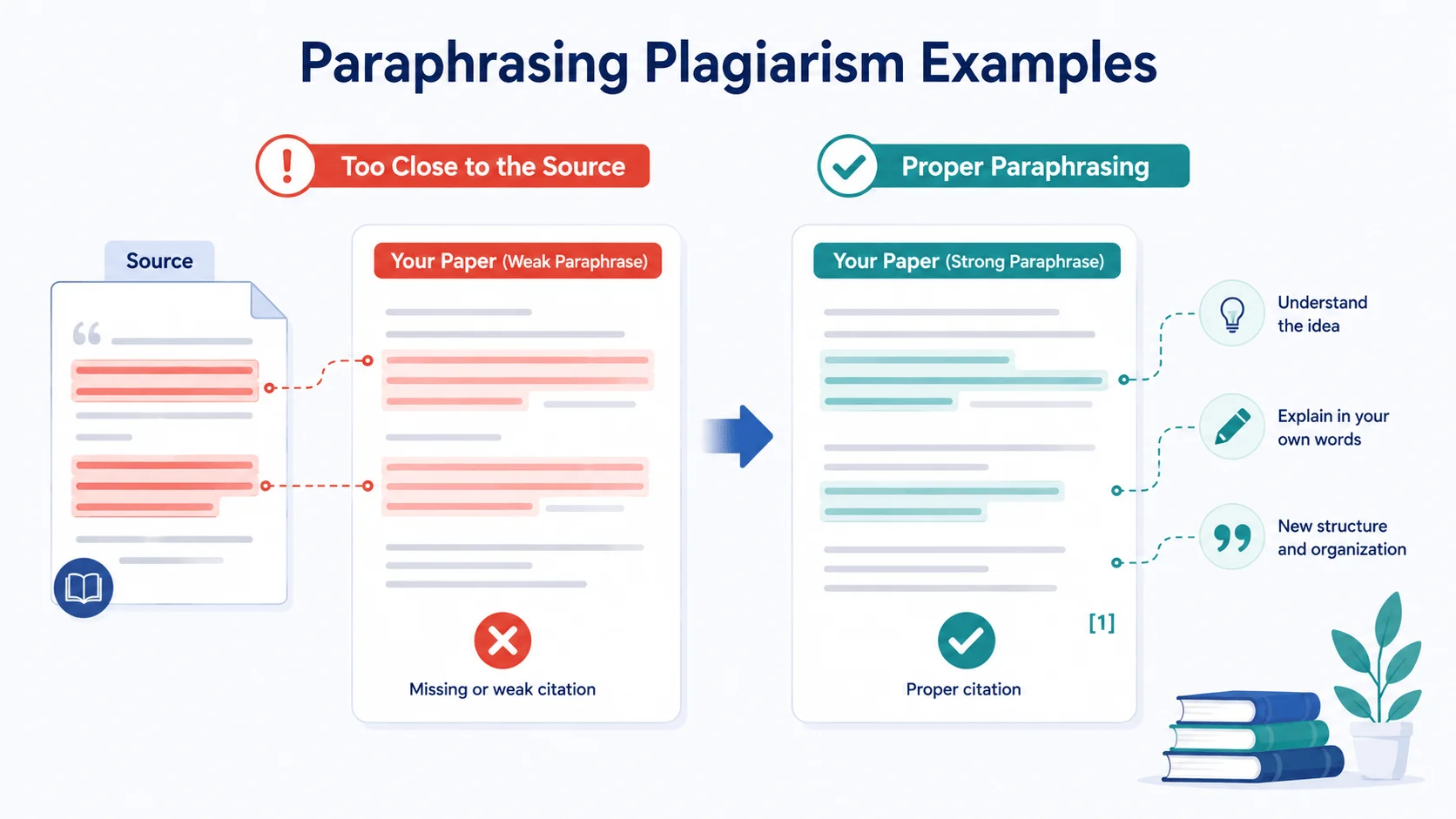
Paraphrasing plagiarism happens when a writer rewrites a source too closely without creating original wording or ideas. Common examples include replacing a few words with synonyms, rewriting a paragraph while keeping the same structure, summarizing ideas without citation, or using AI tools to closely rewrite a single source.
Example Source Text
Artificial intelligence systems are increasingly being used in hiring processes to evaluate job applicants. While these systems may improve efficiency, researchers warn that algorithmic decision-making can reproduce existing social biases if the training data reflects historical inequalities.
O’Neil, Cathy. Weapons of Math Destruction. New York: Crown Publishing, 2016.
Draft
Many companies now use artificial intelligence to screen potential employees because automated systems can speed up the hiring process. However, some experts argue that these technologies may continue patterns of discrimination when the data used to train them contains social inequalities from the past.
Explanation
This draft is an example of paraphrasing plagiarism because the writer successfully changes much of the original wording but still relies entirely on the source author’s ideas without providing a citation. Although the sentences are rewritten, the concepts about AI hiring systems and algorithmic bias are taken directly from the source.
Paraphrasing does not eliminate the need for citation. Whenever ideas, arguments, or information come from another source, the writer must acknowledge the original author.
How to Fix Paraphrasing Plagiarism
Writers can avoid paraphrasing plagiarism by fully understanding the source first and then explaining the idea in a new way. Proper citation is still required even after successful paraphrasing.
Therefore, the previous draft should be revised as follows:
Corrected Draft
Cathy O’Neil explains that artificial intelligence is becoming more common in employee recruitment because automated systems can process applicants more efficiently. However, she also warns that these technologies may reinforce existing social inequalities when biased historical data is used to train hiring algorithms (O’Neil 2016).
4. Self-Plagiarism Examples
What Is Self-Plagiarism?
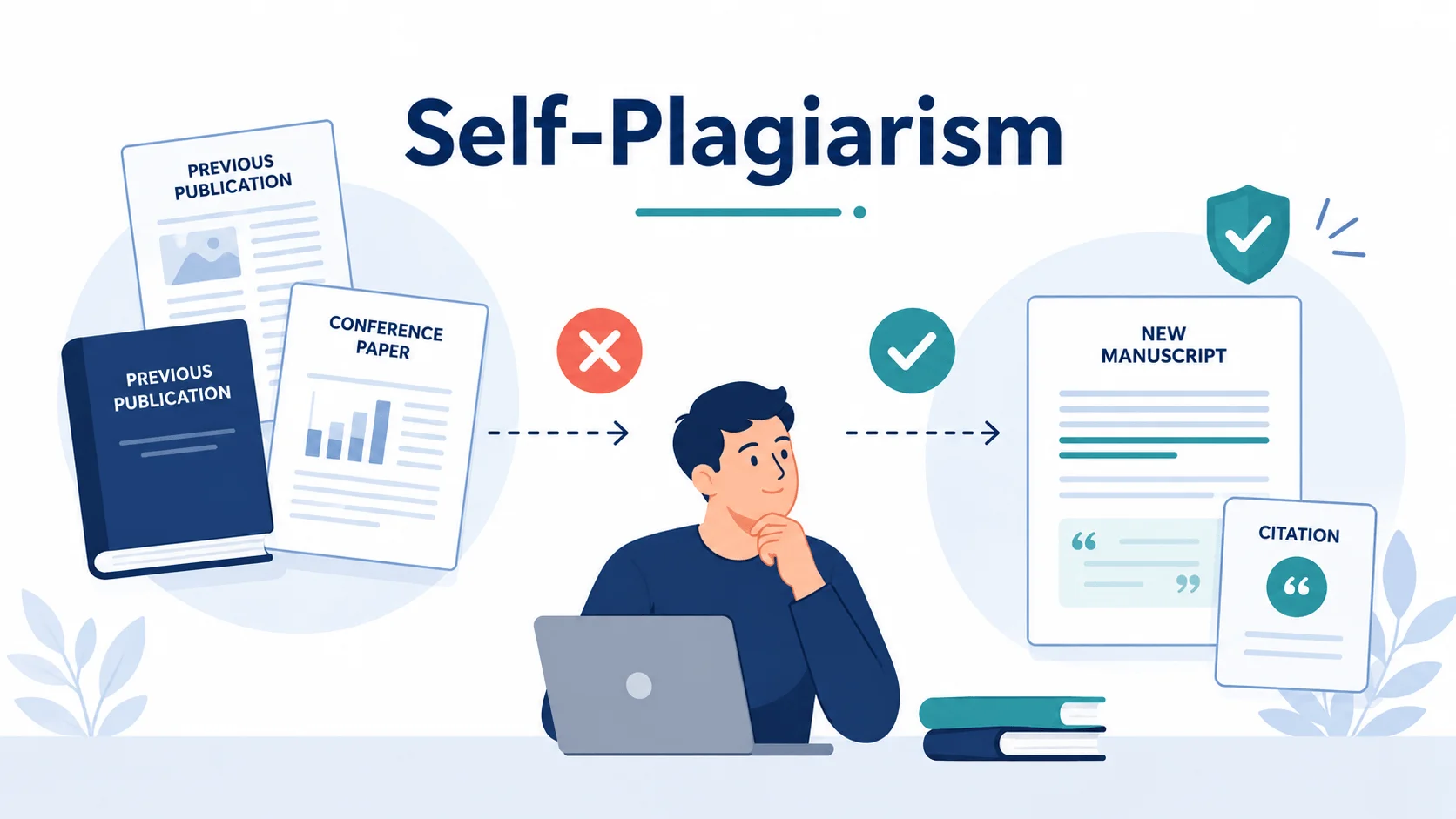
Self-plagiarism happens when writers reuse their own previously published work without proper citation or disclosure. Common examples include copying parts of earlier papers into new manuscripts, reusing research findings in multiple publications, or recycling thesis content without citation.
Example Source Text
Remote work environments often improve employee flexibility and independence. However, organizations may experience reduced informal communication and weaker collaborative relationships when employees work remotely for extended periods of time.
Youngs, T. “Workplace Flexibility in Digital Organizations.” Journal of Organizational Studies, 2023.
Draft
Remote work environments improve employee flexibility and independence. Organizations may experience reduced informal communication and weaker collaborative relationships when employees work remotely for long periods of time. Companies therefore need to balance flexibility with communication efficiency.
Explanation
In this example of self-plagiarism, the writer reuses substantial wording and ideas from a previously published article without acknowledging the earlier source. Although the material originally belongs to the same author, presenting recycled content as new writing can mislead readers about the originality of the work.
How to Fix Self-Plagiarism
Researchers can avoid self-plagiarism by disclosing prior publications, citing their earlier work when necessary, and rewriting reused sections instead of copying them directly.
Therefore, the previous draft should be revised as follows:
Corrected Draft
In an earlier study of digital workplaces, Youngs explains that remote work can increase employee flexibility and independence while also weakening informal communication between coworkers (Youngs 2023). Building on this research, the present paper further examines how organizations can strengthen collaboration through structured virtual communication systems.
5. Accidental Plagiarism Examples
What Is Accidental Plagiarism?
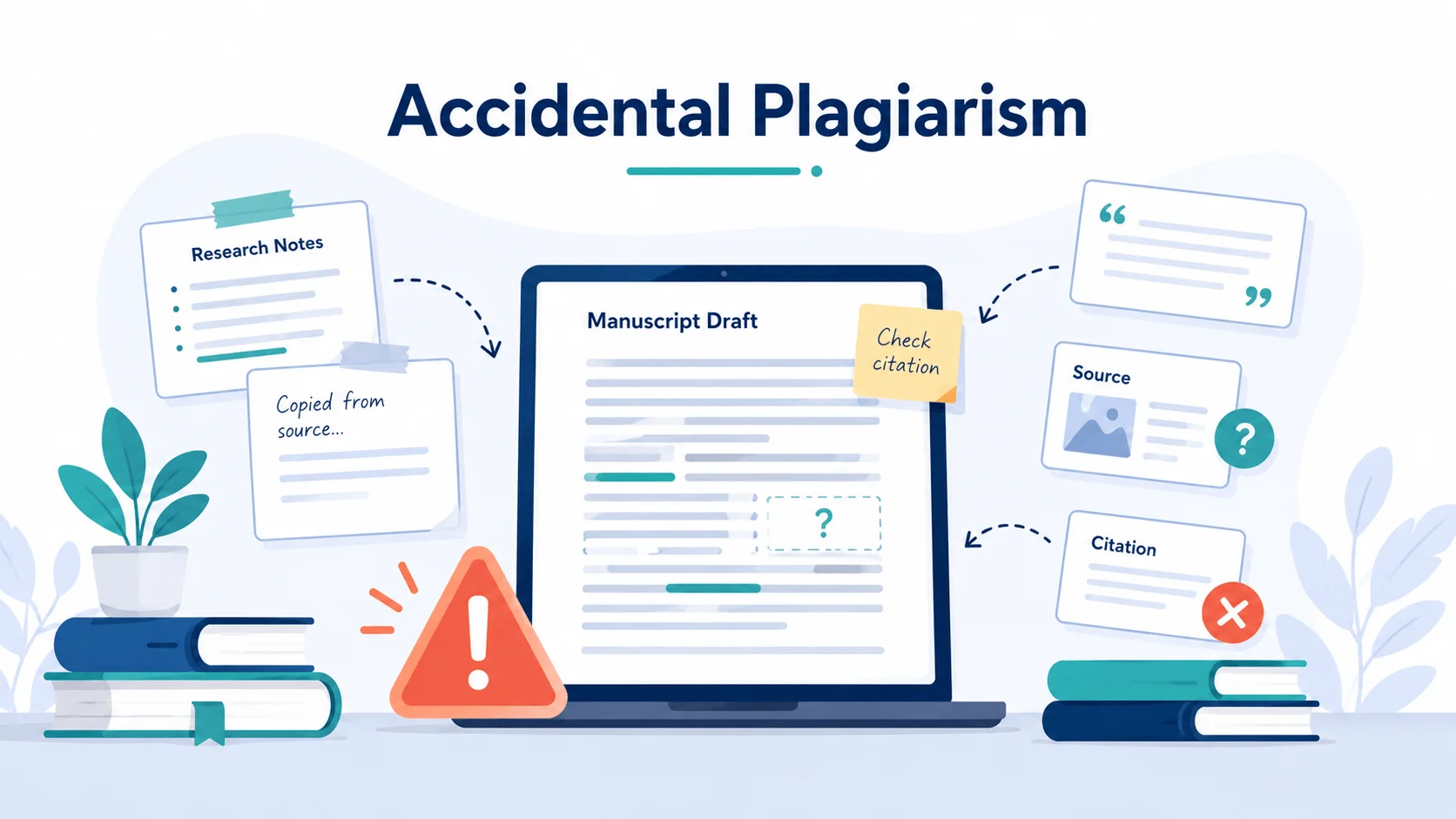
Accidental plagiarism happens when writers use someone else’s ideas or wording without proper citation by mistake. Common examples include forgetting to add citations, leaving copied notes in a draft, mixing copied and original text during editing, or using AI-generated content that contains uncited material.
Example Source Text
Artificial intelligence systems are increasingly used in hiring because they can evaluate large numbers of applicants quickly and efficiently. However, critics argue that these systems may reproduce existing social biases when algorithms are trained using historical employment data.
O’Neil, Cathy. Weapons of Math Destruction. New York: Crown Publishing Group, 2016.
Draft
Artificial intelligence systems are increasingly used in hiring because they can evaluate large numbers of applicants efficiently. Critics argue that these systems may reproduce social biases when algorithms are trained using historical employment data. Companies therefore need to monitor the fairness of automated hiring systems.
Explanation
In this example of accidental plagiarism, the writer unintentionally copies sentence structure and wording from the original source too closely. Although some words are changed and additional commentary is added, the draft still relies heavily on the language and organization of the source material. In addition, the writer provides no citation acknowledging where the information originated.
How to Fix Accidental Plagiarism
Researchers can reduce accidental plagiarism by organizing sources carefully, using citation management tools, and reviewing manuscripts with plagiarism screening software before submission.
Therefore, the previous draft should be revised as follows:
Corrected Draft
Cathy O’Neil explains that artificial intelligence has become increasingly common in employee recruitment because automated systems can process applicants more efficiently. However, she also warns that hiring algorithms may reinforce existing social inequalities when they rely on biased historical employment data (O’Neil 2016).
6. Complete Plagiarism Examples
What Is Complete Plagiarism?
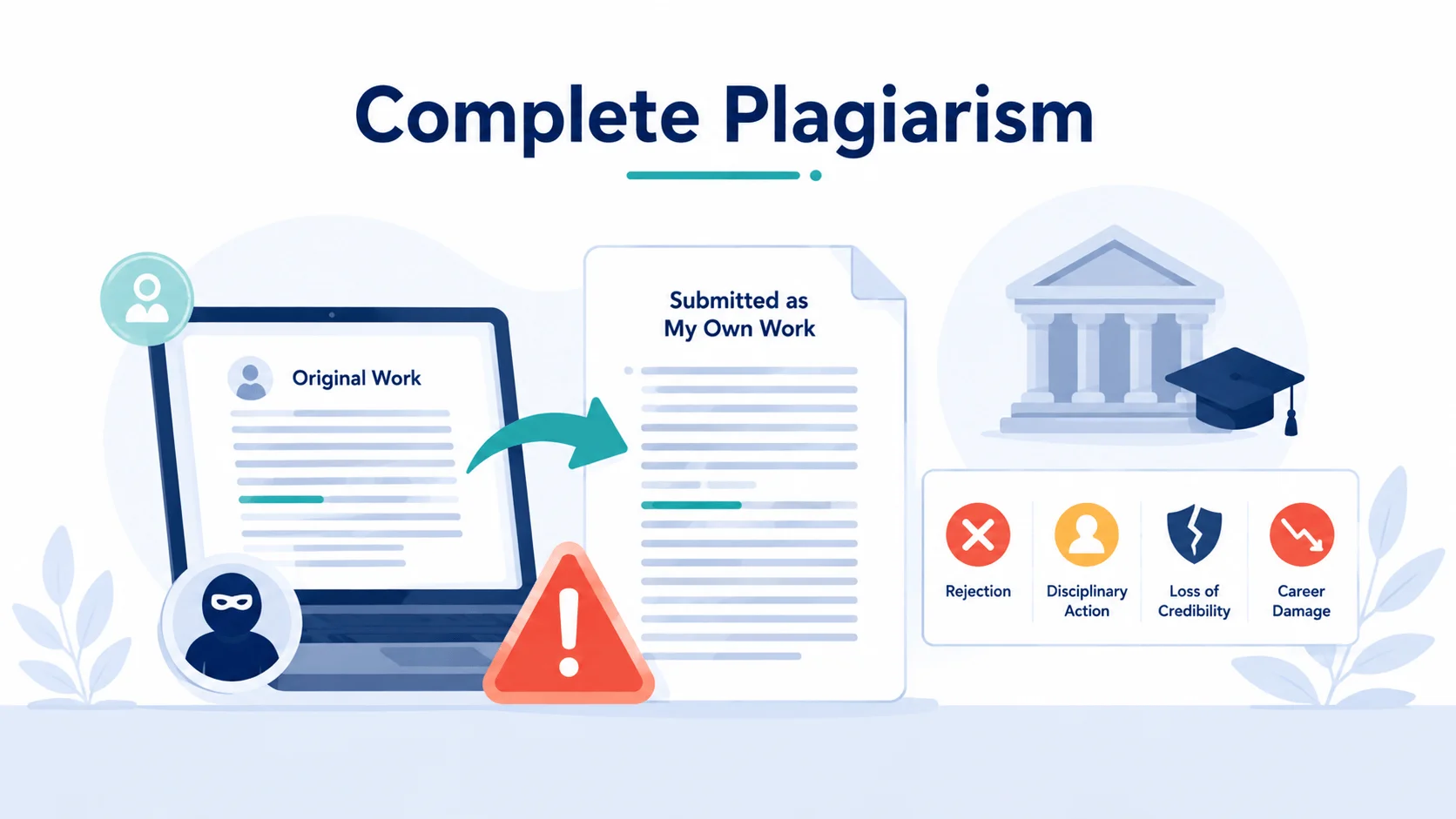
Complete plagiarism happens when someone submits another person’s entire work as their own. Common examples include buying essays or research papers, hiring others to write assignments, downloading papers from the internet, or submitting someone else’s unpublished work with only minor changes.
Example Source Text
Democratic backsliding often begins with the gradual weakening of institutional constraints rather than the sudden collapse of elections. Elected leaders may preserve the appearance of democratic legitimacy while simultaneously limiting judicial independence, restricting media freedom, and undermining opposition parties.
Levitsky, Steven, and Daniel Ziblatt. How Democracies Die. New York: Crown Publishing Group, 2018.
Draft
Democratic backsliding often begins with the gradual weakening of institutional constraints rather than the sudden collapse of elections. Elected leaders may preserve the appearance of democratic legitimacy while simultaneously limiting judicial independence, restricting media freedom, and undermining opposition parties.
Explanation
In this example of complete plagiarism, the writer copies the original source word-for-word and presents it as entirely original work. No quotation marks, citations, or acknowledgments are provided to indicate that the material belongs to another author.
How to Fix Complete Plagiarism
Writers can avoid complete plagiarism by producing original analysis and properly acknowledging all borrowed material. When exact language from a source is necessary, quotation marks and citations must be included. Writers should also contribute their own interpretation rather than relying entirely on another author’s work.
Therefore, the previous draft should be revised as follows:
Corrected Draft
Steven Levitsky and Daniel Ziblatt argue that democratic decline frequently occurs through the gradual erosion of institutional safeguards rather than through abrupt political collapse (Levitsky and Ziblatt 2018). According to their analysis, modern authoritarian leaders often maintain formal elections while weakening judicial systems, media independence, and political opposition.
7. Source-Based Plagiarism Examples
What Is Source-Based Plagiarism?
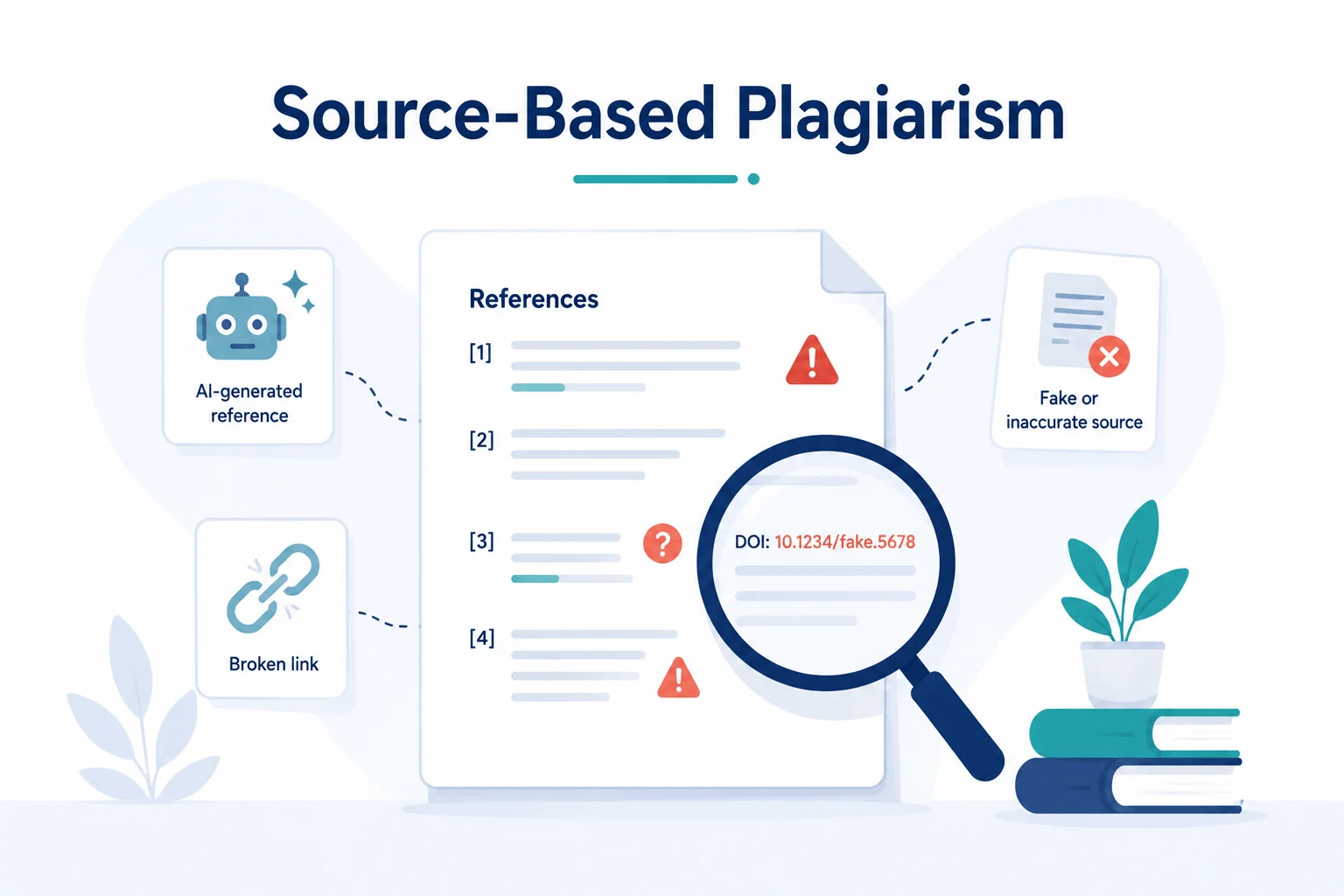
Source-based plagiarism happens when writers use false or misleading citations in academic work. Common examples include adding fake references, citing sources that were not actually read, using AI-generated citations that do not exist, or referencing studies that do not support the claims in the paper.
Example Source Text
Research on algorithmic governance suggests that predictive policing systems often rely on historical crime data that may reflect existing patterns of racial and socioeconomic inequality. As a result, automated policing technologies can unintentionally reinforce discriminatory enforcement practices.
Benjamin, Ruha. Race After Technology. Cambridge: Polity Press, 2019.
Draft
Recent studies prove that predictive policing technologies are completely objective and eliminate racial discrimination in law enforcement (Benjamin 2019).
Explanation
In this example of source-based plagiarism, the writer cites a legitimate academic source but misrepresents the author’s actual argument. Rather than claiming that predictive policing eliminates discrimination, Ruha Benjamin warns that these systems may reproduce existing social inequalities through biased historical data.
How to Fix Source-Based Plagiarism
Writers can avoid source-based plagiarism by reading sources carefully, representing authors’ ideas accurately, and verifying that all citations genuinely support the claims being made. Citations should never be used to create false authority or misleading evidence.
Therefore, the previous draft should be revised as follows:
Corrected Draft
Ruha Benjamin argues that predictive policing technologies may unintentionally reinforce racial and socioeconomic inequalities because automated systems are frequently trained using historically biased crime data (Benjamin 2019). Her analysis suggests that algorithmic decision-making in law enforcement should be examined critically rather than assumed to be fully objective.
8. Translation Plagiarism Examples
What Is Translation Plagiarism?
Translation plagiarism happens when someone translates content from another language and presents it as original work without citation. Common examples include translating foreign articles, books, or research papers without crediting the original author, or using machine translation tools to rewrite sources without attribution.
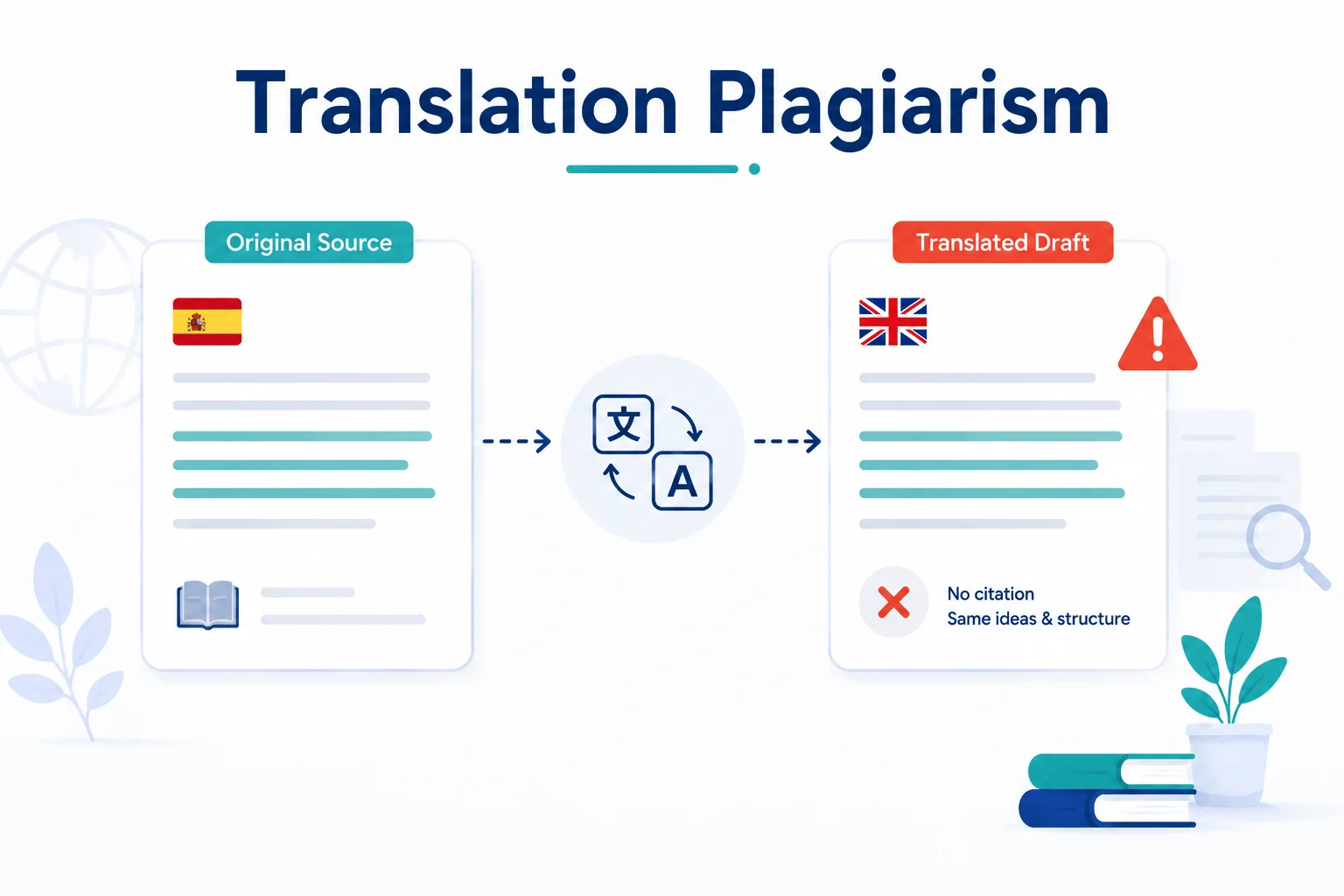
Example Source Text
La expansión de las redes sociales ha cambiado profundamente la manera en que las personas consumen información política. Los algoritmos digitales tienden a mostrar contenido que coincide con las preferencias previas del usuario, lo que puede limitar la exposición a perspectivas diferentes.
Martínez, Laura. Medios Digitales y Democracia. Barcelona: Editorial Académica, 2020.
Draft
The expansion of social media has greatly changed the way people consume political information. Digital algorithms usually display content that matches users’ previous preferences, which may reduce exposure to different perspectives.
Explanation
This draft is an example of translation plagiarism because the writer directly translates the original Spanish passage into English without acknowledging the source. Although the language is different, the ideas, organization, and meaning remain almost identical to the original text. The writer also fails to provide citations indicating where the information came from.
How to Fix Translation Plagiarism Plagiarism
To avoid translation plagiarism, writers should always cite the original source when using translated material. They should also paraphrase the information carefully instead of relying on direct translation alone.
Therefore, the previous draft should be revised as follows:
Corrected Draft
Laura Martínez argues that social media algorithms influence political information consumption by recommending content that aligns with users’ existing preferences. According to Martínez, this filtering process may reduce exposure to alternative viewpoints and narrow public discussion (Martínez 2020).
Martínez, Laura. Medios Digitales y Democracia. Barcelona: Editorial Académica, 2020.
Final Thoughts
In this guide, we looked at eight common types of plagiarism in academic writing and discussed practical ways to correct or avoid them.
As research and digital writing tools continue to evolve, plagiarism often appears in more subtle forms than many people expect.
Hopefully, this overview helps make those distinctions a little clearer. Whether it involves paraphrasing, citation practices, or source integration, a stronger understanding of context and academic conventions can make the writing process feel far more manageable—and ultimately lead to more confident, responsible scholarly work.
FAQ

What are the most common examples of plagiarism?
Some of the most common examples include direct plagiarism, improper paraphrasing, mosaic plagiarism, and self-plagiarism. Accidental plagiarism caused by missing citations or poor source tracking is also very common in academic writing.
Is paraphrasing without citation plagiarism?
Yes. Even when the wording is changed, the original idea still requires proper citation.
Can you plagiarize your own work?
Technically, this is called self-plagiarism rather than traditional plagiarism. It happens when researchers reuse previously published work without disclosure, citation, or journal permission.
Can AI-generated text be considered plagiarism?
Yes, in some cases. AI tools may produce content that closely resembles existing sources or generate inaccurate references.
What is the difference between mosaic plagiarism and paraphrasing plagiarism?
Mosaic plagiarism combines borrowed wording or structures from multiple sources. Paraphrasing plagiarism usually relies too closely on a single source without sufficient rewriting or citation.