

Is Using ChatGPT Plagiarism? Understanding Where the Line Is

Many researchers now use ChatGPT to brainstorm ideas, rewrite text, summarize literature, or improve academic wording.
But the uncertainty appears quickly: if AI helped generate the language, is the writing still fully your own? The line between writing assistance and academic misconduct has become less clear.
Most researchers are not trying to plagiarize. However, some uses of AI-generated content can still raise ethical or authorship concerns in academic publishing.
This article explains where the risks appear and how to use AI responsibly during the publication process.
What Actually Counts as Plagiarism?
Before answering the question “is using ChatGPT plagiarism,” we first need to understand what plagiarism actually means in academic writing.
Plagiarism is not limited to copying text directly. In research publishing, it can also involve reusing ideas, rewriting existing content too closely, or failing to properly acknowledge original sources.
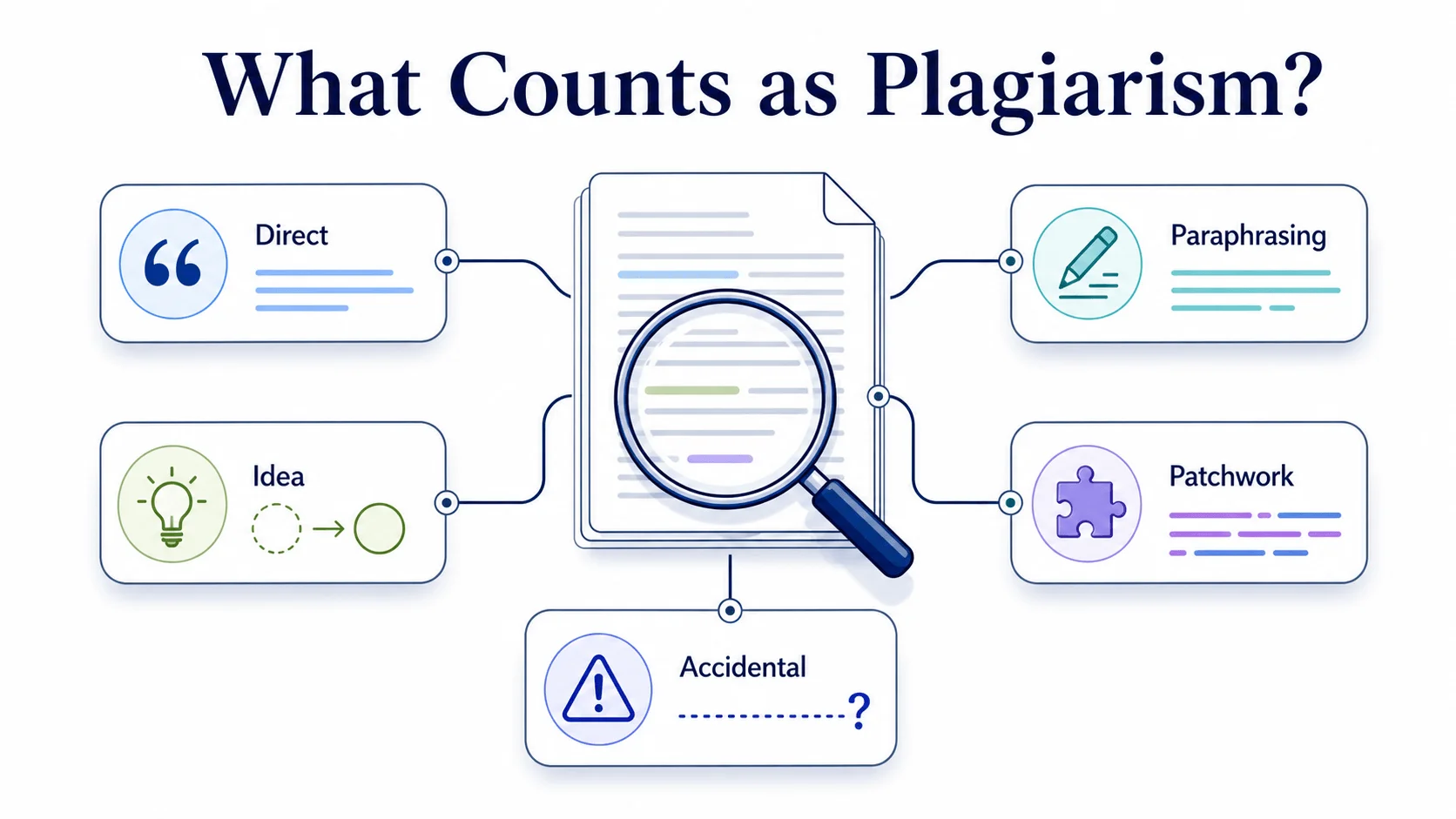
Some common types of plagiarism include:
Direct Plagiarism
Using another author’s exact wording without proper attribution. This is the most obvious form of plagiarism in academic publishing.
Paraphrasing Plagiarism
Changing a few words or sentence structures while keeping the original content essentially the same. Many writers mistakenly assume this counts as original writing.
Idea Plagiarism
Presenting another researcher’s concept, interpretation, or argument as your own. Even without copied wording, the original intellectual contribution still belongs to someone else.
Mosaic (or Patchwork) Plagiarism
Blending sentences or phrases from multiple sources into one paragraph without clear citation. The writing may appear new, but large parts are still borrowed.
Accidental Plagiarism
Incorrectly citing sources or unintentionally reusing published content due to poor note organization. Although unintentional, it can still create serious academic issues.
For years, these boundaries were relatively easy to identify because plagiarism usually involved human-written sources. The rise of AI tools like ChatGPT has made the situation far less straightforward.
A researcher can now generate technically “new” text within seconds, yet questions about originality, ownership, and source influence still remain — especially in academic publishing, where ethical standards are much stricter than in everyday writing.
Why ChatGPT Makes the Question More Complicated
The reason “is using ChatGPT plagiarism” has become such a difficult question is that AI changes the traditional definition of plagiarism itself.
In the past, plagiarism usually involved taking content from an identifiable source — a journal article, a book, or a website. Because the original source already existed, editors could evaluate similarity, attribution, and citation relatively clearly.
ChatGPT works differently. Instead of copying from one visible source, it generates new text based on patterns learned from massive amounts of data. As a result, the output may appear original and often avoids high similarity scores in plagiarism checkers.
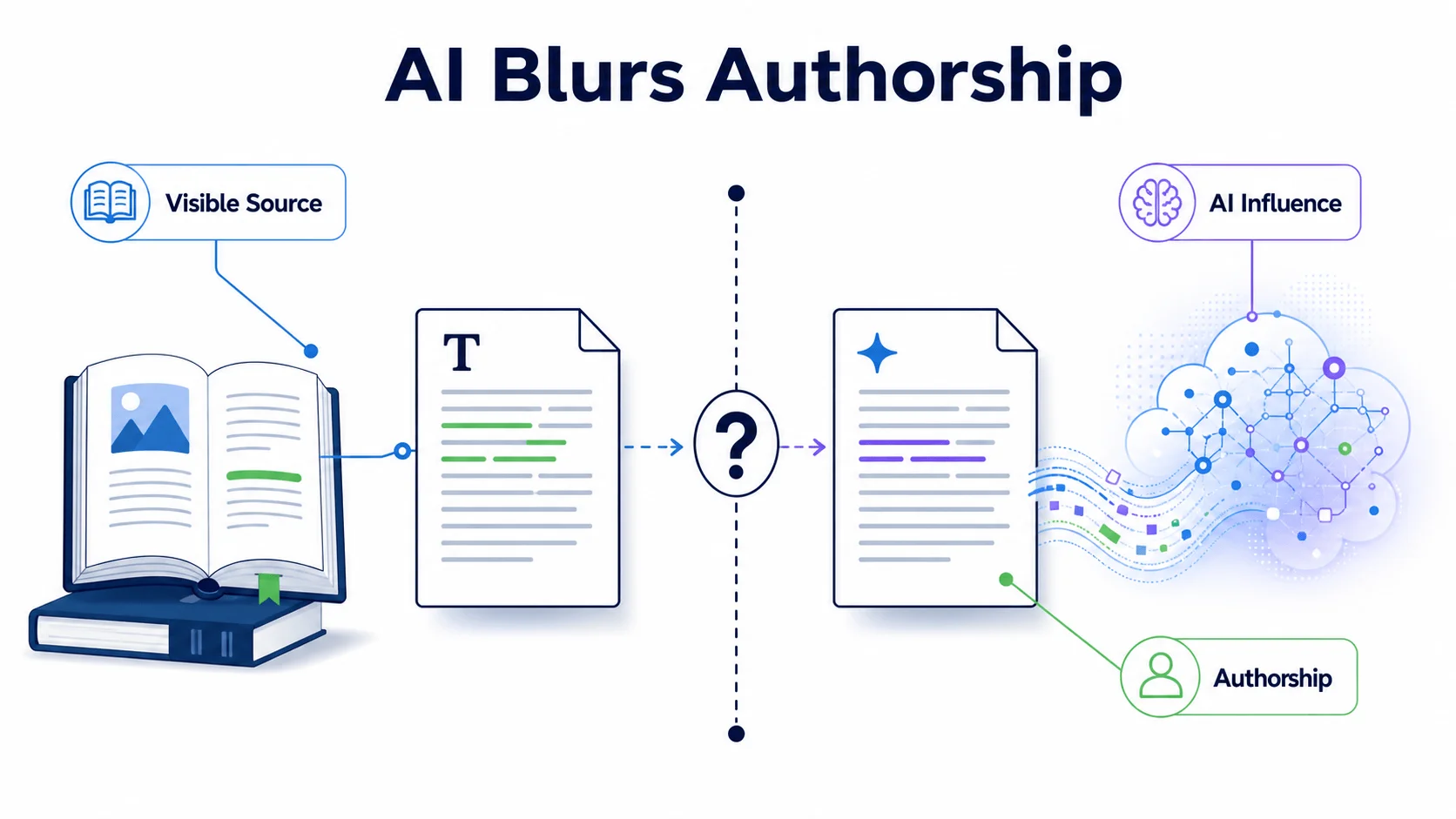
This shifts the issue from simple copying to questions of authorship and intellectual contribution. A researcher may submit wording that is technically original, while much of the reasoning, structure, or analytical framing was heavily assisted by AI rather than created independently.
As AI blurs the boundary between writing assistance and authorship, whether using ChatGPT counts as plagiarism becomes far less straightforward.
When Using ChatGPT Can Be Considered Plagiarism
Submitting AI-Generated Writing as Fully Your Own
One of the clearest ethical problems is presenting AI-generated work as entirely personal scholarship. This often happens when researchers generate full manuscript sections with ChatGPT and submit them with only minor editing.
The issue is not simply that AI was used. The real problem is misrepresenting authorship and making AI-produced analysis appear fully human-created.
Using AI Without Understanding the Content
Another major risk is relying on AI-generated content you cannot personally verify or defend. Some researchers now paste AI-written literature summaries, interpretations, or theoretical explanations directly into manuscripts without checking the original sources carefully.
This becomes dangerous during peer review, where unsupported reasoning or inaccurate claims can quickly undermine the credibility of the paper.
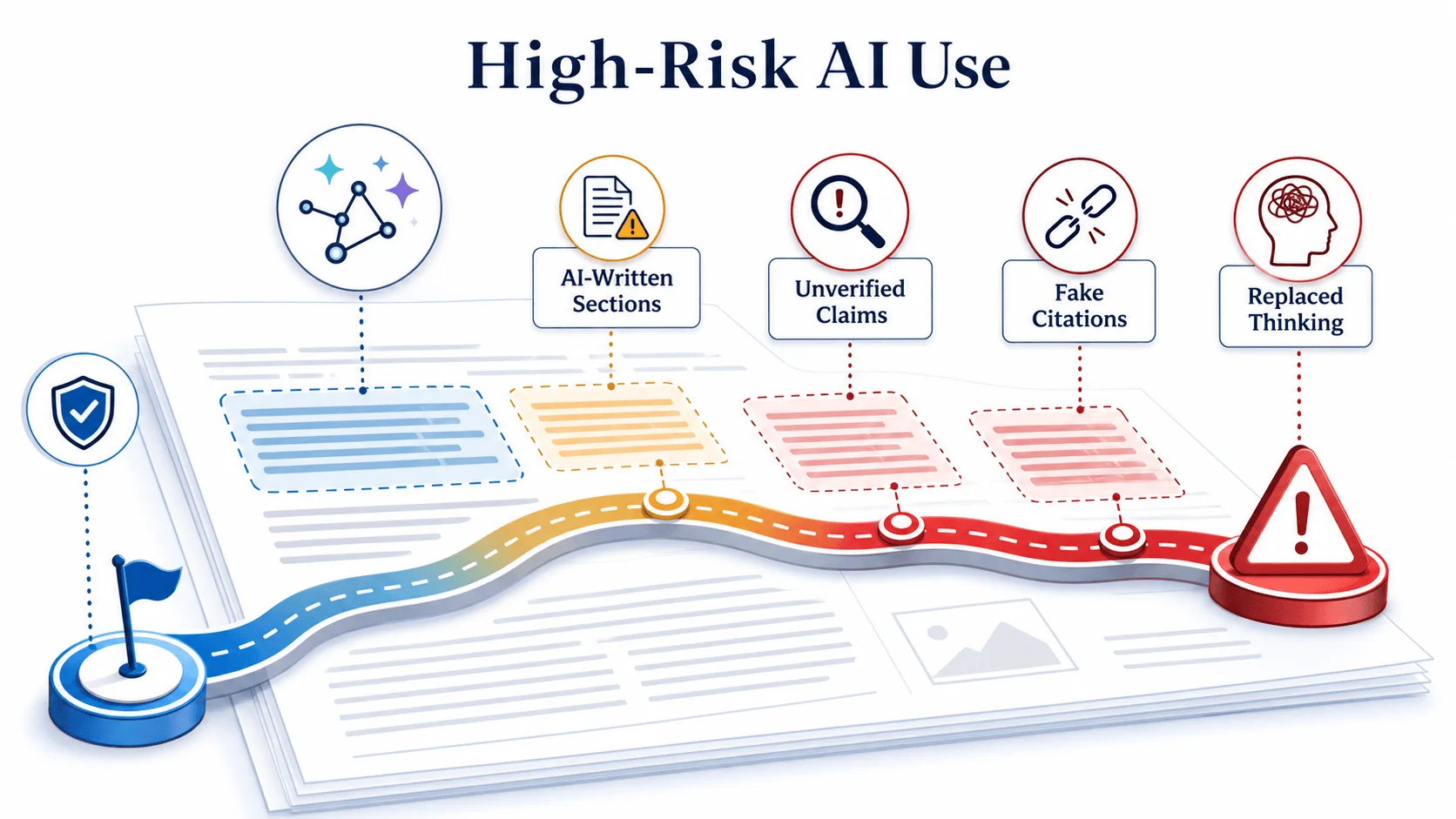
Fabricated Citations and False Information
ChatGPT can also generate references that look convincing but do not actually exist. These fabricated citations are especially risky in academic publishing because reviewers and editors may attempt to verify every referenced source.
Even a small number of false citations can damage research credibility and raise serious integrity concerns during submission.
Overusing AI to Replace Intellectual Contribution
The boundary becomes even more concerning when AI starts replacing critical thinking itself. If ChatGPT is heavily used to synthesize evidence, develop arguments, or perform analytical reasoning, the manuscript may remain technically original while still raising authorship concerns.
In other words, a paper can contain no directly copied text and still create ethical problems if too much of the intellectual contribution came from AI rather than the researcher.
At the same time, this does not mean every use of ChatGPT automatically counts as plagiarism. In many cases, researchers use AI more as a language-support or productivity tool rather than a substitute for academic thinking.
When Using ChatGPT Is Probably Not Plagiarism
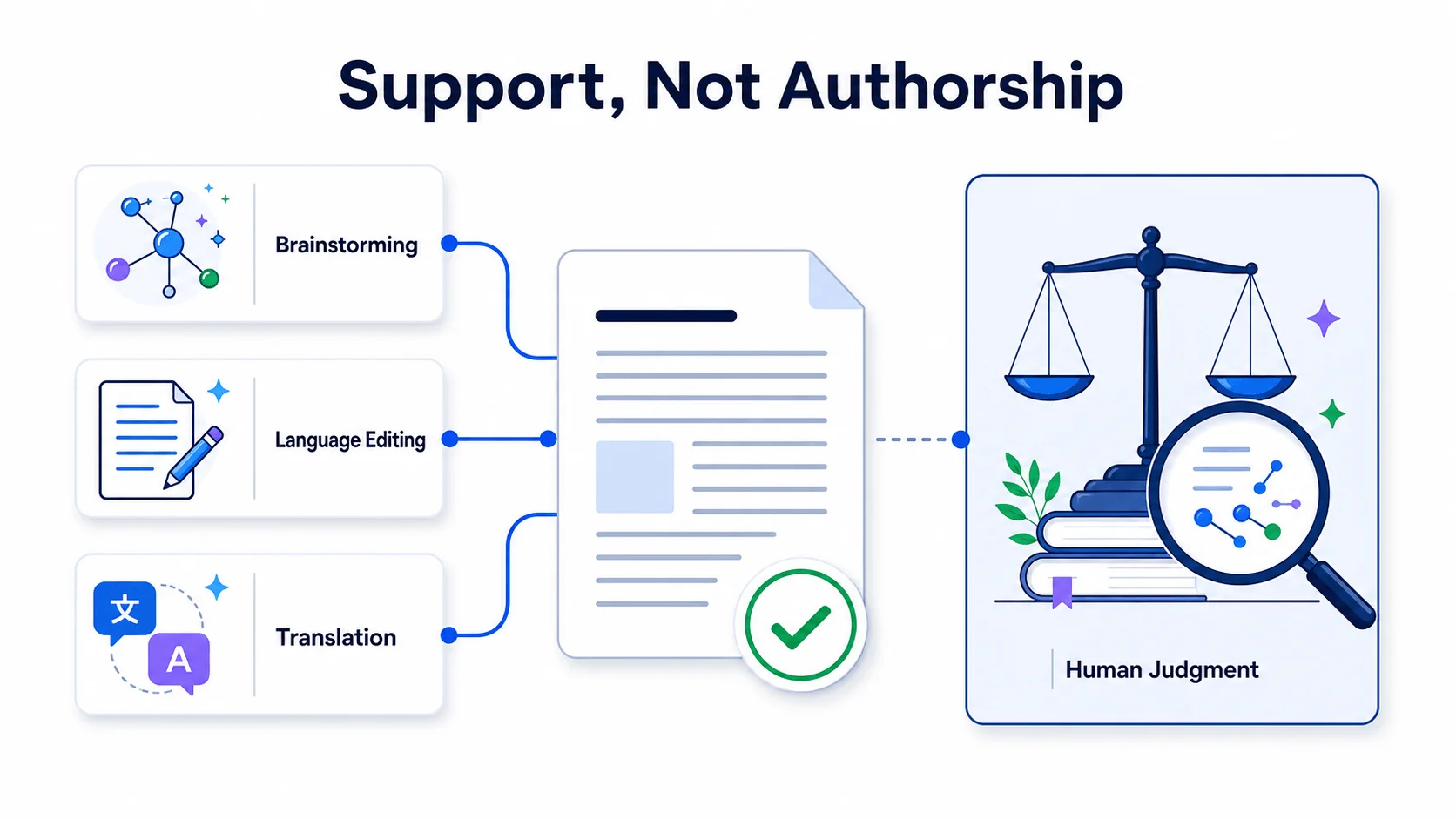
Using AI for Brainstorming and Idea Development
Many researchers now use ChatGPT during the early stages of writing to support idea development and planning. For example, it can help generate topic ideas, organize outlines, or explore possible manuscript structures before drafting begins.
In these situations, human judgment still drives the work. The researcher evaluates the suggestions, decides what is academically meaningful, and develops the actual scholarly contribution.
Human judgment still drives the work.
Editing, Clarity, and Language Improvement
ChatGPT is also commonly used for language refinement rather than content generation. Common examples include:
grammar correction
sentence restructuring
improving readability
simplifying dense academic wording
For many non-native English researchers, this functions more like advanced editing assistance than academic authorship. The core ideas, evidence, and interpretations still come from the researcher rather than the AI.
Using ChatGPT for Translation and Language Support
Many researchers also use ChatGPT to translate drafts, improve academic tone, or make non-native English writing sound more natural.
In most cases, this is not considered plagiarism because the underlying research, analysis, and scientific contribution still belong to the author. The AI mainly assists with language expression rather than generating the intellectual content itself.
This is similar to using professional editing services, which are already common in academic publishing.
Still, understanding that certain uses are “probably acceptable” does not automatically remove the risks. In real academic writing, the line between assistance and overreliance can become blurry very quickly — especially when researchers start depending on AI for tasks beyond simple language support. Because of that, using ChatGPT safely often depends less on the tool itself and more on how researchers choose to use it in practice.
How to Use ChatGPT Without Causing Plagiarism Problems
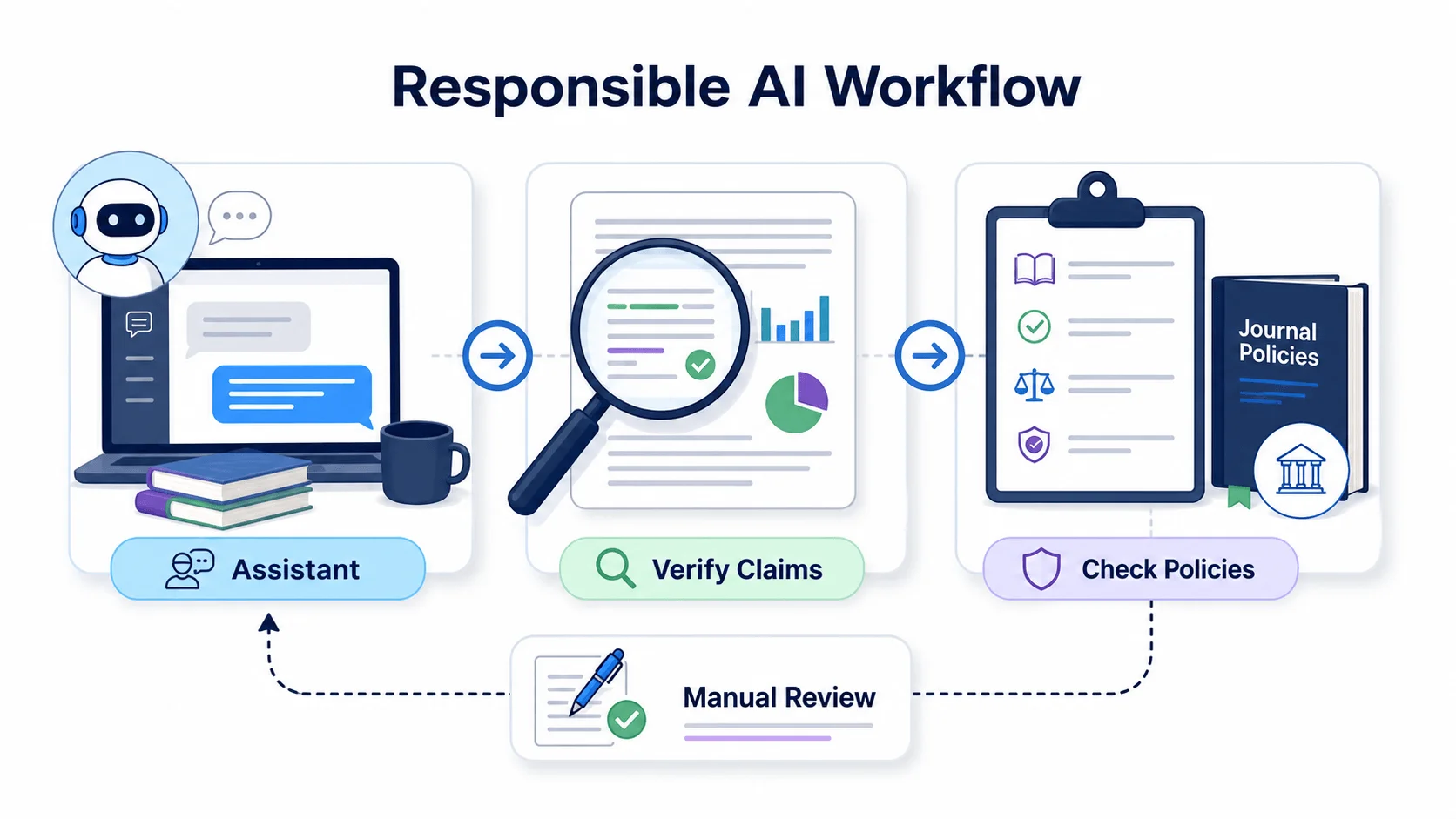
Treat ChatGPT as an Assistant, Not a Ghostwriter
The safest approach is to use ChatGPT as a support tool rather than a replacement for academic thinking. AI can help improve flow, clarify wording, or organize early ideas, but researchers should still handle the core intellectual work themselves.
That includes developing arguments, evaluating literature, and interpreting evidence independently.
Verify Everything AI Generates
ChatGPT can produce convincing academic language, but that does not guarantee accuracy. Before using AI-assisted content in a manuscript, researchers should:
fact-check important claims
confirm citations manually
rewrite generic AI phrasing
verify interpretations independently
This is especially important because fabricated references and inaccurate summaries are still common in AI-generated outputs.
Follow Journal and Institutional Policies
AI policies are changing quickly across academic publishing. Some journals now require authors to disclose AI use during manuscript preparation, while others place stricter limits on generative AI tools.
Because these standards continue evolving, researchers should always review the policies of their target journals and institutions before using AI-assisted content in academic writing.
Final Thoughts
So, is using ChatGPT plagiarism? In most cases, the answer depends more on how the tool is used than the tool itself. AI can support academic writing without automatically creating ethical problems.
At the same time, originality in research is not only about wording. Critical thinking, interpretation, and intellectual contribution still remain the researcher’s responsibility.
Hopefully, this guide has made the topic feel a little clearer and less overwhelming. As AI becomes more integrated into research workflows, responsible usage is becoming less about avoiding the tool entirely and more about understanding where ethical boundaries actually exist.
FAQ
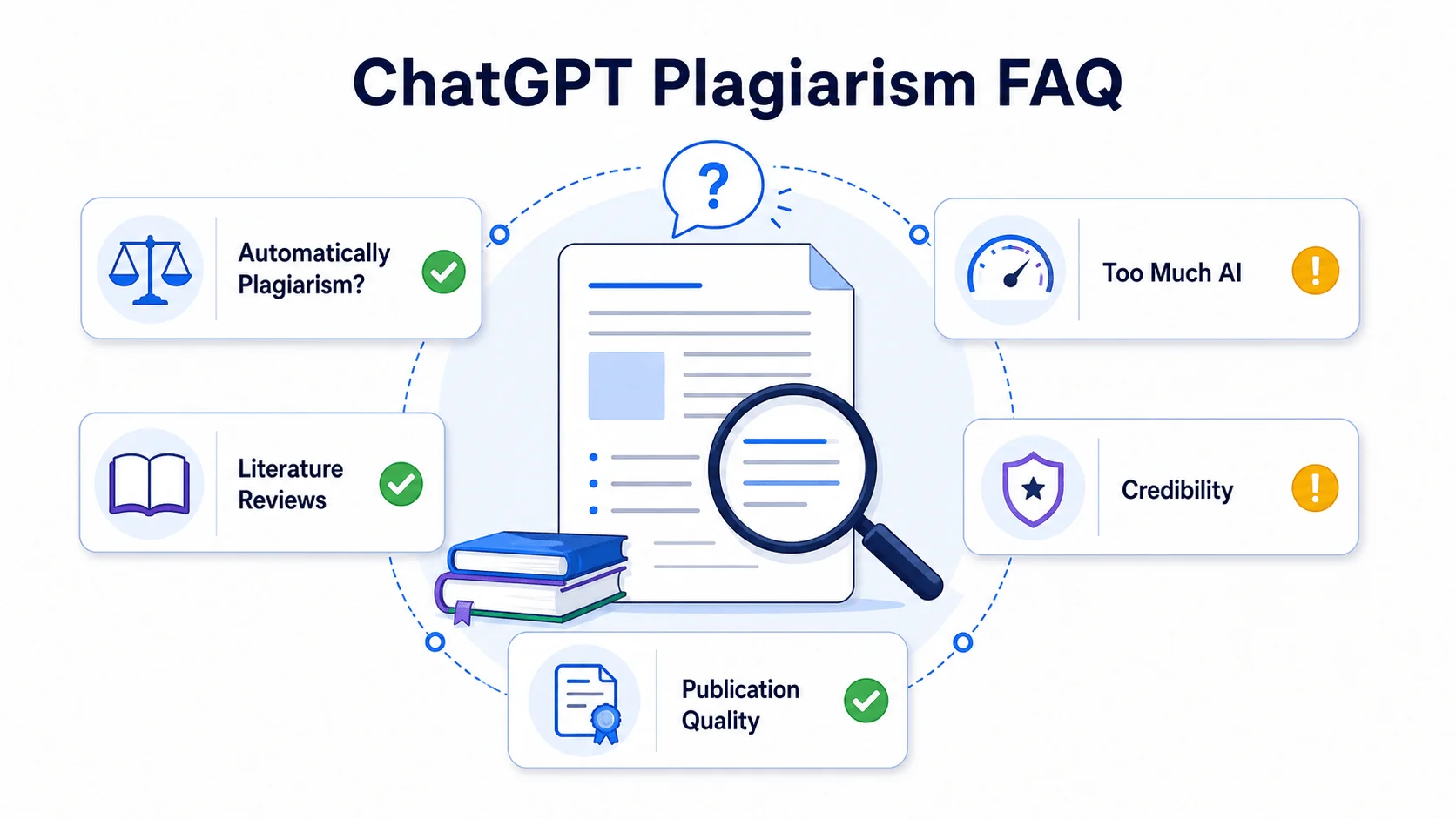
Is using ChatGPT automatically plagiarism?
No. It depends on how the tool is used and whether the final work genuinely reflects your own thinking and contribution.
Can using too much ChatGPT become academic misconduct?
Yes, especially when AI replaces original analysis or interpretation. Submitting heavily AI-generated work without transparency can create integrity issues.
Can you use ChatGPT for literature reviews?
You can use it for summarizing or organizing ideas. However, researchers should still verify sources and write the final analysis themselves.
Can AI-written text harm research credibility?
Yes, especially when the writing includes vague claims or fake references. Overreliance on AI can also weaken academic precision and originality.
Can relying too much on ChatGPT affect publication quality?
Yes. Excessive AI-generated writing can make research sound generic, less analytical, and less academically convincing.