

Global Plagiarism Explained: Types, Risks & Prevention

Global plagiarism can create serious publication risks long before a manuscript reaches peer review. Ghostwritten papers, translated research, and recycled submissions are now receiving far closer scrutiny from journals and publishers.
At the same time, plagiarism detection methods are becoming more advanced across academic publishing.
This guide explains the most common forms of global plagiarism, the risks involved, and practical ways to avoid problems before submission.

What Is Global Plagiarism?
Global plagiarism is one of the most serious forms of academic misconduct. It occurs when someone submits or publishes an entire work created by another person while claiming full authorship themselves.
Unlike patchwork plagiarism or improper citation, global plagiarism involves taking the core intellectual work — including the ideas, structure, analysis, data, or complete manuscript — and presenting it as original.
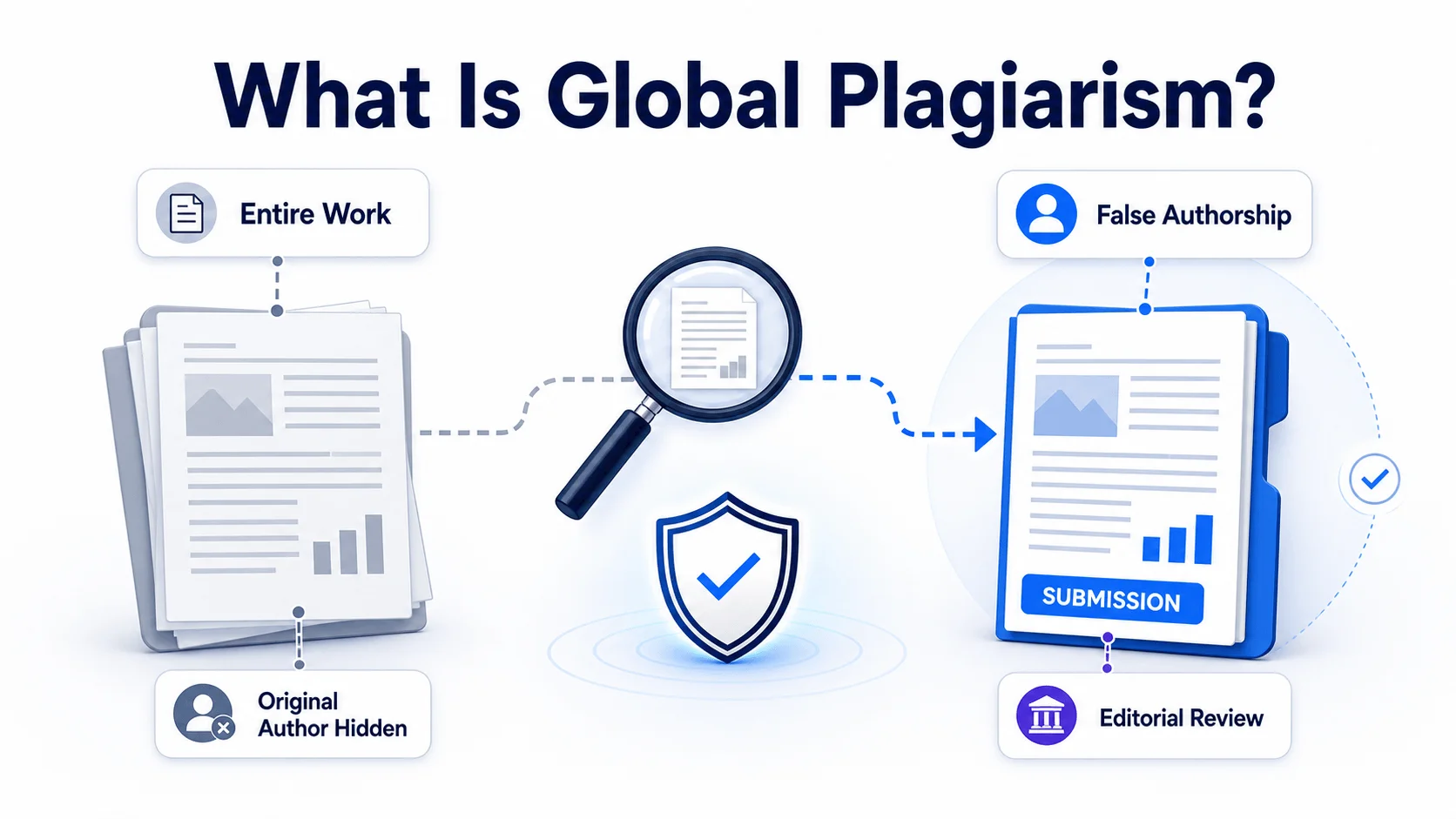
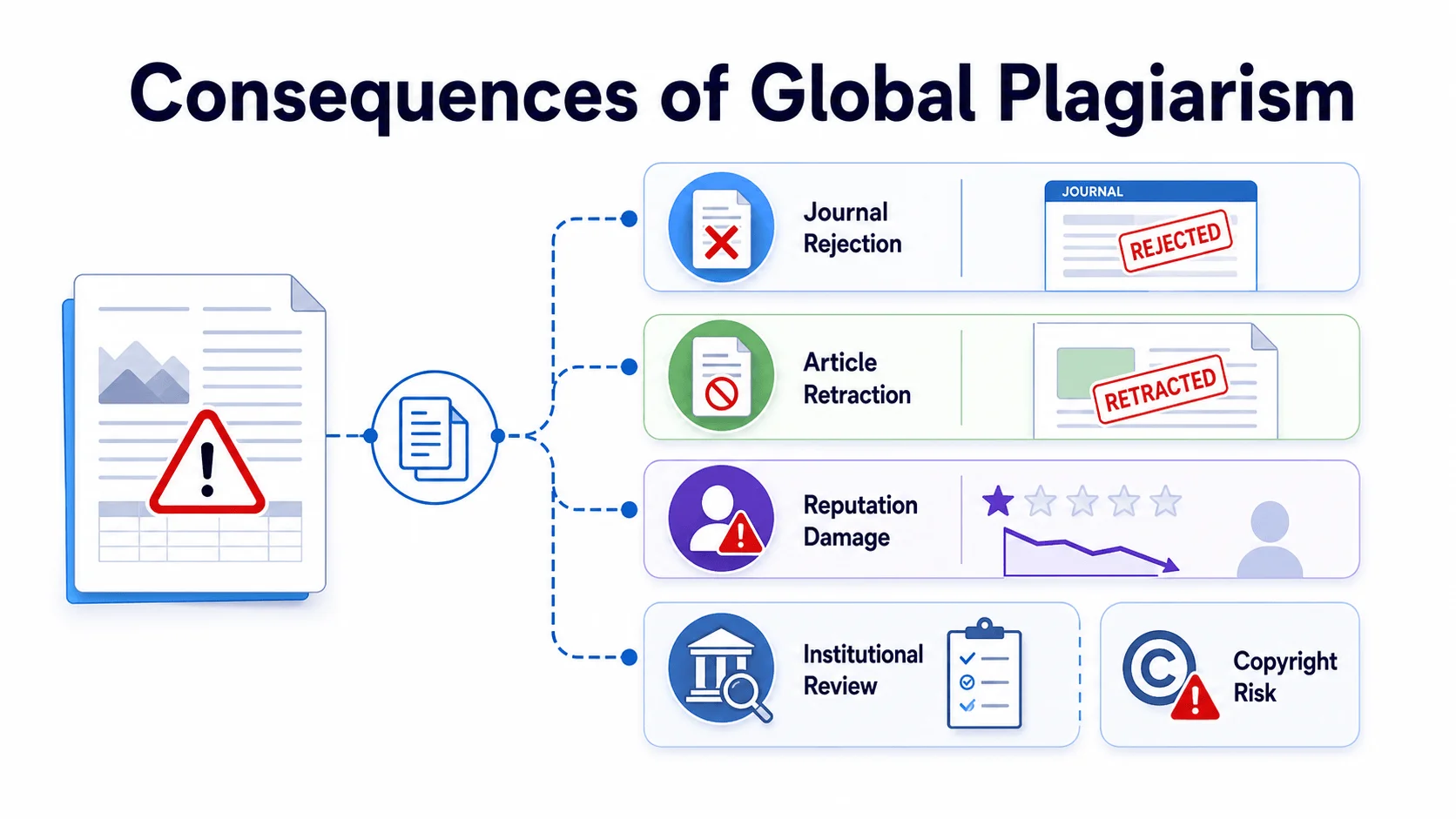
Academic institutions, journals, and publishers treat global plagiarism as a major ethical violation because it undermines research integrity, authorship accountability, and trust in scholarly communication. Consequences may include manuscript rejection, article retraction, damage to professional reputation, institutional disciplinary action, and long-term publishing restrictions.
If the definition still feels abstract, the following examples illustrate how global plagiarism commonly appears in academic publishing and research environments.
Today, universities and publishers use advanced plagiarism detection systems that can compare submissions against published articles, institutional databases, and online sources. Because of this, many researchers and students now check their work with plagiarism detection tools before submission to reduce the risk of serious authorship problems.
7 Typical Global Plagiarism Scenarios in Academic Publishing
1. Submitting Someone Else’s Published Paper
One of the clearest forms of global plagiarism is directly submitting another author’s published work under a different name. This may involve stealing manuscripts from journals, conference proceedings, institutional repositories, or online databases.
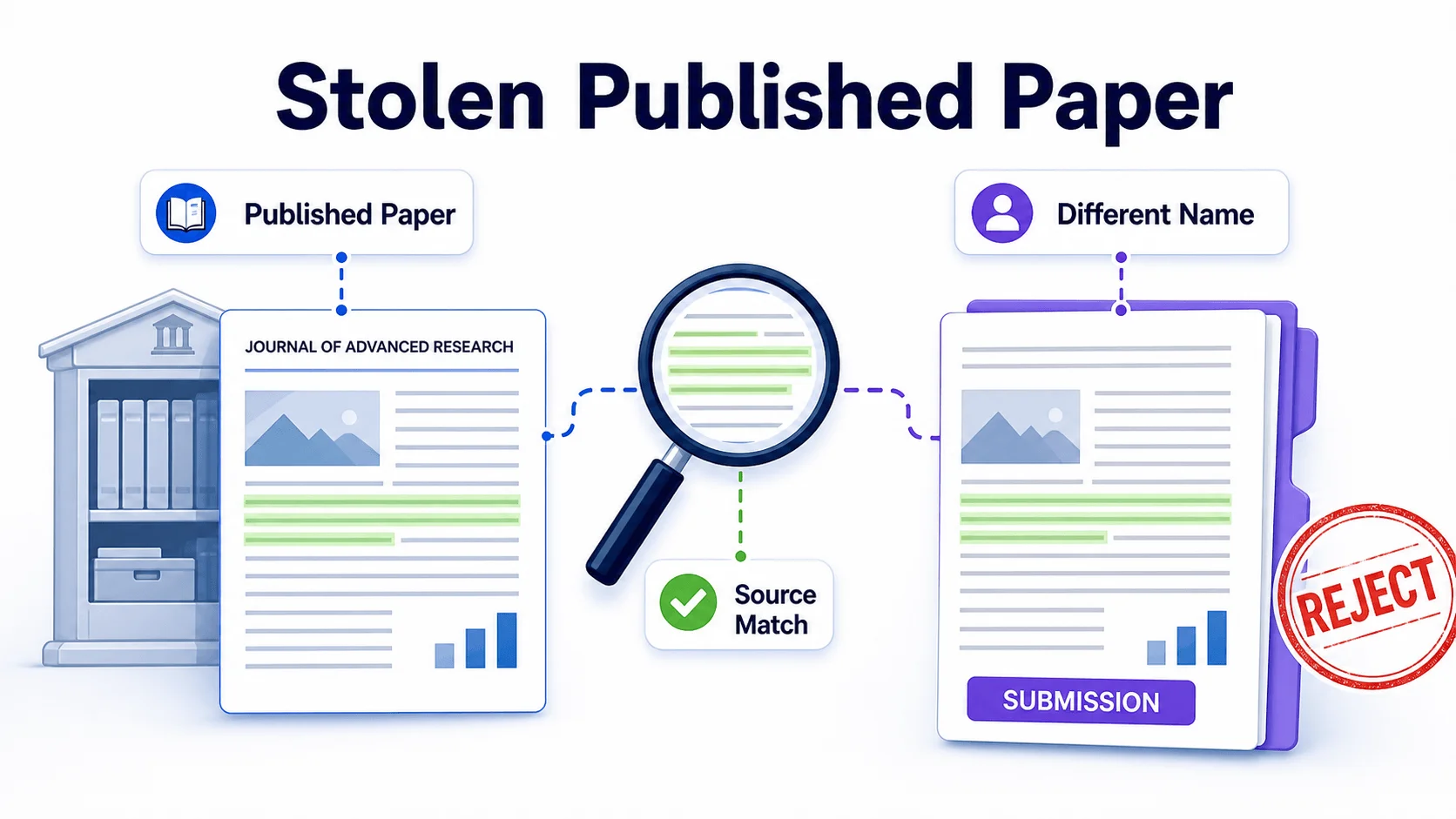
In some cases, researchers slightly change the title or formatting while keeping the core content untouched. Even when small edits are made, the work still counts as plagiarism because the original authorship is intentionally concealed.
2. Ghostwritten or Purchased Manuscripts
Another common form involves outsourcing academic writing to third parties. This includes buying essays, dissertations, or journal manuscripts from paper mills or freelance writers.
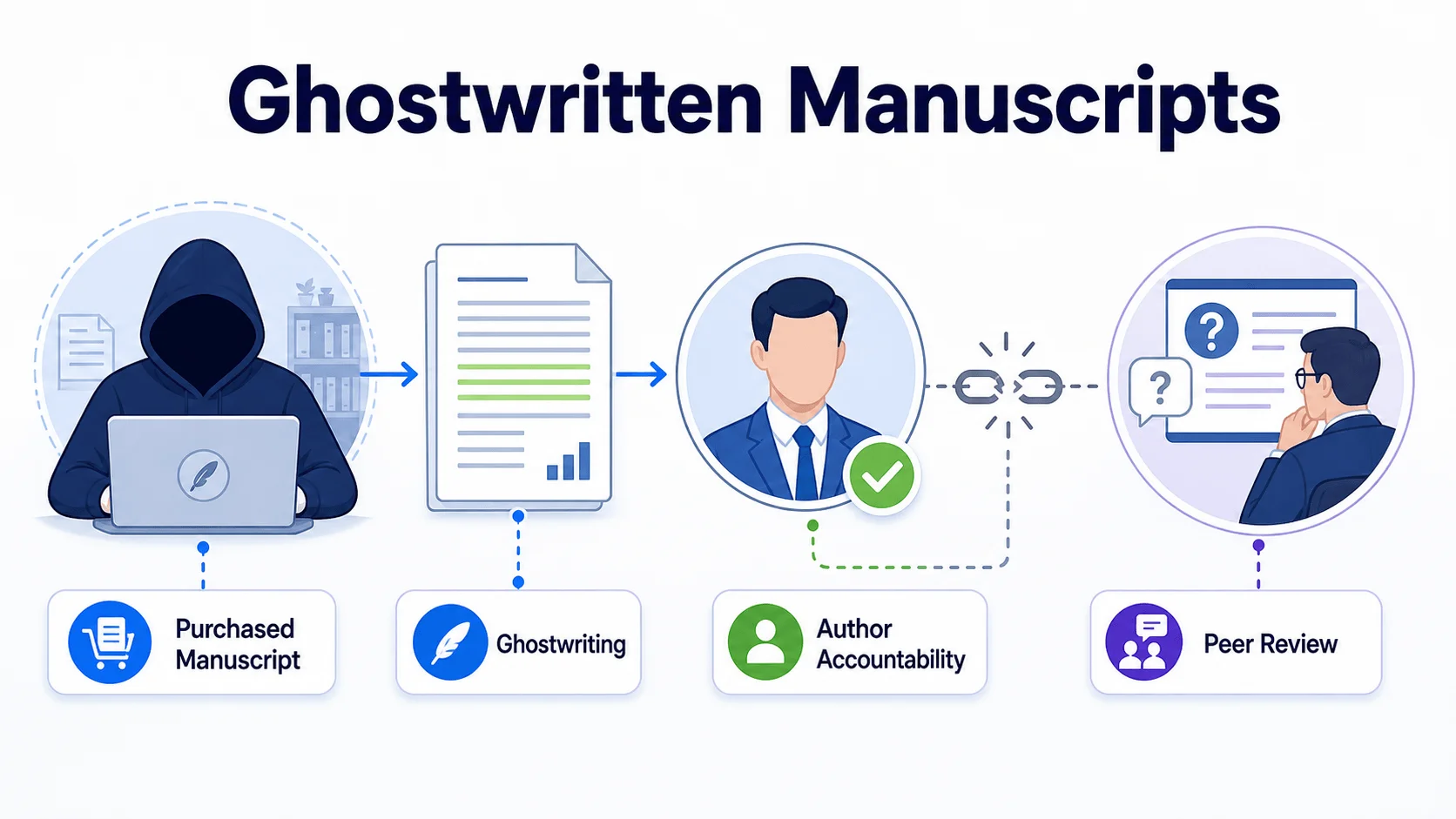
The biggest risk is not only ethical misconduct but also accountability. Authors whose names appear on a paper are expected to defend the data, methodology, and conclusions. With ghostwritten work, that responsibility becomes questionable, which can create serious problems during peer review or academic investigations.
3. Unauthorized Translation Plagiarism
Translation plagiarism happens when someone translates research from another language and presents it as original work without attribution.
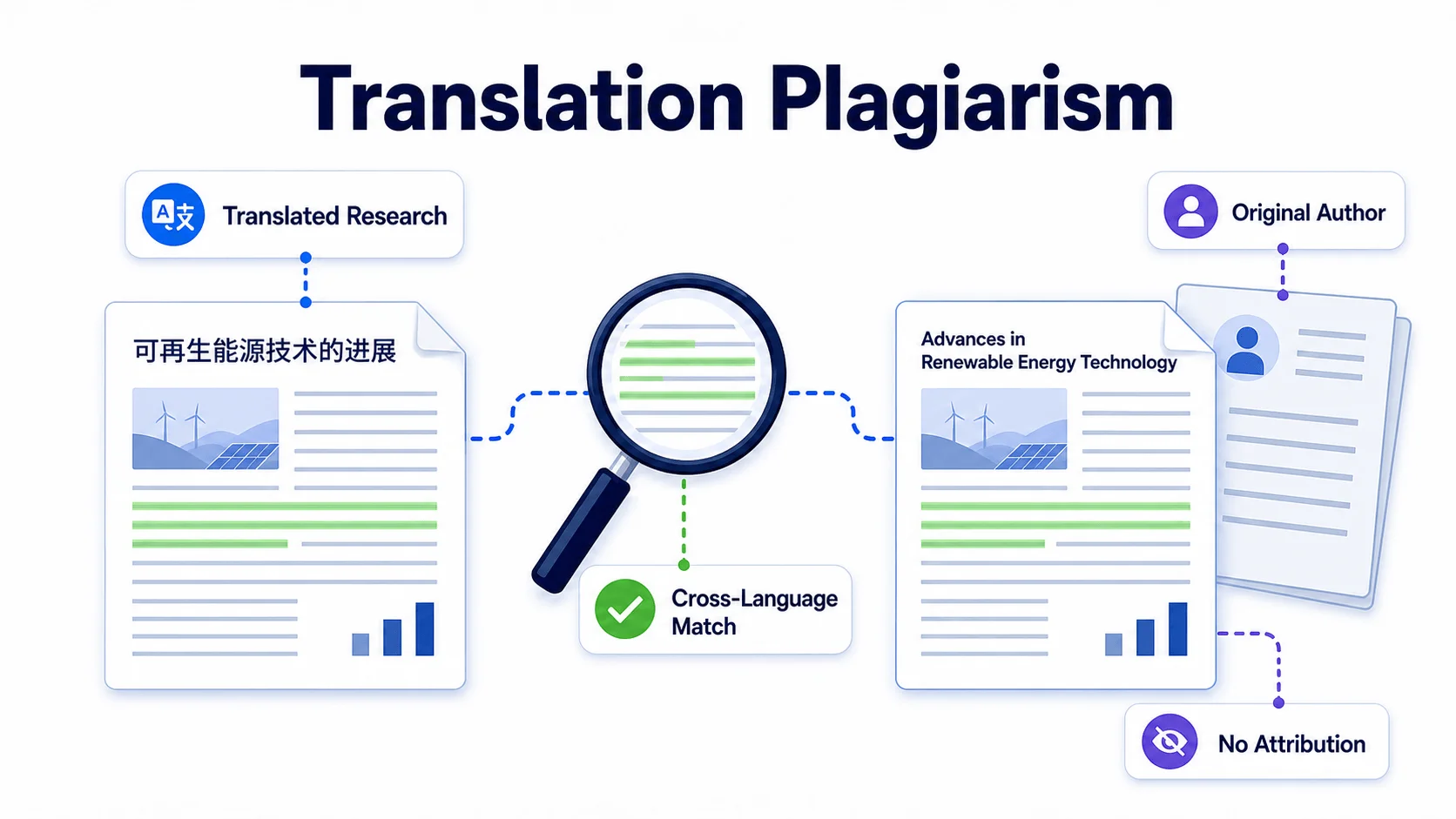
This practice has become more closely monitored in recent years because plagiarism detection tools and publishers increasingly use cross-language similarity analysis. A translated paper may look “new,” but the intellectual content still belongs to the original author.
4. Full Manuscript Recycling
Some researchers reuse entire manuscripts that were previously submitted, published, or rejected and resubmit them as supposedly new work. This can include duplicate submissions to multiple journals or republishing old material without disclosure.
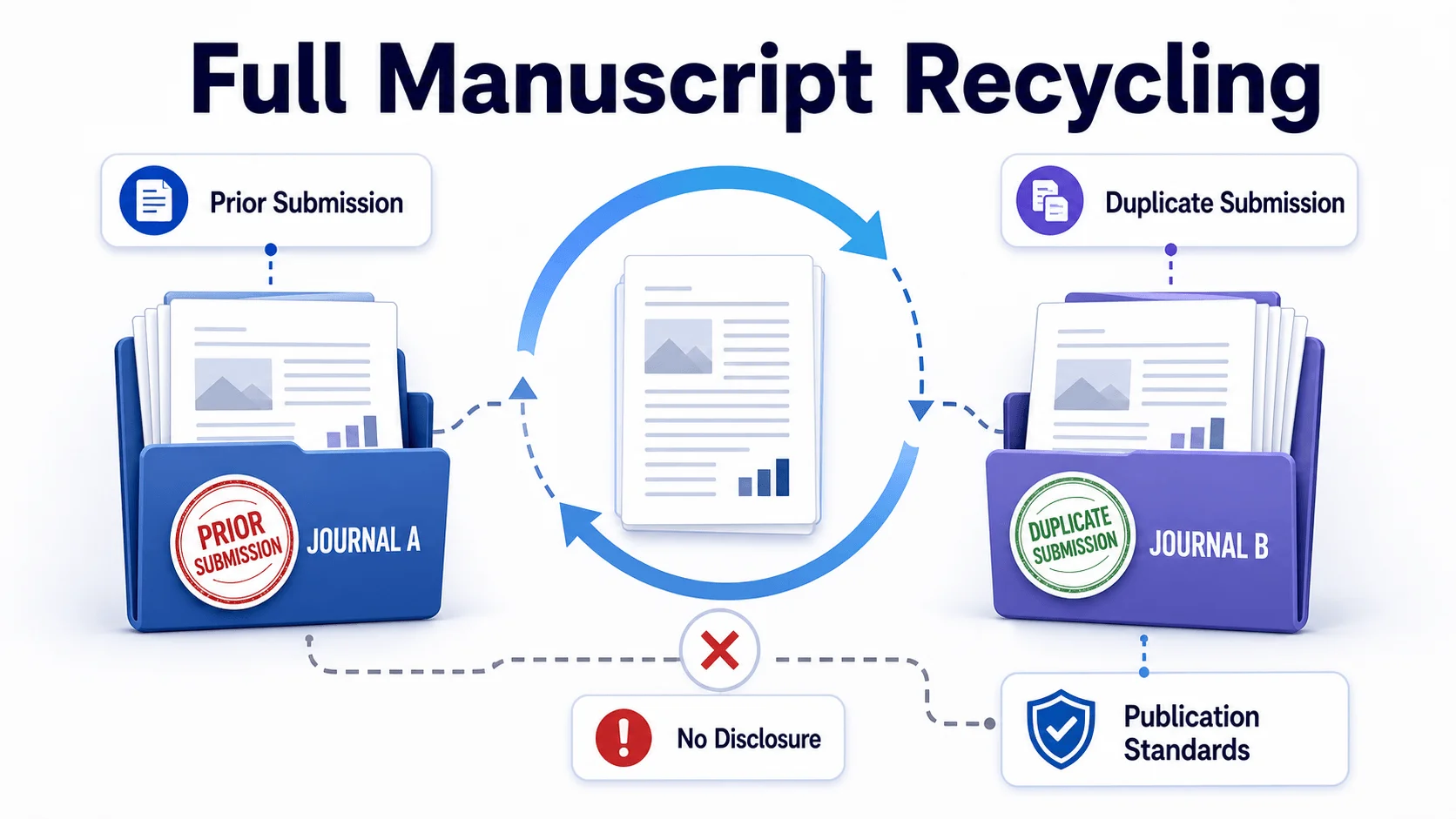
Even when the original author and the submitting author are the same person, misleading journals about prior publication raises major ethical concerns. Many publishers treat this as a serious violation of publication standards.
5. Plagiarism of Unpublished Peer Review Manuscripts
A particularly serious form of global plagiarism occurs when someone misuses confidential research obtained during the peer review process. Reviewers or editors may gain access to unpublished manuscripts, experimental data, or novel research findings and later incorporate that material into their own publications without permission or attribution.
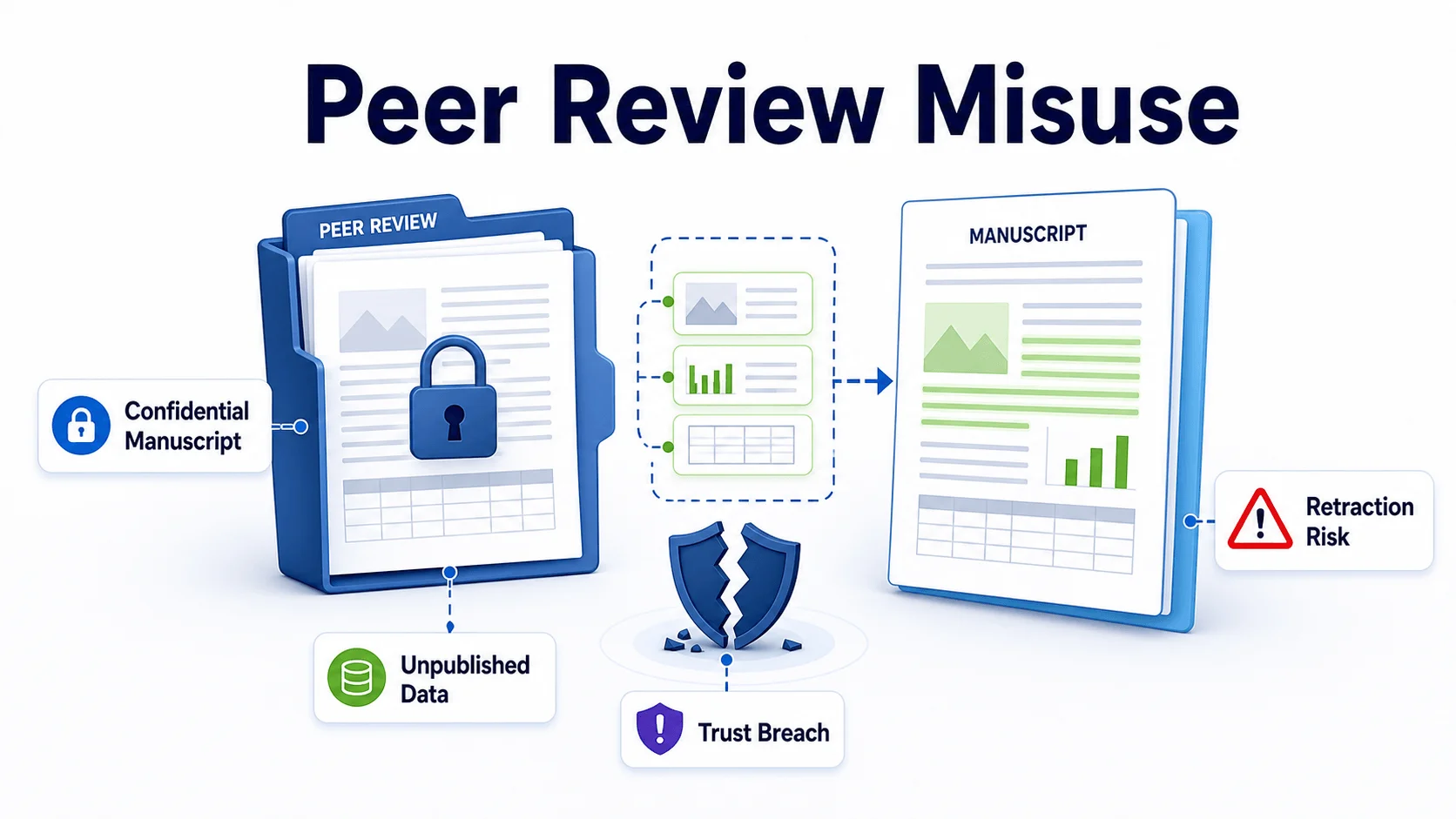
Because peer review is built on confidentiality and academic trust, this type of misconduct is considered both plagiarism and a breach of publication ethics. Cases involving stolen peer review content often result in severe professional consequences, including article retractions, institutional investigations, and loss of editorial or reviewer privileges.
6. Misappropriation of Collaborative Research Work
Global plagiarism can also occur within research collaborations when one contributor publishes shared work under their sole authorship while excluding the original collaborators.
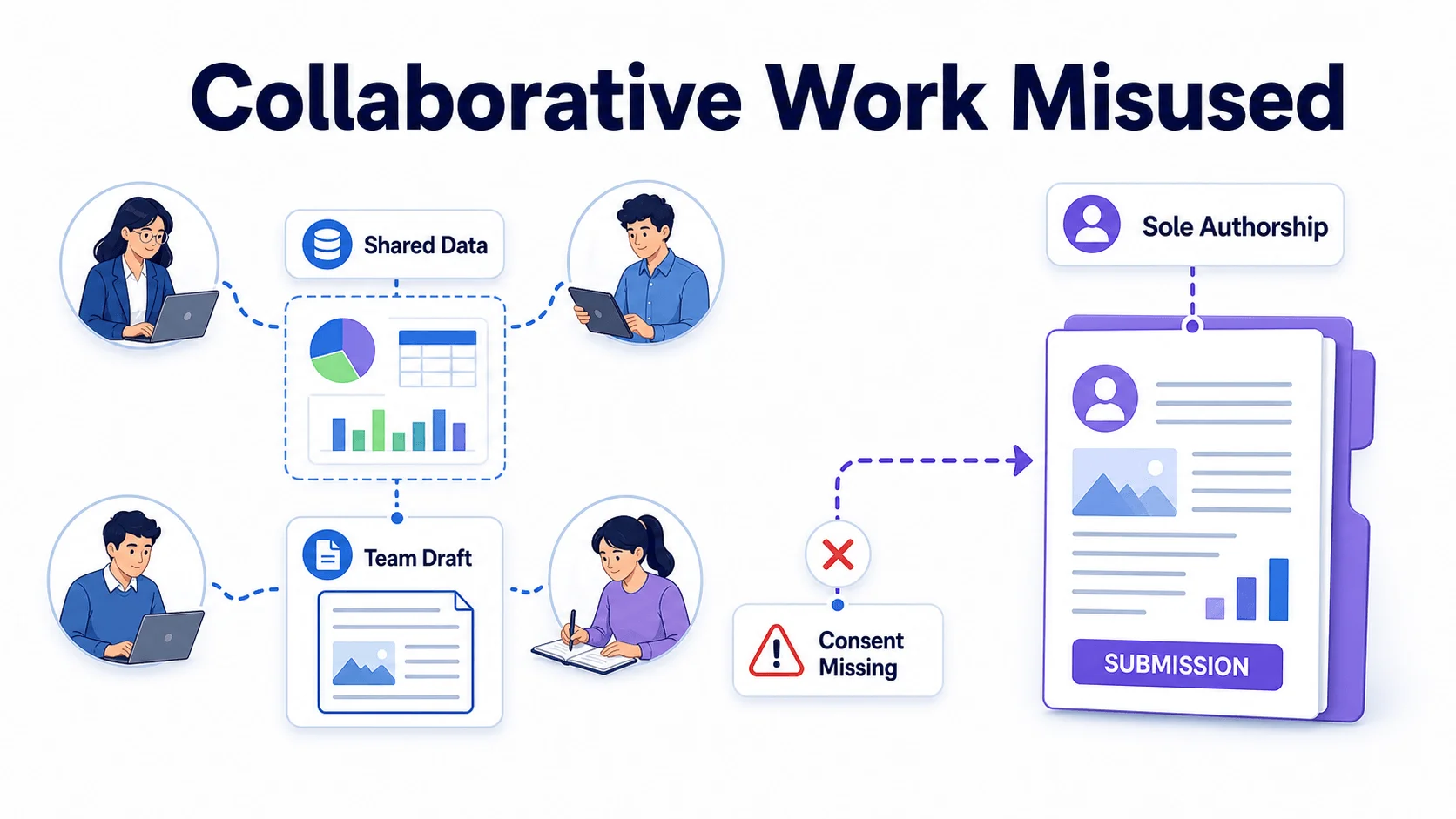
For example, a researcher may take jointly developed data, unpublished analyses, or draft manuscripts from a research team and independently submit them to a journal without the consent of the other contributors. Even if the plagiarist participated in the project, claiming exclusive ownership of collaborative intellectual work still constitutes serious academic misconduct.
7. AI-Assisted Full-Content Plagiarism
With the rise of generative AI tools, some cases of global plagiarism now involve using AI to heavily rewrite or paraphrase an existing paper while preserving the original research structure, arguments, and findings.
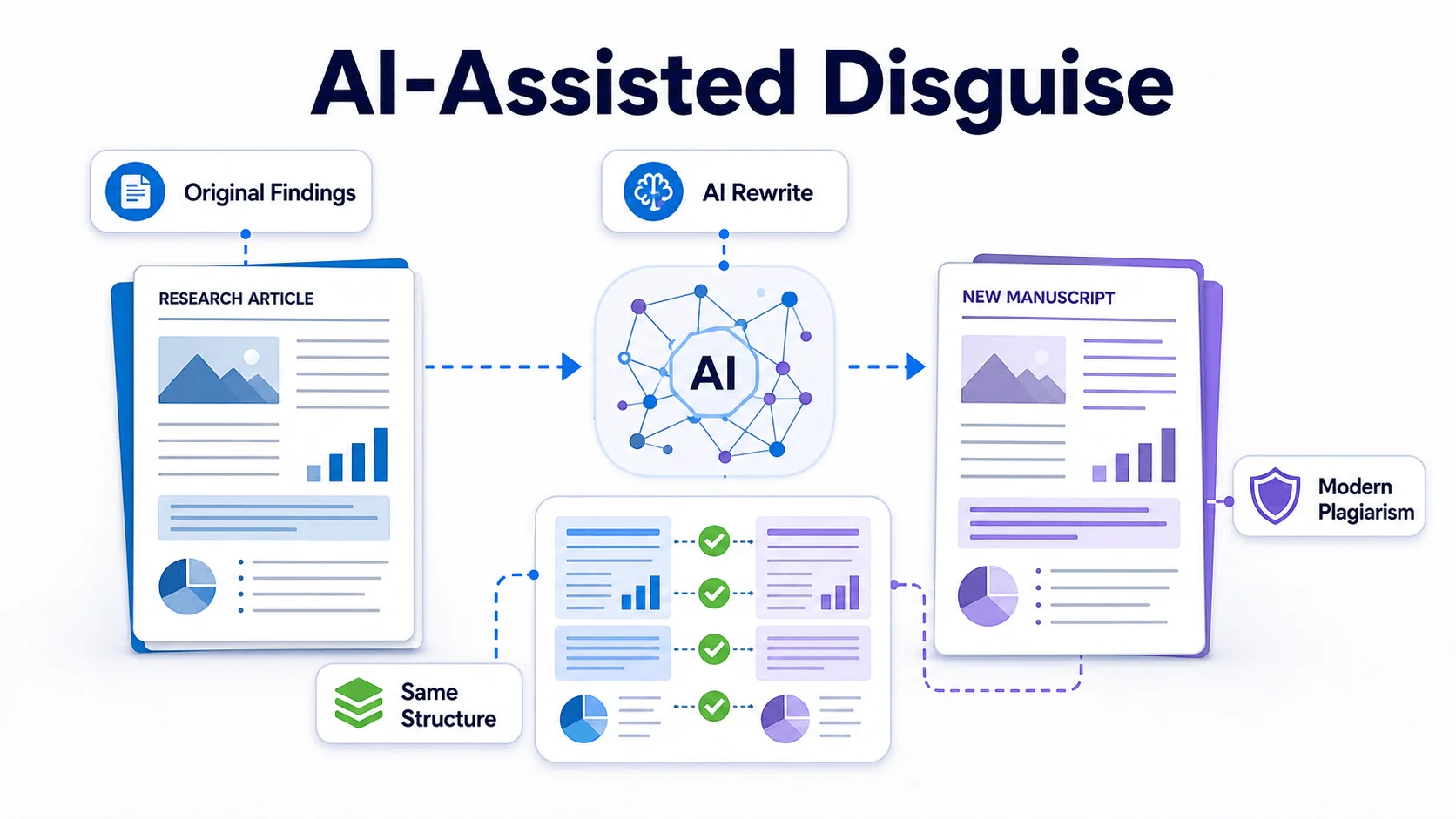
Although the wording may appear different on the surface, the underlying intellectual contribution still originates from another author. Many publishers and research integrity experts increasingly view AI-assisted manuscript disguise as a modern form of plagiarism rather than genuine original authorship.
Global Plagiarism vs Other Types of Plagiarism
As we know, plagiarism can appear in many different forms in academic writing and publishing, and each type may involve different definitions, levels of severity, and academic consequences.
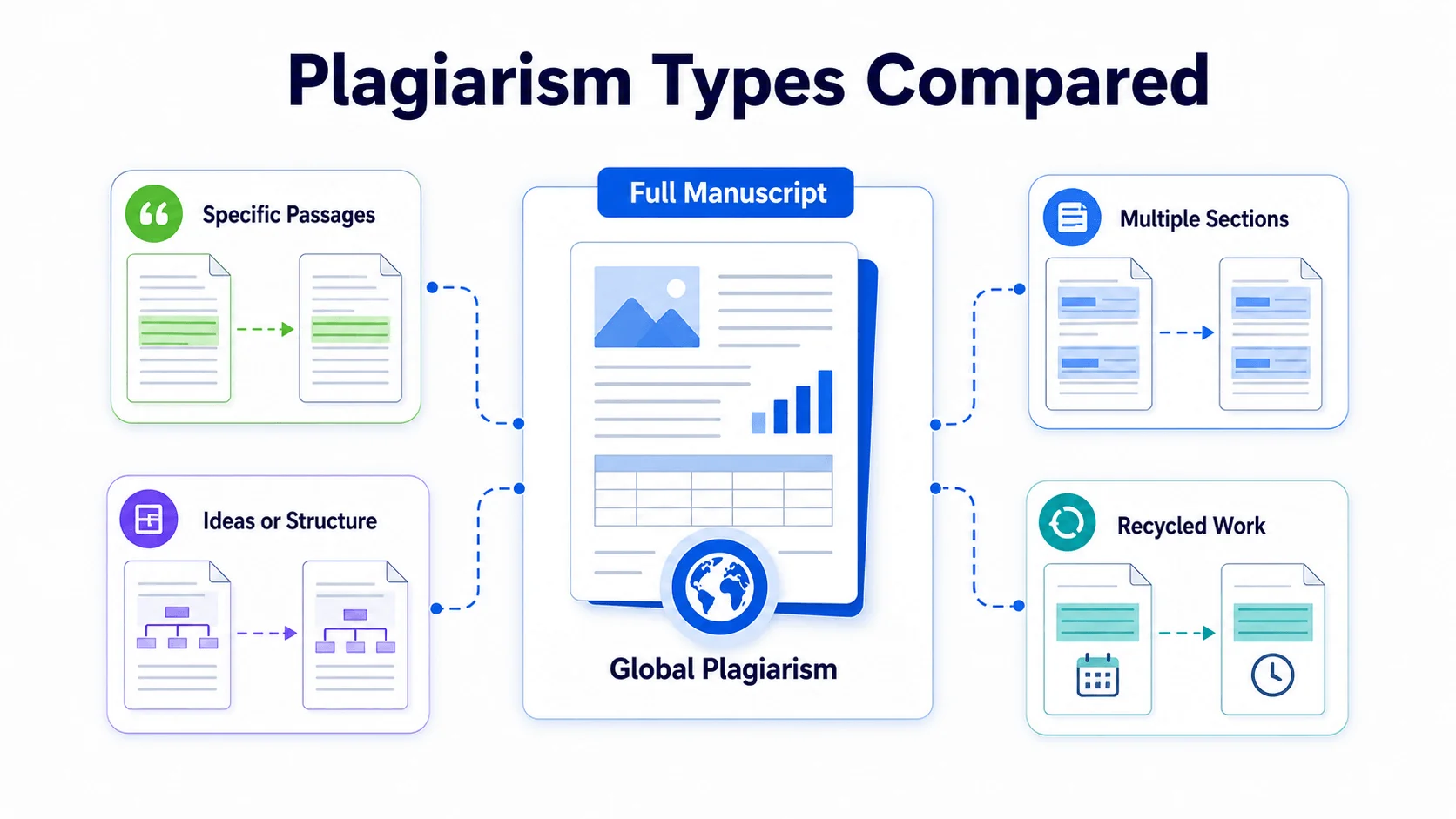
So how does global plagiarism differ from other common forms of plagiarism? The comparison below helps clarify the key distinctions between them.
Type of Plagiarism | What It Involves | Scope of Copied Content | Original Contribution | Severity |
|---|---|---|---|---|
Global Plagiarism | Submitting an entire work created by someone else | Full manuscript or project | Almost none | Very severe |
Direct Plagiarism | Copying text word-for-word without citation | Specific passages | Partial | High |
Patchwork (Mosaic) Plagiarism | Combining copied content from multiple sources | Multiple sections | Limited | Moderate to high |
Paraphrasing Plagiarism | Rewriting ideas without proper attribution | Ideas or structure | Some | Moderate |
Self-Plagiarism | Reusing previously submitted or published work without disclosure | Entire sections or full papers | Original but recycled | Moderate |
The Consequences of Global Plagiarism
Because global plagiarism involves false authorship of an entire work, the consequences are often severe and long-lasting. In academic publishing, a single case can affect not only publication outcomes but also professional credibility and future research opportunities.
Journal Rejection and Retraction
Most journals now use plagiarism detection software during editorial screening. If global plagiarism is identified before peer review, the manuscript is usually rejected immediately.
In more serious cases, plagiarism may be discovered after publication, leading to:
Article retraction
Editorial investigations
Public misconduct notices
Permanent corrections to publication records
Damage to Academic Reputation
Global plagiarism can seriously damage a researcher’s credibility within the academic community. Once authorship integrity is questioned, reviewers, collaborators, and institutions may become less willing to trust future work.
Unlike minor citation mistakes, global plagiarism is often viewed as deliberate deception, making reputational recovery particularly difficult.
Institutional and Funding Consequences
Universities and research organizations may launch formal ethics reviews when plagiarism allegations arise. Depending on the severity of the case, consequences may include:
Academic suspension or dismissal
Degree revocation
Research misconduct investigations
Restrictions on grant applications
Loss of institutional or financial support
Negative effects on hiring and promotion opportunities
For early-career researchers, these penalties can have long-term career implications.
Legal and Copyright Risks
Global plagiarism may also create legal and copyright problems, especially when published material is reused without permission. Submitting another author’s work under a different name can violate intellectual property rights and publisher agreements.
How to Avoid Global Plagiarism
In some cases, global plagiarism is intentional. But not every serious plagiarism issue starts with deliberate misconduct. Disorganized research records, unclear authorship boundaries, careless source management, or overreliance on third-party writing services can all create major ethical problems during the publication process.
As publishing standards and manuscript screening become more rigorous, researchers need to stay actively involved in every stage of writing, revision, and submission to protect authorship transparency and avoid unnecessary plagiarism risks.
Maintain Clear Research Documentation
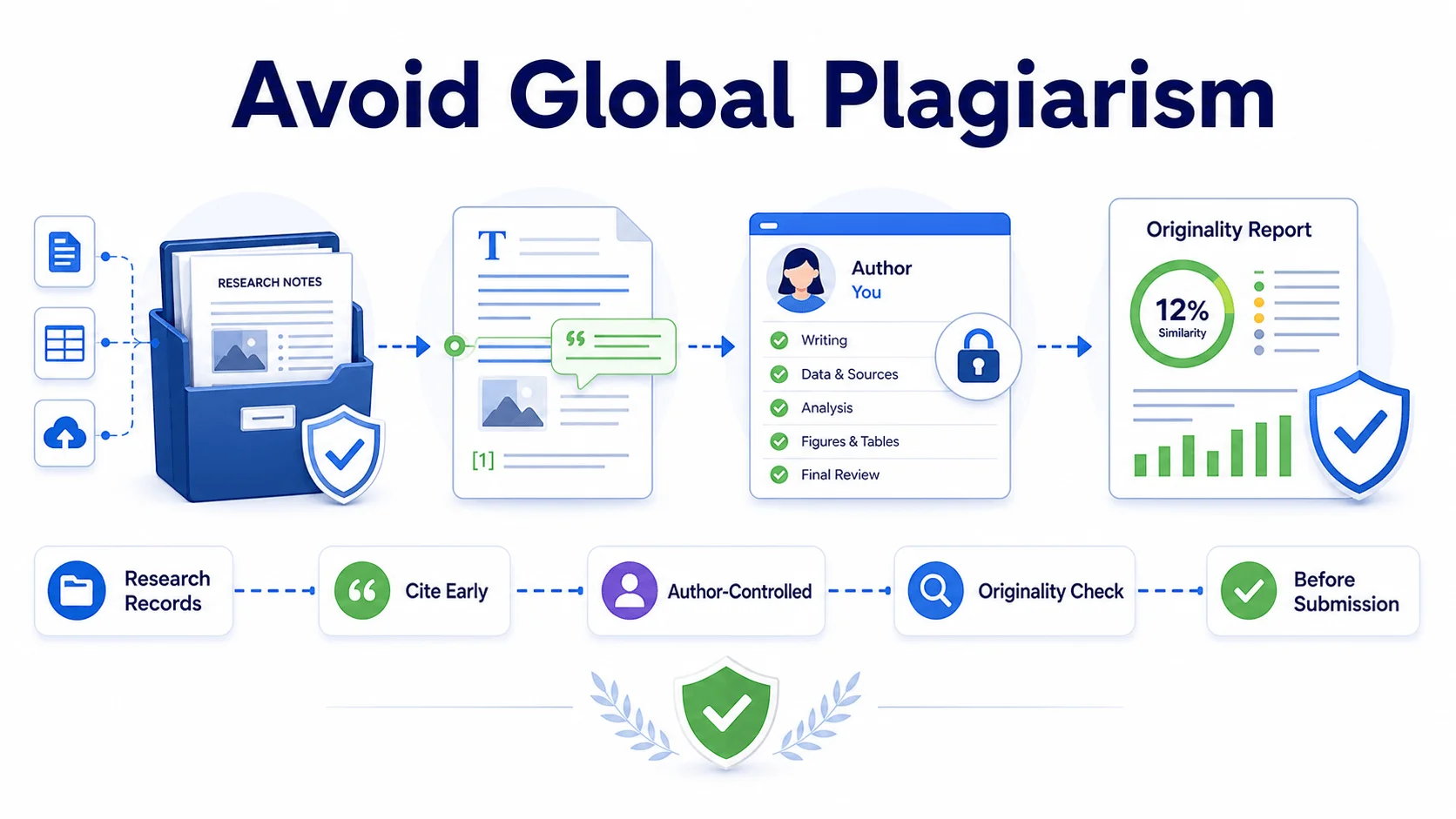
Keeping detailed research records makes it easier to prove authorship and track the development of a manuscript over time. This is especially important for collaborative projects and multi-stage submissions.
Good practices include:
Saving draft histories and revision records
Tracking all research sources from the beginning
Documenting contributor roles clearly
Keeping notes on data collection and analysis processes
Clear documentation can also help resolve authorship disputes during peer review or institutional investigations.
Cite and Attribute Early
One common mistake is postponing citations until the final editing stage. This increases the risk of missing references or accidentally presenting sourced material as original writing.
Instead, researchers should cite sources while drafting the manuscript. Early attribution helps maintain transparency and reduces unintentional plagiarism risks later in the submission process.
Be Careful With Third-Party Editing Services
Professional editing services can improve grammar and readability, but researchers should clearly distinguish language editing from ghostwriting.
Before working with external services, it is important to:
Confirm that the manuscript remains fully author-controlled
Avoid services offering complete manuscript writing
Review all edited sections carefully before submission
Verify that no unauthorized content has been added
Maintaining full ownership of the research and writing process is essential for publication ethics.
Use Originality Checks Before Submission
Professional plagiarism detection tools can help researchers identify problematic overlap before journal submission by comparing manuscripts against academic databases, published literature, repositories, and online sources.
Commonly used tools include:
iThenticate — widely used by journals and publishers for scholarly manuscript screening
Thentify — designed to generate similarity reports closely aligned with iThenticate-style outputs for pre-submission checking
These tools can be valuable for identifying potential overlap before submission, but similarity scores should not be interpreted in isolation. Researchers should also review flagged sections carefully to ensure appropriate citation, paraphrasing, and source attribution before submitting a manuscript.
Final Thoughts
Global plagiarism involves more than copied content. It also relates to authorship, research ethics, and academic responsibility in modern publishing.
As detection methods become more advanced, understanding global plagiarism can help researchers and students approach academic writing with greater awareness and confidence.
Hopefully, this guide has made the topic easier to understand. In the end, transparent research practices and genuine ownership of academic work remain essential in strong academic writing.
FAQ
What is global plagiarism?
Global plagiarism happens when someone submits an entire work created by another person and presents it as original authorship. This can include research papers, essays, dissertations, or published manuscripts.
Is global plagiarism the same as self-plagiarism?
No. Self-plagiarism involves reusing one’s own work, while global plagiarism involves copying someone else’s work.
Can global plagiarism happen without direct copy-and-paste?
Yes. Global plagiarism can also involve ghostwritten manuscripts, purchased papers, translated research, or heavily rewritten content that falsely claims original authorship.
How do journals identify global plagiarism?
Journals use plagiarism detection software alongside editorial review and database comparisons to identify suspicious overlap. Many publishers also use cross-language screening and AI-assisted analysis during manuscript evaluation.
What is the best way to avoid global plagiarism?
Maintaining transparent authorship records, proper attribution, and careful manuscript review are the most effective strategies.