

Academic Misconduct: Definition, Types & Consequences

Academic misconduct has become increasingly complex as AI-assisted writing tools become more common in academic publishing.
Questions surrounding authorship, citation transparency, and acceptable AI usage are creating new integrity concerns for researchers and academic authors alike. At the same time, journal and institutional policies do not always apply the same standards.
What actually counts as academic misconduct today? Let’s explore the most common risks, evolving AI-related concerns, and practical ways to maintain research integrity in scholarly publishing.
What Is Academic Misconduct?
Definition
Academic misconduct refers to behavior that violates established academic standards in order to gain an unfair advantage in research, scholarship, or publication. It may occur at any stage of the academic publishing process, including research conduct, manuscript preparation, authorship, peer review, citation practices, and editorial communication.
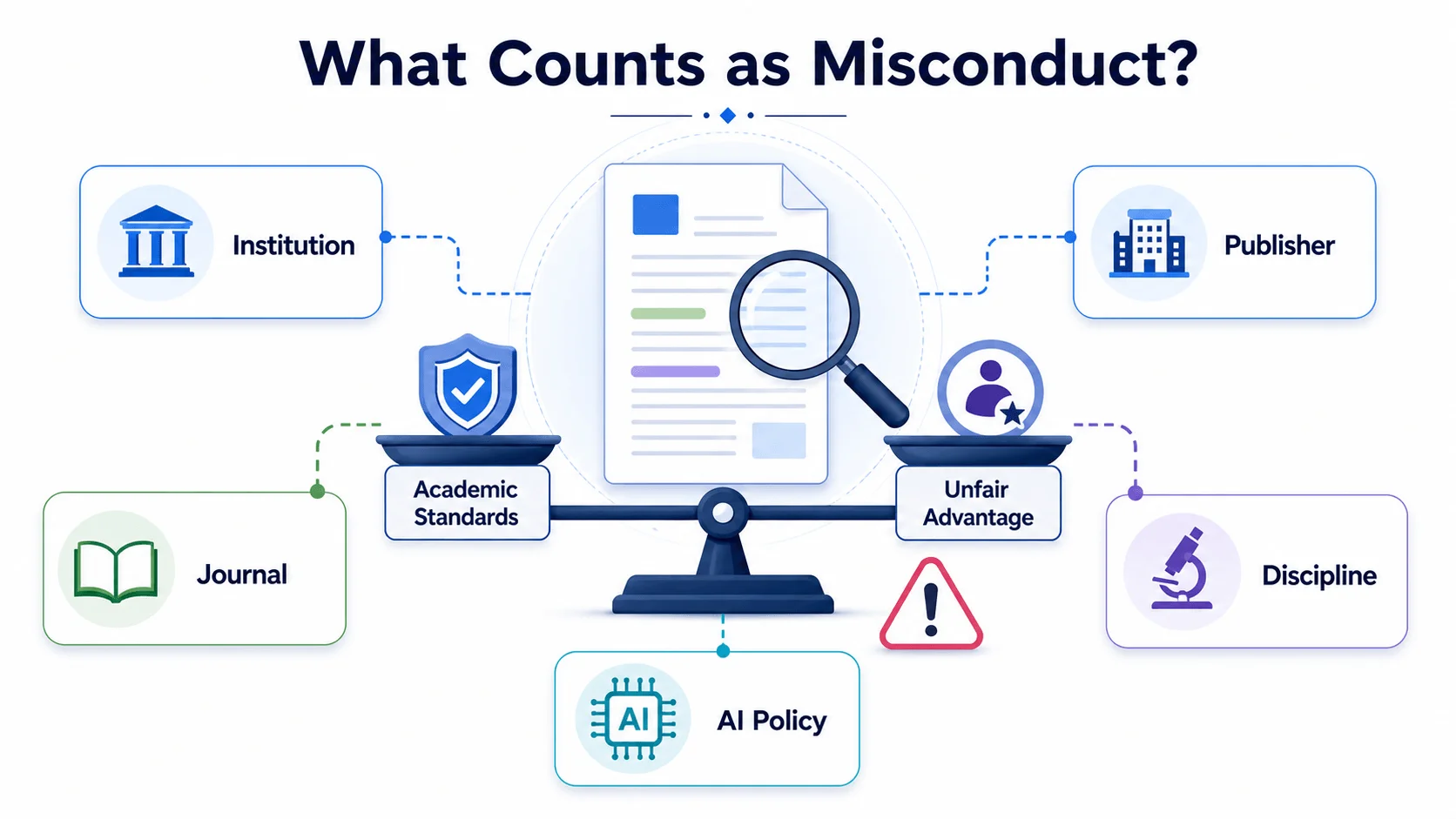
Definitions May Differ Across Contexts
Although the core concept is widely recognized, definitions and enforcement standards can vary across institutions, disciplines, journals, and publishers. Expectations regarding collaboration, authorship attribution, citation practices, and AI-assisted writing are not always applied consistently across academic and publishing environments.
For example, some publishers permit limited AI-assisted language editing when properly disclosed, while others prohibit the use of generative AI entirely. As a result, practices considered acceptable in one context may be treated as academic misconduct in another.
If the definition still feels abstract, examining common real-world scenarios can help clarify how academic misconduct appears in research and publishing practice.
Common Types of Academic Misconduct
Academic misconduct covers a wide range of behaviors that violate academic integrity standards. While policies vary across institutions and publishers, several forms appear consistently in research and scholarly publishing environments.
1. Plagiarism
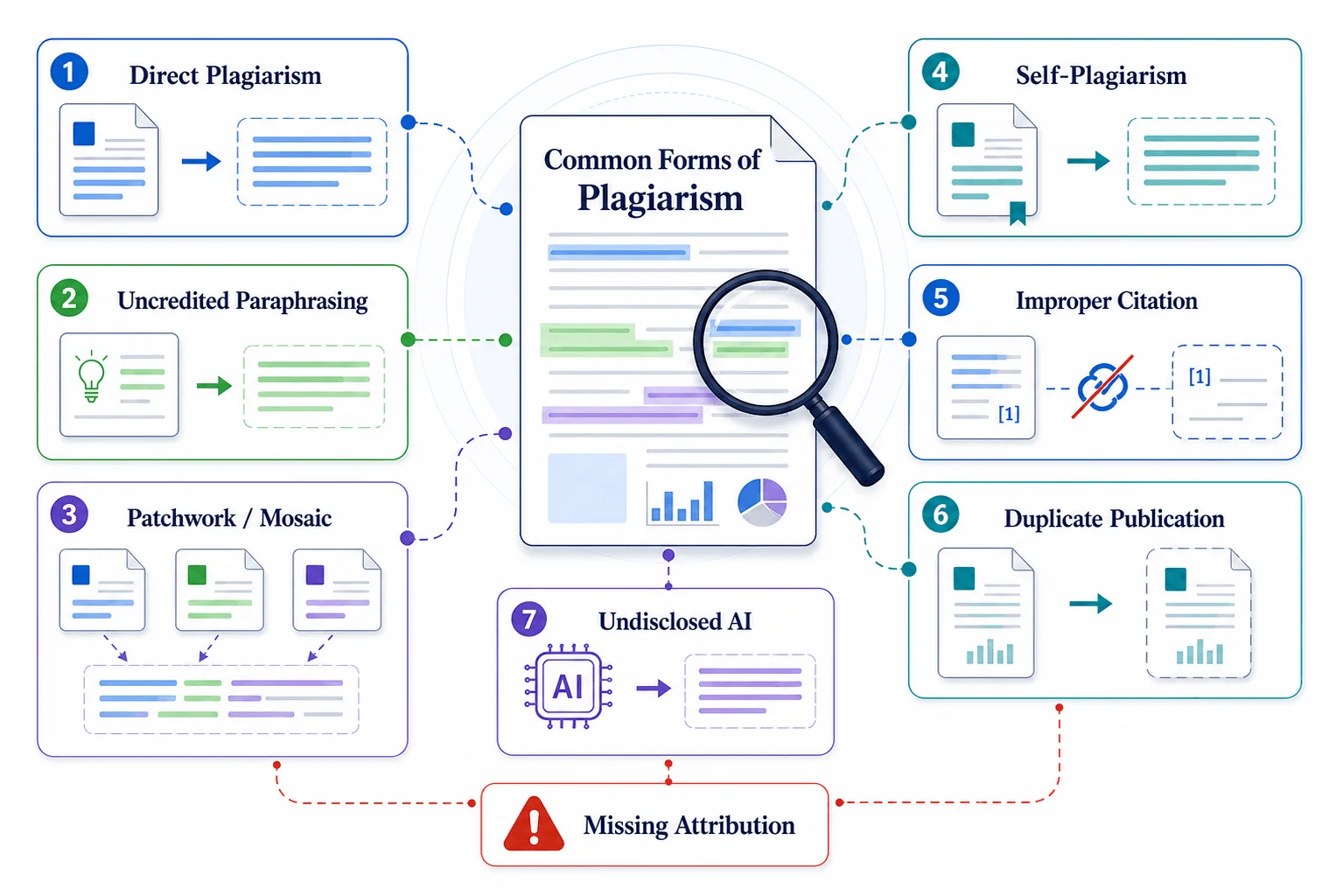
Plagiarism involves using another author’s words, ideas, or intellectual contributions without proper attribution. It may include copied language, paraphrased content, or uncredited research concepts. Common forms include:
Direct plagiarism
Self-plagiarism
Patchwork plagiarism
Mosaic plagiarism
Accidental plagiarism
Improper citation or source attribution
Uncredited paraphrasing
Duplicate publication
AI-generated content has also become a growing concern. In some publishing contexts, submitting AI-written material without disclosure may be treated as improper authorship or attribution.
2. Cheating
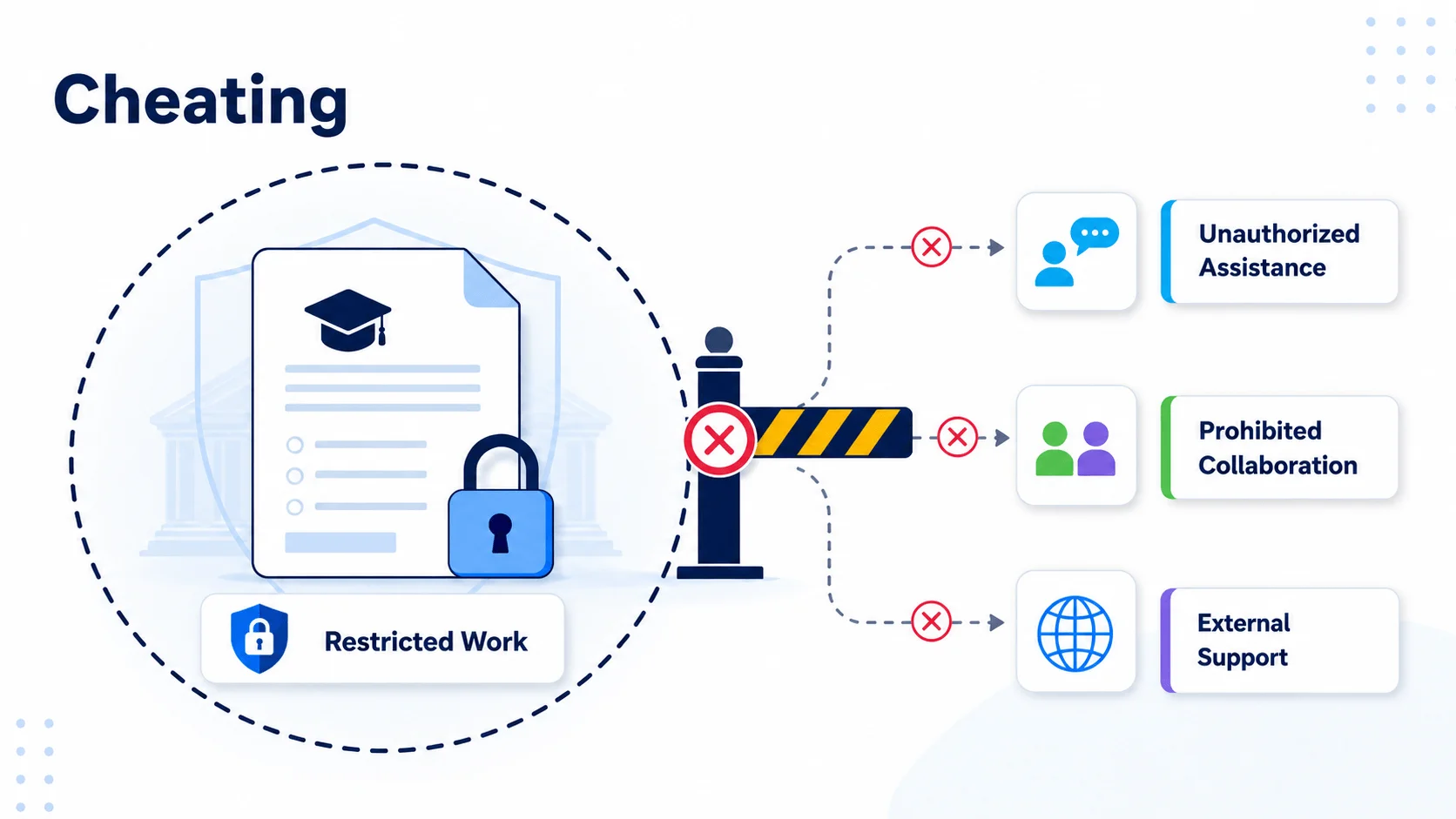
In academic and research settings, cheating generally refers to using unauthorized assistance in evaluations, certification processes, or restricted academic work. This may involve prohibited collaboration, unauthorized editing support, or undisclosed external assistance.
3. Fabrication and Falsification
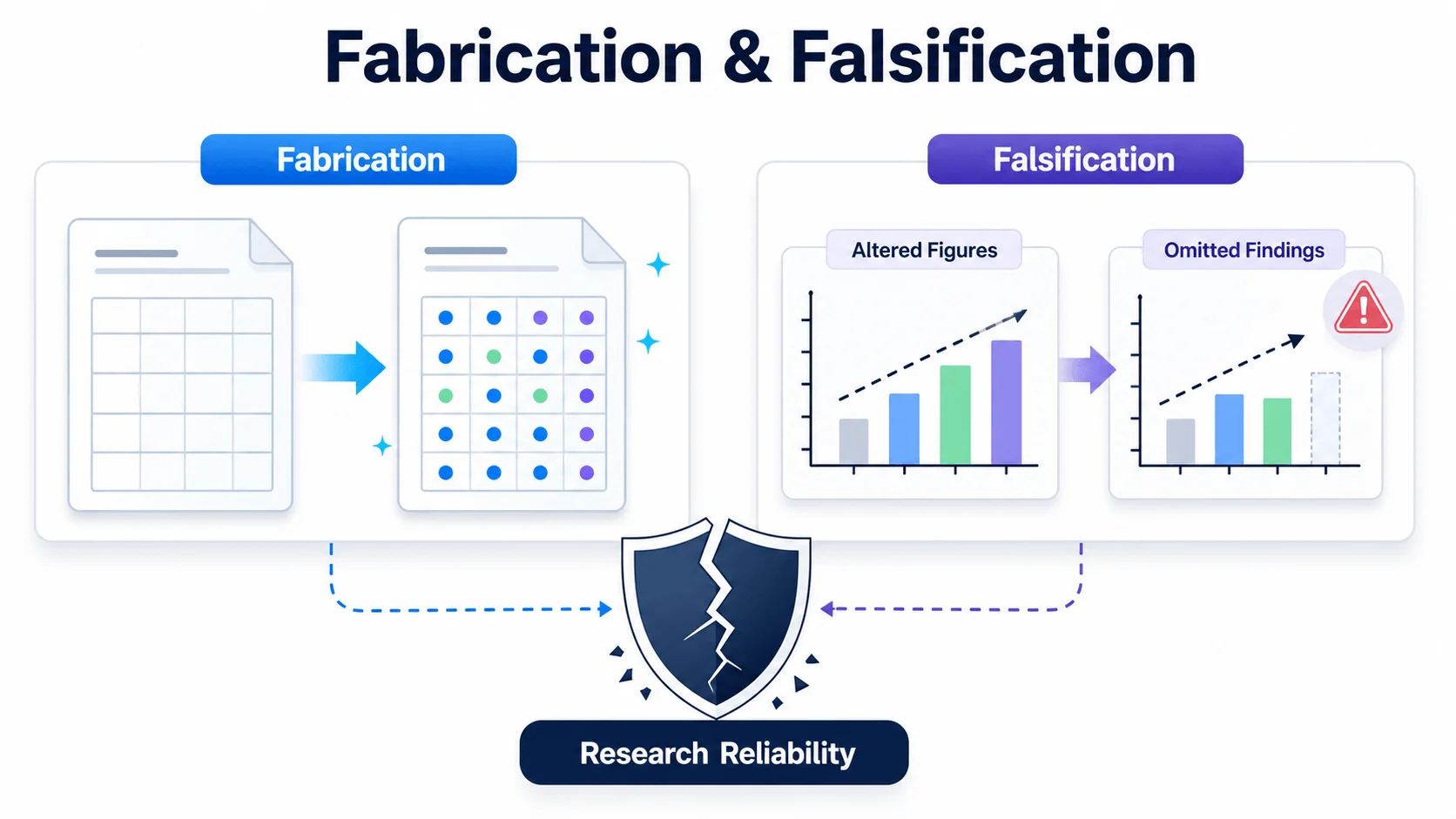
Fabrication involves creating false information, while falsification refers to manipulating existing data or research materials. Examples include altered figures, omitted findings, or falsified documentation.
These violations are considered especially serious because they directly undermine research reliability and scholarly credibility.
4. Collusion and Contract Cheating
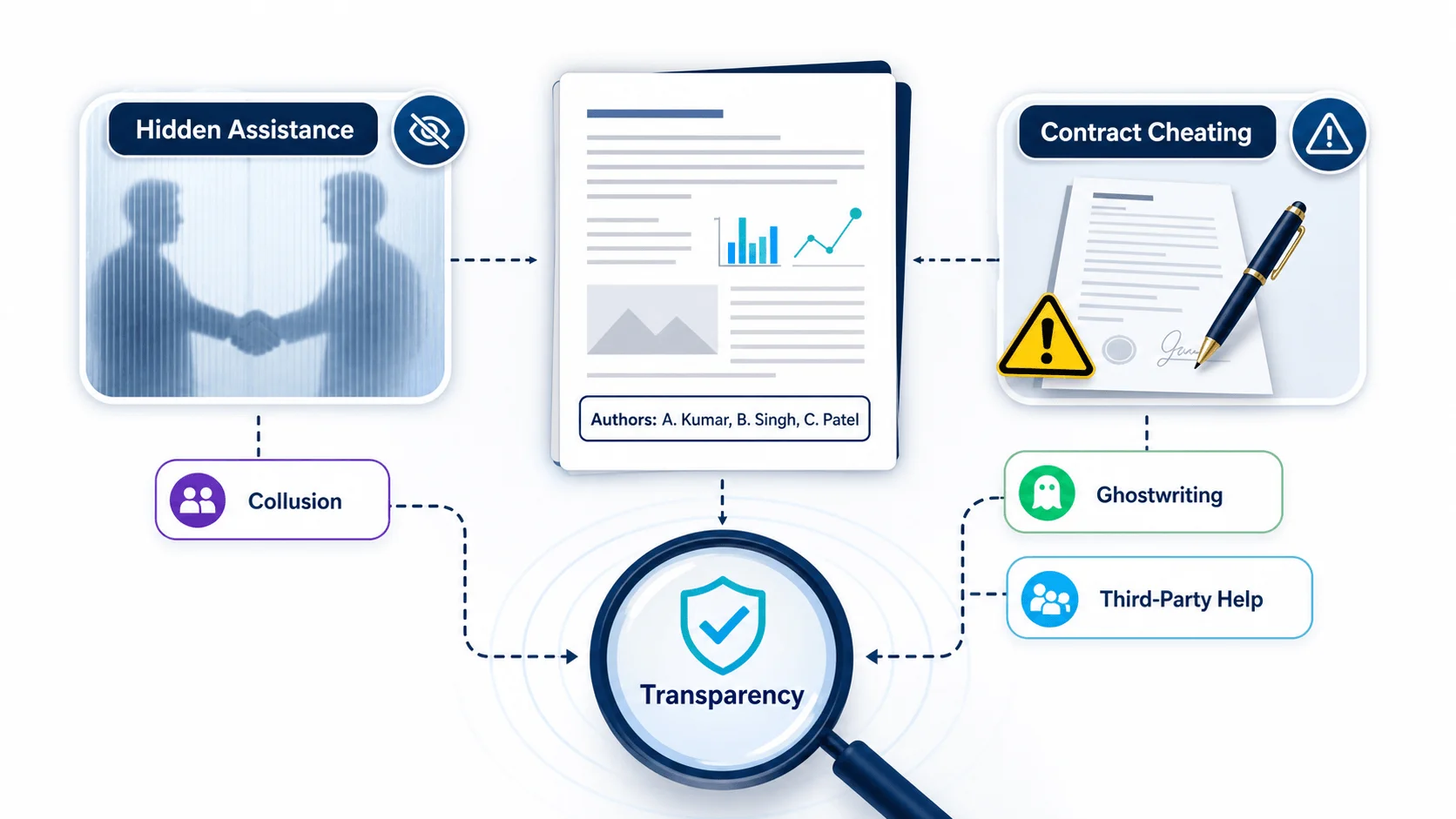
Collusion occurs when individuals collaborate in ways that violate authorship or contribution policies. Contract cheating involves third-party writing services, ghostwriting, or undisclosed manuscript preparation assistance.
Such practices raise significant concerns regarding transparency and research integrity.
5. Unauthorized AI Usage
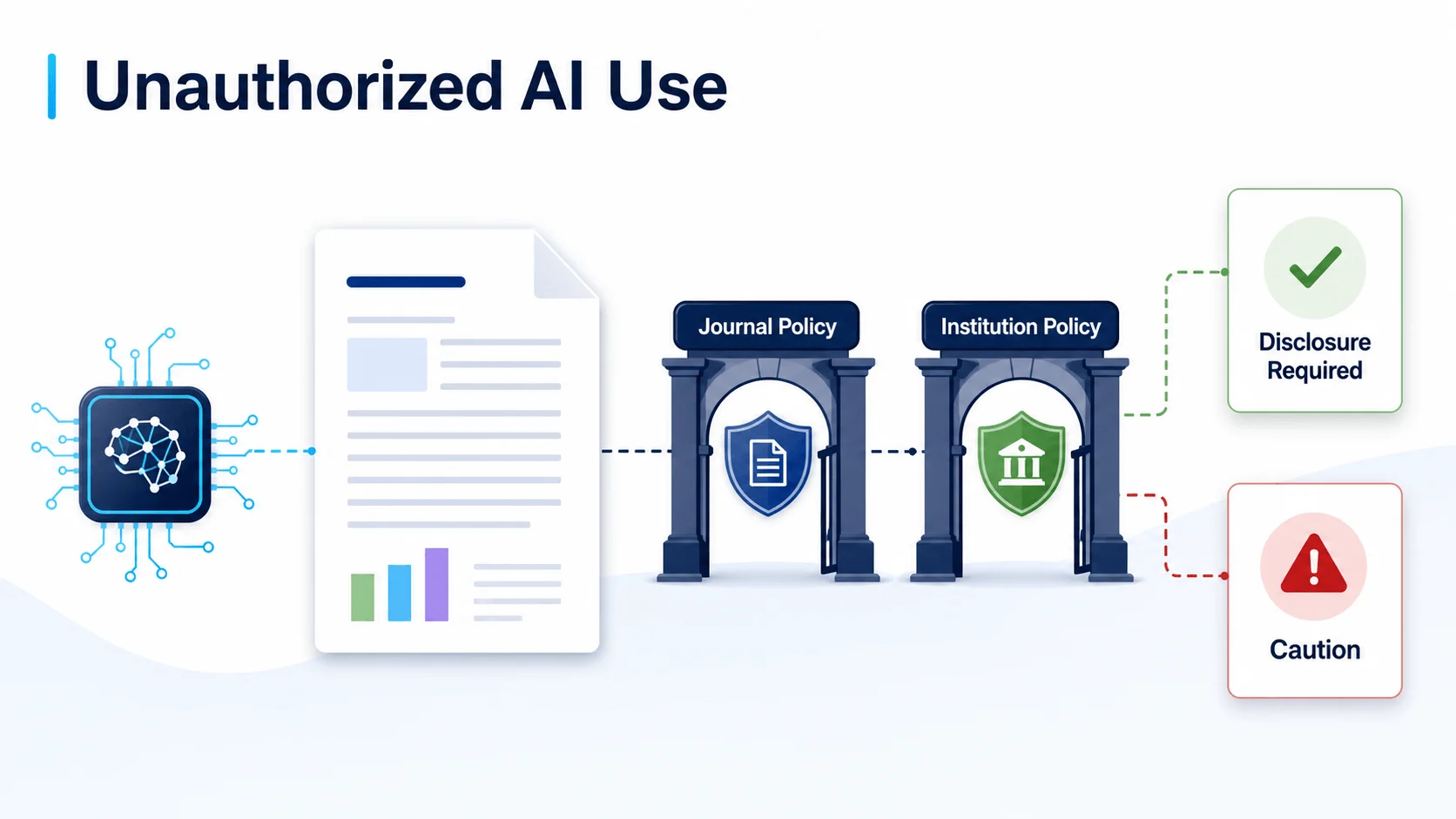
AI-assisted writing remains one of the most debated areas of academic misconduct. Some institutions and publishers allow limited AI support with disclosure requirements, while others restrict generative AI involvement entirely.
Because AI policies continue to evolve, understanding journal and institutional guidelines has become increasingly important for researchers and academic authors.
6. Authorship Misconduct
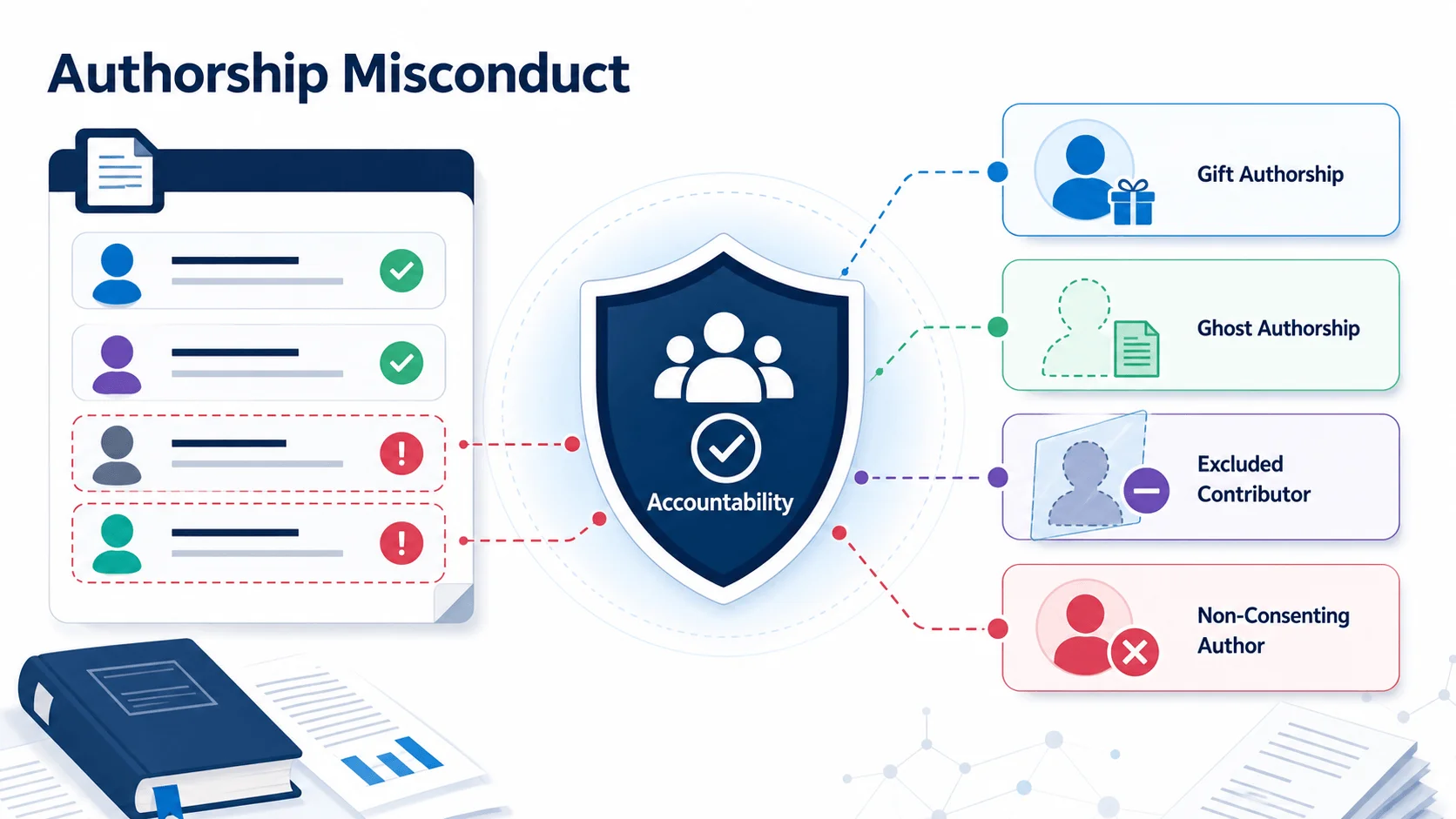
Authorship misconduct occurs when publication credit does not accurately reflect actual research contributions. In academic publishing, authorship is closely tied to accountability, making improper attribution a serious ethical issue.
This type of misconduct may involve adding individuals who made little or no contribution, excluding legitimate contributors, or concealing third-party involvement in manuscript preparation. Common examples include gift authorship, ghost authorship, and listing non-consenting authors on submitted papers.
7. Duplicate Submission and Redundant Publication
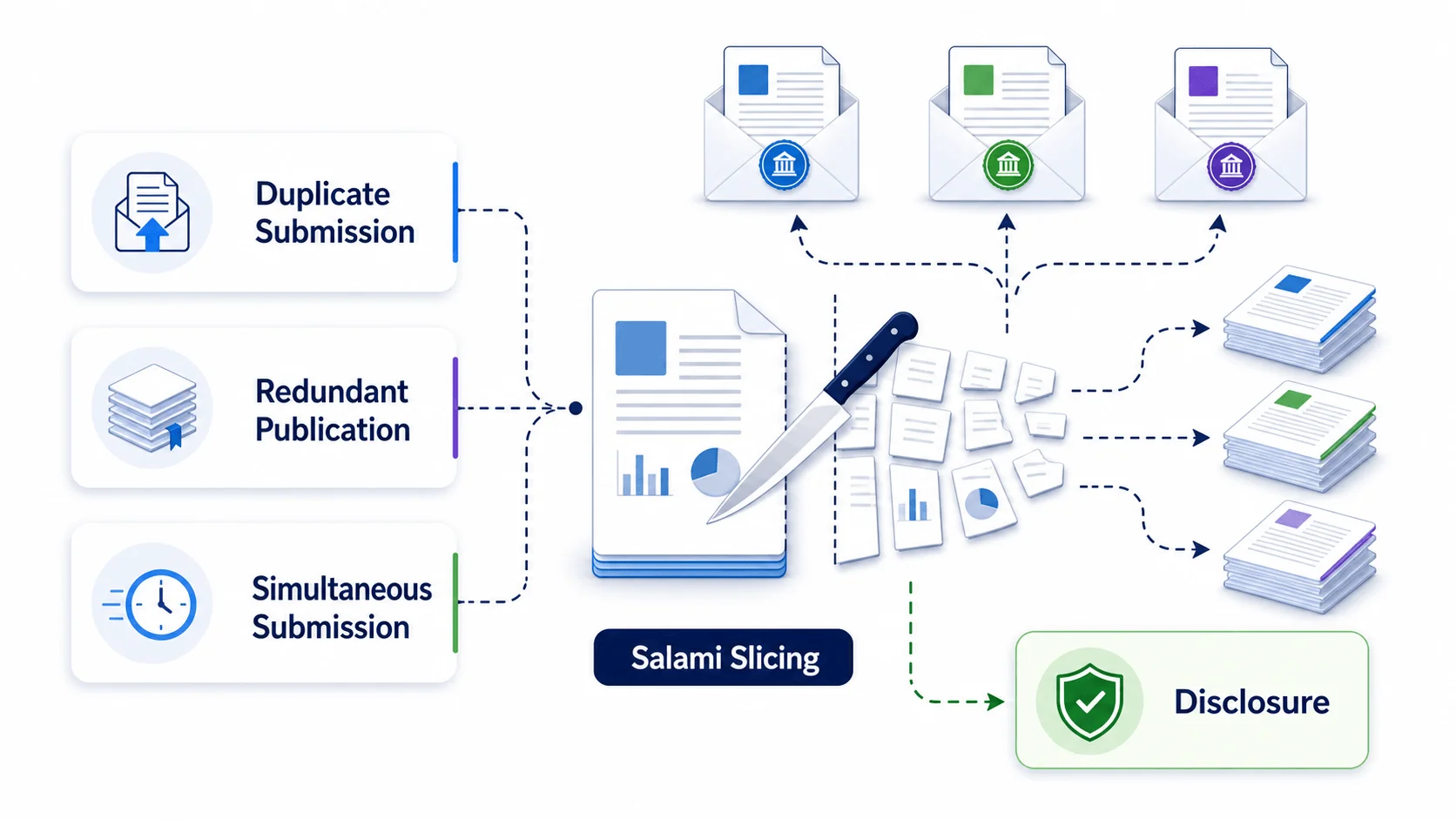
Duplicate submission refers to sending the same manuscript to multiple journals simultaneously without disclosure. Redundant publication involves publishing substantially similar research findings across different papers.
In research publishing, these practices can create confusion regarding originality and distort the academic record. Common forms include:
Simultaneous journal submission
Reusing previously published content
Salami slicing research into multiple minimal papers
Republishing translated articles without disclosure
8. Citation Manipulation
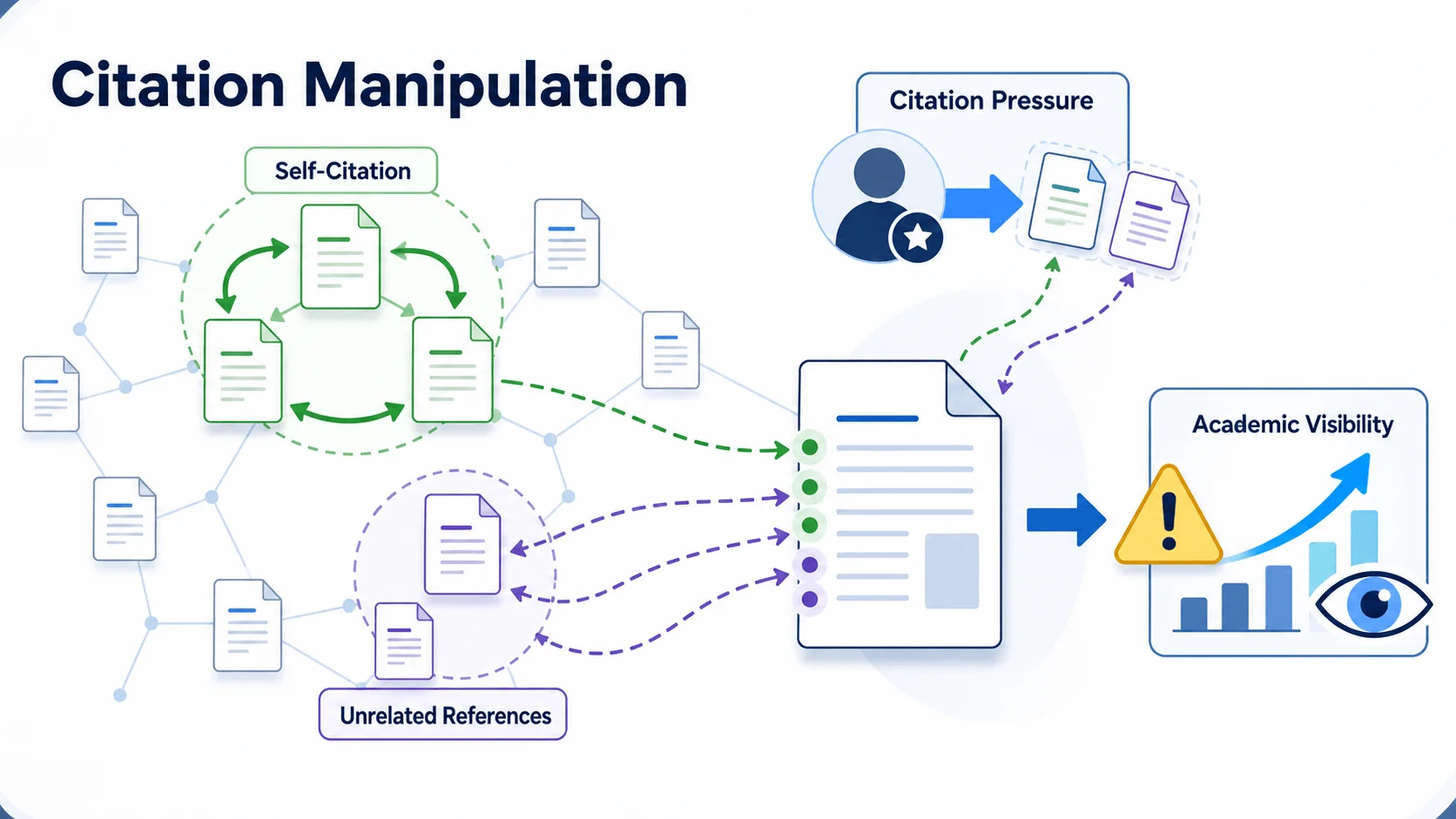
Citation manipulation involves using references in misleading or inappropriate ways to artificially increase citation counts or academic visibility. While citations are an essential part of scholarly communication, excessive or irrelevant referencing may raise ethical concerns.
This behavior may include unnecessary self-citation, adding unrelated references, or coordinated citation practices between authors and journals. In some cases, reviewers or editors may also pressure authors to include citations that are not academically necessary.
9. Peer Review and Research Ethics Violations
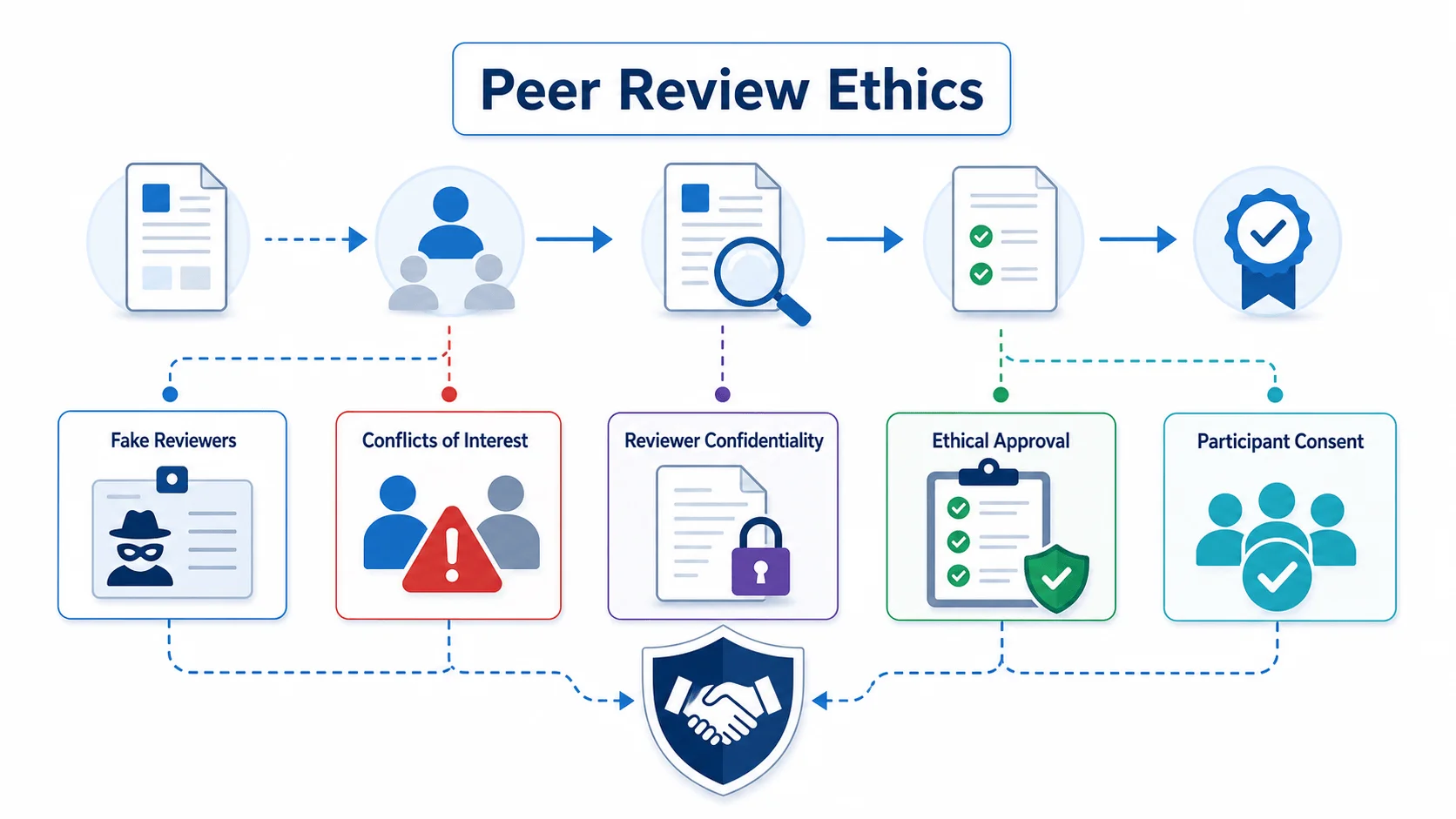
Academic misconduct may also occur during peer review or ethical approval processes. These violations affect research transparency and the credibility of scholarly publishing.
Examples include fake peer reviewer identities, undisclosed conflicts of interest, breaches of reviewer confidentiality, or conducting research without proper ethical approval and participant consent.
How AI Can Lead to Academic Misconduct
The growing use of generative AI in academic writing has created new concerns around research integrity, authorship, and transparency. While AI tools can improve efficiency during manuscript preparation, improper use may still violate institutional or publishing policies.
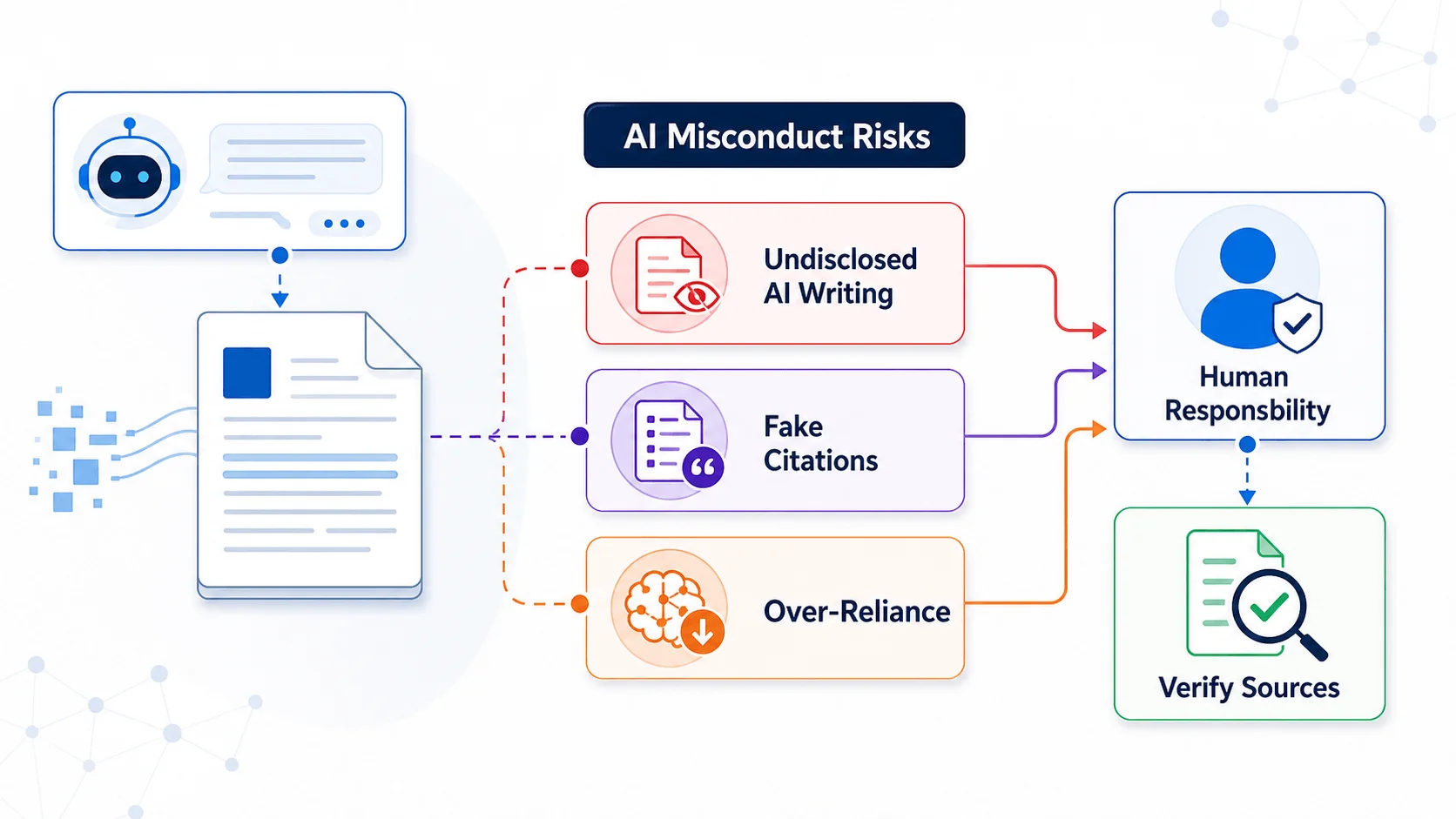
Undisclosed AI-Assisted Writing
Many journals and research institutions now require authors to disclose AI involvement in manuscript development. Problems typically arise when AI-generated text, paraphrasing, or summaries are presented as entirely original human authorship without transparency.
Because policies vary significantly across publishers, researchers may unintentionally violate submission guidelines when using AI tools without proper disclosure.
AI Hallucinations and Fake Citations
Generative AI tools can produce fabricated references, inaccurate quotations, or misleading summaries. In academic publishing, relying on unverified AI-generated information may damage research credibility and weaken the reliability of scholarly work.
Common risks include:
Fake citations or DOIs
Misinterpreted studies
Unsupported claims
Over-Reliance on AI in Academic Writing
Another growing concern is excessive dependence on AI-generated analysis or argument development. While AI can support drafting and language refinement, researchers are still responsible for ensuring originality, accuracy, and intellectual contribution.
As AI policies continue to evolve, avoiding academic misconduct now requires not only ethical research practices, but also a clear understanding of responsible AI usage in academic publishing.
Differences Between Academic Misconduct and Poor Academic Practice
So far, we’ve focused on behaviors that are widely recognized as academic misconduct because they involve clear violations of research ethics or academic integrity.
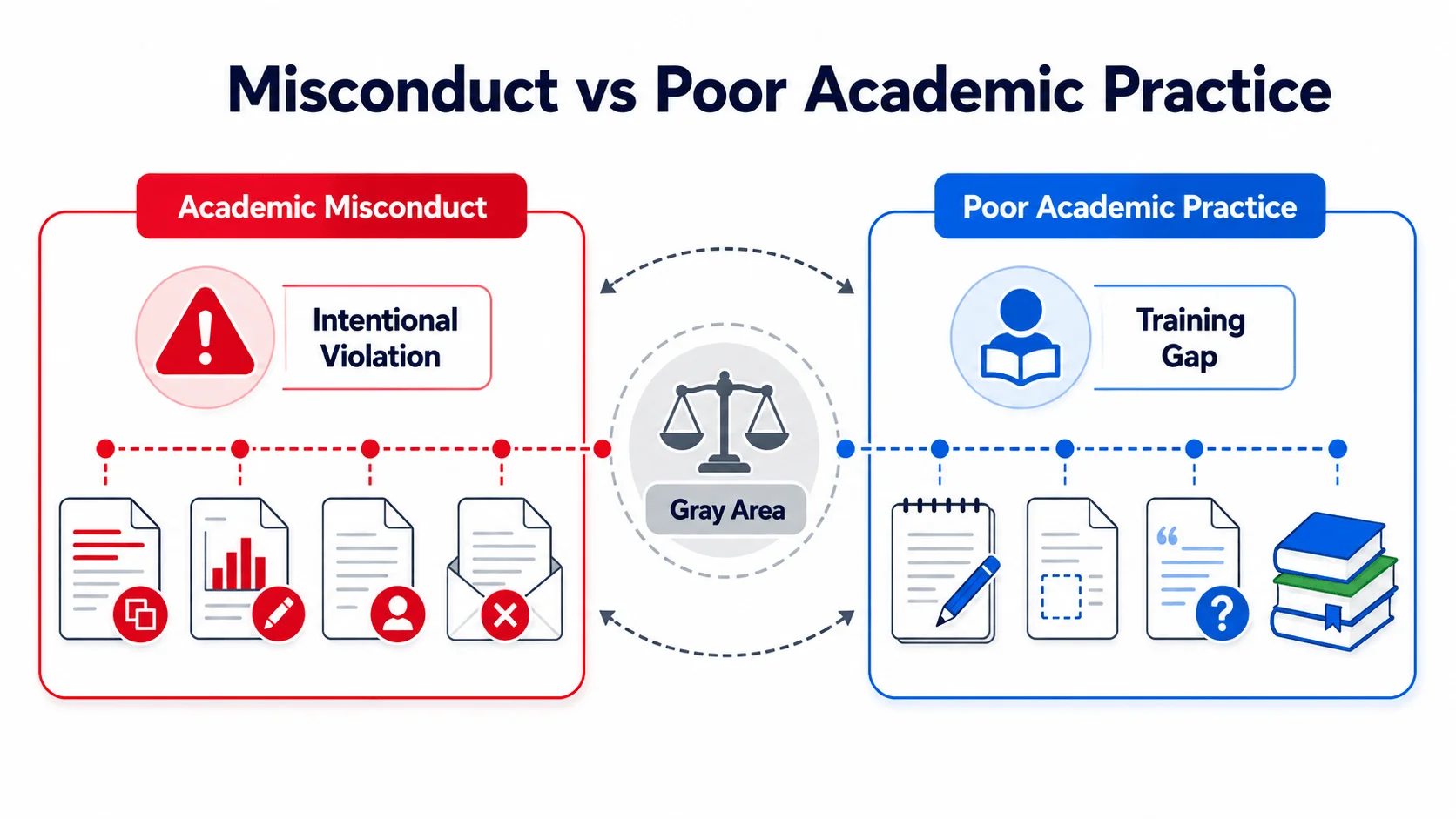
Another related concept is poor academic practice. Unlike deliberate misconduct, poor academic practice is more commonly associated with weak academic habits, limited research experience, or insufficient training. Examples include:
Inaccurate or incomplete citations
Improper paraphrasing
Weak note-taking that leads to accidental similarity
Overreliance on source wording
Incorrect reference formatting
Unclear attribution of ideas or data
These issues are generally considered less serious than intentional misconduct, but they can still affect similarity reports, editorial evaluation, and overall research credibility.
Consequences of Academic Misconduct
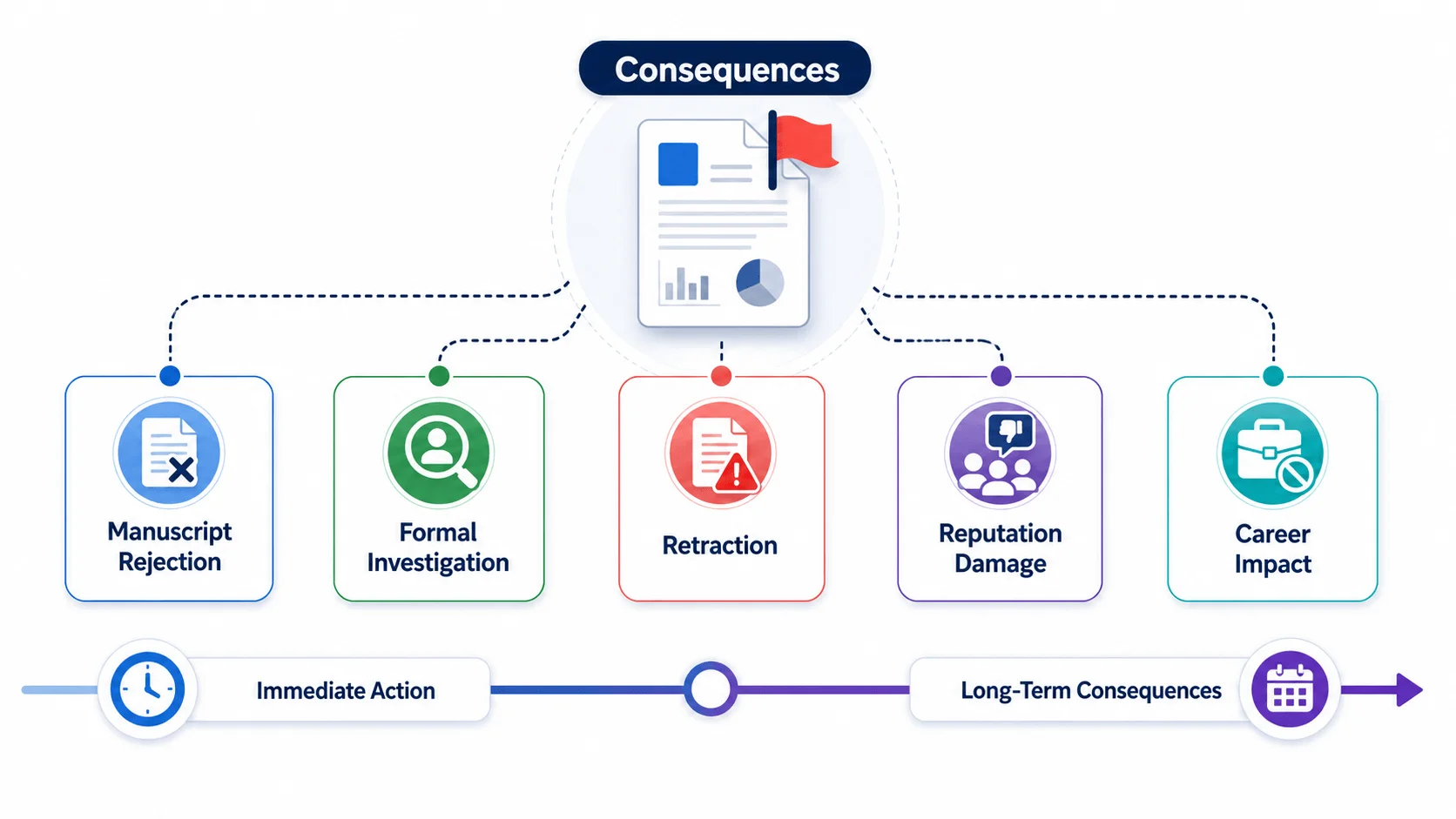
Academic misconduct can affect far more than a single assignment, manuscript, or research project. In academic publishing and research environments, integrity violations may lead to immediate disciplinary action as well as long-term damage to professional credibility.
When misconduct is identified during peer review, editorial screening, or institutional evaluation, researchers may face manuscript rejection, formal investigations, publication restrictions, or academic penalties. In serious cases involving plagiarism, data fabrication, or falsification, journals may retract published papers or report violations to affiliated institutions and funding organizations.
The long-term consequences are often more significant. Academic misconduct can damage a researcher’s reputation, reduce future publication opportunities, and affect grant applications, collaborations, or career advancement. Some institutions may also revoke degrees, terminate research positions, or impose bans on future academic activity for severe ethical violations.
As plagiarism detection systems, AI screening policies, and publication ethics standards continue to evolve, academic integrity has become increasingly important throughout the research and publishing process.
What To Do If You Are Accused of Academic Misconduct
Review the Allegation Carefully
The first step is to understand the exact concern being raised. Identifying the specific issue helps determine whether the problem relates to intentional misconduct, poor academic practice, or a misunderstanding during submission.
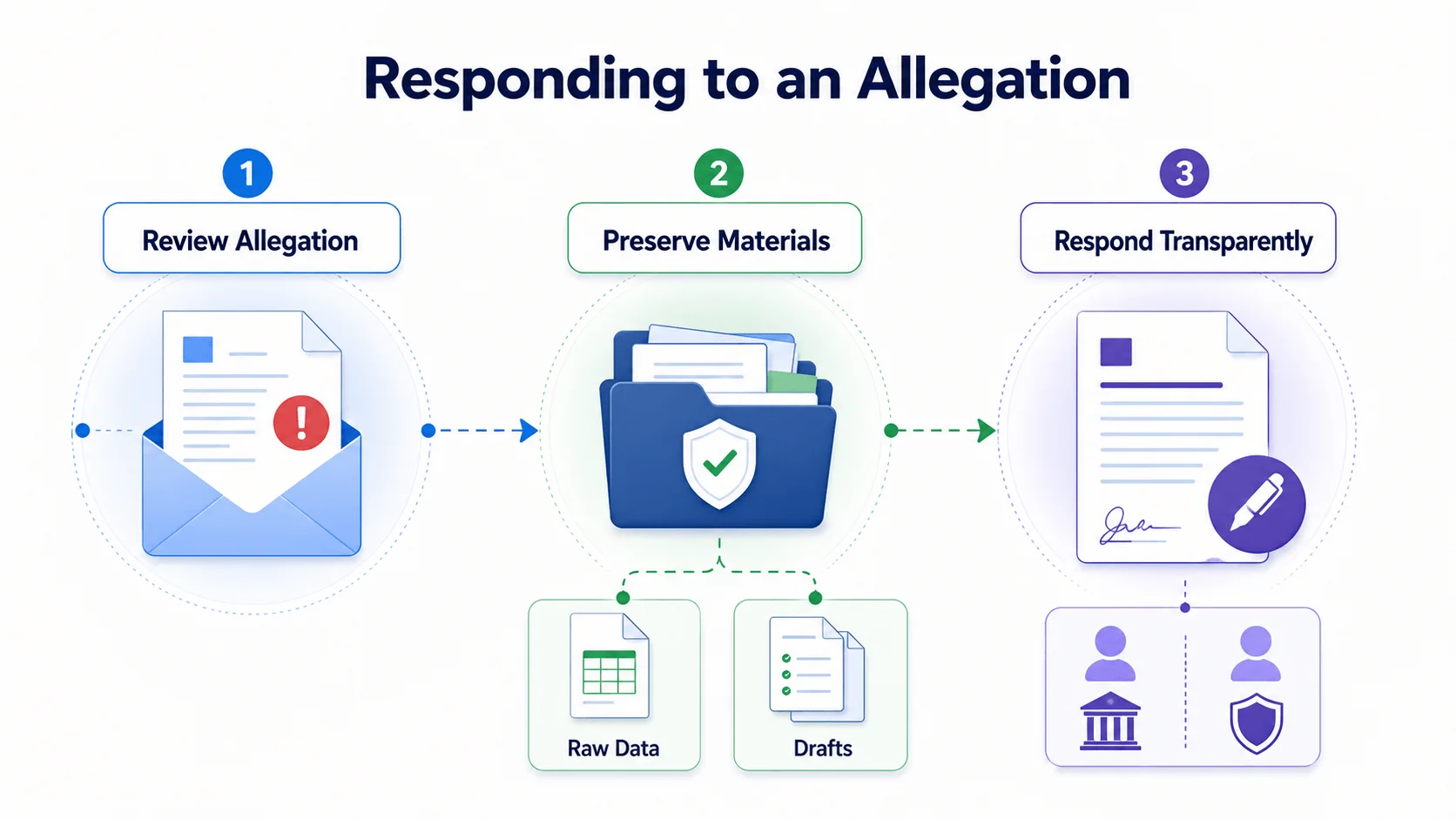
Preserve Supporting Materials
Researchers should keep all relevant documentation, including:
Draft versions of the manuscript
Raw research data
Citation records
Ethics approvals
Communication with co-authors or editors
These materials may help clarify how the work was prepared and whether errors occurred unintentionally.
Respond Professionally and Transparently
It is important to cooperate honestly with journal editors, universities, or ethics committees. Attempting to hide information, modify records, or provide misleading explanations may worsen the situation and increase potential penalties.
If necessary, researchers may also seek guidance from supervisors, institutional ethics offices, or professional academic support services before submitting a formal response.
Final Thoughts
Academic misconduct is not just about breaking rules; it is about protecting trust in research, authorship, and academic publishing.
Hopefully, this guide has made the topic easier to understand, from plagiarism and data issues to newer concerns around AI-assisted writing.
FAQ
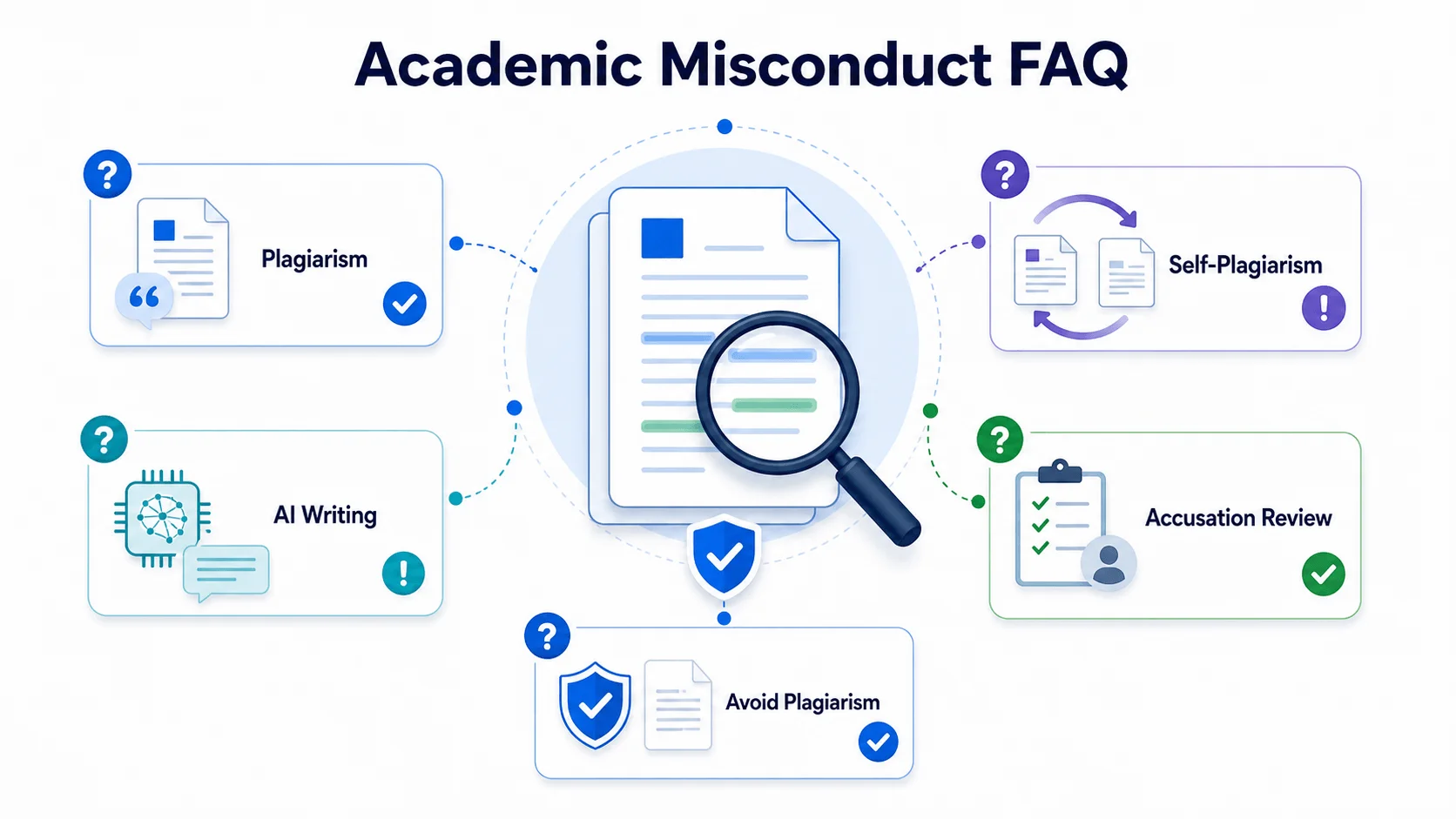
What is considered academic misconduct?
Academic misconduct refers to behavior that violates academic integrity standards in research, writing, or publication activities. Common examples include plagiarism, falsified data, improper authorship, and undisclosed AI-generated content.
Is self-plagiarism considered academic dishonesty?
Yes. Reusing previously published or submitted work without proper disclosure may be treated as academic misconduct by journals or institutions.
Can AI-generated writing count as academic misconduct?
It can, depending on journal or institutional policies. Undisclosed AI-generated content or fabricated AI citations may raise integrity concerns.
What happens after an academic misconduct accusation?
Most cases involve an institutional or editorial review process. Consequences may include manuscript rejection, disciplinary action, or reputational damage.
How can researchers avoid accidental plagiarism?
Researchers can reduce plagiarism risks by citing sources carefully, verifying references, and reviewing journal guidelines before submission. Plagiarism-checking tools may also help improve accuracy.